Right Sider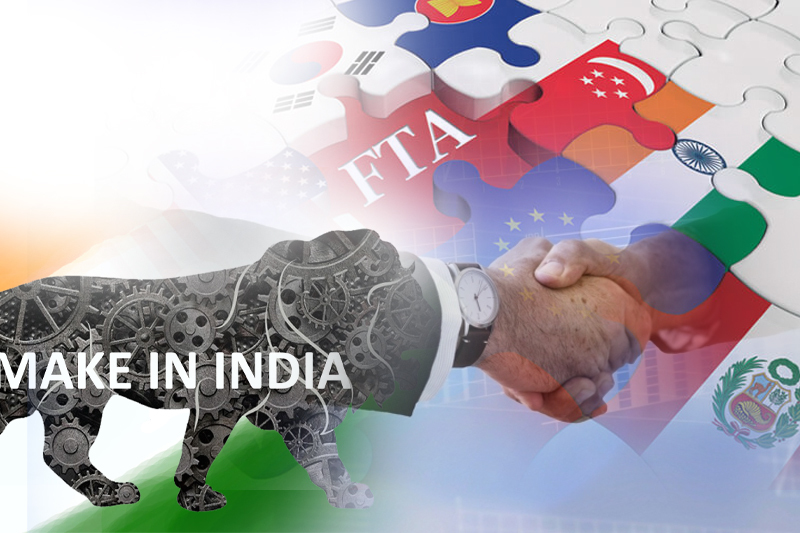
why india made a u turn on free trade deals
Last updated on August 26th, 2023 at 11:26 am
 India – India has signed new agreements with several countries to lower trade barriers, eliminate tariffs and gain preferential access to world markets. All this happened despite India’s doubts about a free trade agreement for decades.
Earlier this year, the country launched a comprehensive economic partnership with the UAE and signed a trade deal with Australia, committing to an 85% tariff reduction. Negotiations are also underway to sign free trade agreements (FTAs) with the UK and the EU.
These deals are expected to cover a range of products and services, from textiles to alcohol, automobiles, and pharmaceuticals, as well as the labor movement, intellectual property protection, and data protection.
The UK statement said Indian and UK officials are actively working on completing negotiations on a comprehensive and balanced FTA by the end of October 2022.
The resumption of FTA talks with the EU after a long wait was a reflection of “a new India that wants to engage with the developed world as friends from a position of justice,” Indian Commerce Minister Piyush Goyal said last month.
This new zeal marks a sharp departure from India’s fears about trade liberalization for much of the last decade.
Keep Reading




In 2019, India withdrew from the Regional Comprehensive Economic Partnership (RCEP), touted as the world’s largest trade deal between China and 14 other Asian countries, after seven years of negotiating.
Delhi was concerned that the agreement would cut tariffs on imported goods by 80-90% and further increase India’s large trade imbalance with China.
According to NITI Aayog, India’s public policy think tank, while bilateral trade with partner countries such as Japan, South Korea, and the ASEAN region increased following the signing of trade agreements, imports rose more sharply than exports, leading to “unfavorable benefits.”
That is why India’s approach this time around is to achieve a balanced FTA with complementary economies, focused not so much on competition as on cooperation.
But as India accelerates free trade talks with countries such as the UK and the EU, he is concerned about increased competition from cheaper import brands as the sector is on the cusp of maturity.
The terms of the deals with the UK and the EU are expected to be similar to those of the free trade agreement signed with Australia, where duties on wines over $5 have been reduced from 150% to 100%, with further phased reductions over the next decade.
According to Arvind Subramanian, a former economic adviser to the government, India has implemented more than 3,000 tariff increases, affecting 70% of imports.
Eliminating these inconsistencies will be essential. Timing will also be key.
The deadlines set for these deals are ambitious. India can’t afford to slow down because elections will start by the middle of next year.