
 The Workers Rights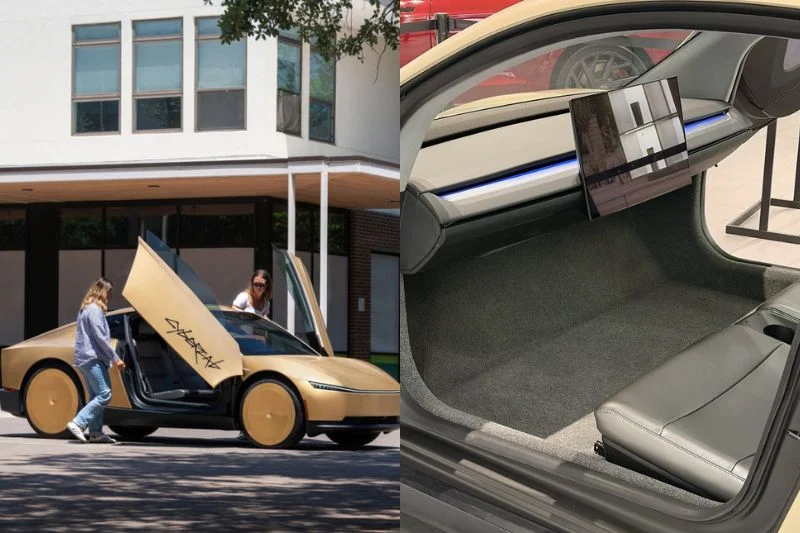
The Tesla Cybercab is advancing from prototype to real-world use at a much faster pace than first thought, industry data on the expanding autonomous fleet indicates, and that’s directly threatening driving jobs. With the robotaxis rolling through the streets of big U.S. cities, taxi drivers, rideshare workers, delivery drivers and truckers are all asking the same question: When will this technology take my place? The Tesla Cybercab is a 2-seat, steering-wheel-less car designed around Tesla’s self-driving software, and the release of the car is not only a technology story, but a labour story as well.
Autonomous vehicles have long been a far-fetched idea for taking away jobs from the transportation industry. That’s changing quickly. The time for disruption has been shortened because regulators have given larger fleets the green light, competing companies are scrambling to grow their robotaxi fleets, and public confidence in self-driving systems is on the rise. Preparation may be on a tighter schedule now, as workers who thought they had 10 years to prepare may be facing a much shorter one. It takes a closer look at the fit of the Tesla Cybertruck into that scenario, what jobs are the first to be put under the most pressure, and how a smooth transition could unfold for those whose livelihood is dependent on driving.
Quick Facts / Key Takeaways:
- According to third-party tracking data, the number of unsupervised robotaxi vehicles in Tesla’s fleet increased by approximately 200% from June to August.
- The Tesla Cybercab is steering-wheel-less and pedal-less, so it isn’t driven by hand as a backup.
- Nevada regulators recently approved the ability of thousands of autonomous vehicles to operate in Las Vegas, indicating more rapid regulatory approval across the country.
- Rideshare and taxi drivers are likely to be the groups most severely affected, and delivery and long-haul truckers have a longer, but still significant, timeline for disruption.
- Public transportation and chauffeur services might change, not vanish at least for the immediate future.
Which Driving Jobs Are Most at Risk?
The Tesla Cybercab expansion isn’t going to take over all driving jobs. The urban rideshare and taxi drivers are under the most immediate pressure, as the lines served by the robotaxis are largely located in the most built-up metropolitan areas where the Uber and Lyft driver positions exist. Chauffeur and private driver roles exist in a middle ground — human judgment and discretion are still important to provide ‘premium’ service, but cost pressures from autonomous vehicle workers could also threaten that market.
The exposure of delivery driver jobs and truck driver jobs is different. These are jobs that the current autonomous driving technology has not completely addressed, such as loading, driving in unexpected conditions, and customer interaction. But as the evolution of the robotaxi market goes ahead, logistics firms are closely watching, and in the long term, an autonomous driving system developed for passenger cars is likely to be adapted to the freight sector.
For the time being, public transportation employees are somewhat protected. The regulatory framework, union contracts, and accountability measures differ across buses, trains, and other transit systems and slow down the pace of private-sector rollouts. However, a few transit providers have started to test out automated shuttles in small areas, meaning that this insulation may not be permanent.
Also note that job displacement is not sudden. In the past, from the introduction of
horse-drawn carriages to the advent of the car, from the manual switchboard to the automatic system, transportation changes have typically taken years rather than months and resulted in new jobs as old ones have been phased out. The transition to a robotaxi fleet will likely undergo a similar transformation: some roles will go, some will change, and new roles (e.g. remote vehicle monitoring and maintenance, safety auditing) will be created to complement the disruption.
Robotaxi vs. Traditional Driving Jobs: A Quick Comparison
| Job Type | Disruption Risk | Timeline |
| Taxi & rideshare drivers | High | Near-term (1–3 years) |
| Chauffeur/private drivers | Moderate | Mid-term (3–5 years) |
| Delivery drivers | Moderate | Mid-term (3–6 years) |
| Truck drivers | Lower (for now) | Long-term (5+ years) |
| Public transit workers | Low | Long-term, policy-dependent |
Why This Matters Beyond Tesla
The Tesla Cybercab story is really a preview of a greater paradigm shift that’s coming in the future of work in transport. Tesla may not be the first to win the war on autonomous vehicles, but the trend is clear: driverless vehicle technology is on the march, competitors are following suit, and it’s not just Tesla’s jobs that are threatened by robotaxis.
This is because this is a period of automation that is faster and more transparent than previous ones. Each new city approval, each fleet expansion, and each Tesla Cybercab hit on the street is a public testament to advancing technology. For workers, it’s a two-way street — it makes their jobs more visible, and it also makes them more visible to prepare themselves, reskill, and even pivot before disruption makes itself felt.
FAQs
Could Tesla Cybercab take over the job of every taxi and rideshare driver?
Not immediately. The effects of robotaxi on jobs are likely to begin in certain cities and then gradually spread to the country.
Are delivery driver jobs in danger at this time?
There is some risk, but deliveries involve physical tasks that autonomous vehicles are not yet adept at.
Will trucking be immune to the “robotaxi” effect?
Yes, for now, mostly — but trends in the autonomous transportation workforce indicate that long-haul could be impacted later.
What should be the role of the workers in these industries?
Drivers can also be flexible by gaining the skills needed to support their current role, like logistics coordination, fleet supervision or customer service, to prepare for future changes and opportunities.
Global Worker Rights Issues You Should Know
Who Pays Rising H-1B Extension Costs?
Check out what workers can do if employers refuse payment.
How Do Malaysian Workers Navigate Singapore?
Find the key housing, economic and retirement challenges.
Could UK Bosses Really Face Jail?
Uncover what the illegal hiring crackdown means for workers.
Why Are Ceuta Migrants Returning?
Browse the food, safety and migration pressures driving returns.
Can Europe Solve Its Labour Shortage?
See why migration controls clash with growing worker demand.






Recent Comments