
 The Workers Rights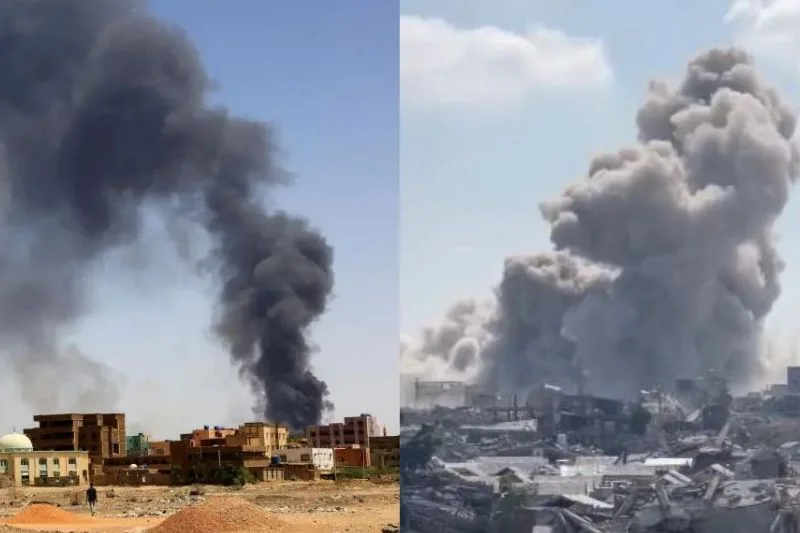
The war in Sudan has resulted in a humanitarian emergency with large numbers of people displaced, buildings damaged and access to basic services restricted. In this context, there has been another significant concern about the potential for civilians to be exposed to chemical weapons and the challenge of determining what occurred in an active conflict area when accusations of chemical weapons use have been brought against the Sudanese Armed Forces (SAF).
The U.S. has concluded that chemical weapons were used in Sudan in 2024, while Sudan has denied it. Different views on the issue mean that it is even more significant to investigate independently. In the civilian world, the issue is not only one of accountability after a claimed assault. It is also a matter of whether the civilian community is still at risk and how to provide proper healthcare to avoid further injuries.
What Does the Claimed Chemical Weapons Assault Mean for Civilians?
The claims are made in the context of the larger rift between the SAF and Rapid Support Forces (RSF) which began in April 2023. As soon as the conflict broke out, civilians became displaced multiple times and their lives greatly affected.
The US evaluation of alleged chemical weapons use, in particular, gives a new serious dimension to the conflict, as chemical weapons are banned under the Chemical Weapons Convention (CWC), which Sudan has signed.
Washington stated that its assessment is about the Sudanese military’s use of chemical weapons in 2024. However, details of the events, the settings, the size and the impact of the alleged events remain significant for an independent investigation.
Sudan has rejected these allegations and has maintained that the allegations should be raised under the existing international mechanisms. Sudan has also insisted that it is participating in the processes and earlier put in place a domestic mechanism to review the accusations.
The issue of competing claims is of significance to civilians because of the potential humanitarian impacts of uncertainty. They may be leaving because of their concern about being exposed to the chemicals, thus making it difficult to find them amid all the pressure on the hospitals, which are already overcrowded.
Incident Timeline: From Allegations to International Pressure
| Period | Development | Status |
| April 2023 | A conflict between the SAF and RSF starts, resulting in a significant humanitarian crisis. | Established |
| 2024 | The US subsequently found evidence that chemical weapons were used in Sudan during the year. | US assessment |
| May 2025 | Washington formally declared its intention to ban the use of chemical weapons and started to implement sanctions. | Official US position |
| 2025 | Sudan denied the allegations and is conducting a national investigation into the allegations. | Disputed |
| June 2026 | The US also imposed new measures over alleged chemical-weapons use and failure to meet CWC obligations. | International dispute |
| July 2026 | Washington stepped up demands for international investigation and access to chemical weapons. | Ongoing |
| September 2026 | The alleged incidents raise doubts regarding accountability in Sudan, in the larger context of international discussion. | Verification remains important |
It is a clear distinction that the timeline places on the value of a government assessment or media investigation as compared to a fully independent international determination of all the alleged incidents.
International Response Tracker
The U.S. has adopted the most public stance, connecting its sanctions policy to its conclusion that chemical weapons were used. Washington has also urged international investigation and the creation of mechanisms that are independent of the investigation of the allegations.
The Organisation for the Prohibition of Chemical Weapons (OPCW) plays a key role in the larger accountability discussion as it is the international organisation tasked with overseeing implementation of the Chemical Weapons Convention. Independent technical investigation may be useful in determining the use of prohibited chemicals and in determining the location of incidents and what evidence may be recovered.
Sudan, on the other hand, has denied the charges and condemned the sanctions against it for the charges. It has been its position that any claims over the use of chemical weapons must be judged through proper international processes and not through political statements.
Sanctions have already been imposed by European governments and other international actors against the regime and certain persons who are related to the broader Sudan issue. But in most cases, sanctions for atrocities should not be considered as automatic evidence of individual chemical-weapons attacks.
This is a distinction that is significant for credibility. Evidence and clear investigation of the work and findings that can be verified by others is a great strength of accountability.
What Happens Next: Protect Civilians and Preserve Evidence
The immediate humanitarian action should be to protect civilians, irrespective of what action is taken with regard to the allegations.
Affected communities may need specific medical care and accurate information on possible hazards if chemical exposure has occurred. Humanitarian access must also be unhindered, with no further questions about potential contamination or attacks.
There is a need for evidence preservation, too. It is possible for conflict situations to become inaccessible, witnesses to be displaced, and physical evidence to deteriorate or vanish. Independent investigators must also be able to access locations, witnesses, medical records and other pertinent information wherever security allows.
Ineffective sanctions will generate diplomatic pressure but will not be the answer. The suggested approach should have included independent investigation, access to the humanitarians, evidence preservation, support to Sudanese physicians and civil society organisations, as well as continued diplomatic pressure.
Issues of a nation’s victory in a foreign conflict are actually secondary to the question of who wins for Sudanese civilians. It concerns the credibility of investigations into allegations of weapons used in violation of the law, whether victims can be given appropriate assistance, and whether future attacks can be prevented. In a crisis that has already displaced and left millions of people insecure, establishing the facts is an important step to ensuring that no more people are hurt.
Know Your Rights And Stay Protected At Work
What Are Different Types Of Leave?
Explore casual, sick and paid leave rules.
How Do Global Parental Leave Laws Work?
Discover rights and policies worldwide.
What Counts As Protected Characteristics Singapore?
Check new anti-discrimination law details.
What Is Workplace Discrimination Exactly?
Explore causes and prevention methods.
Why Can’t Workers Adapt To Heatwaves?
Discover challenges faced by urban workers.





Recent Comments