
 The Workers Rights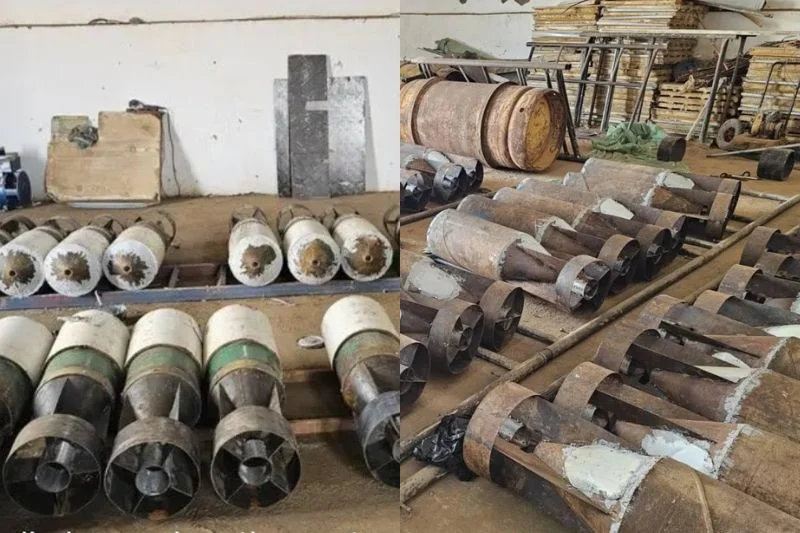
The war in Sudan has entered a more dangerous stage of its conflict, raising worries over new allegations from the Sudanese Armed Forces (SAF) and the use of chemical weapons, Islamist armed groups, and outside military links, as it moves away from the traditional battlefield approach.
According to Prof. Rohan Gunaratna’s analysis in September, released by Eurasia Review, the leaked document containing almost 150 documents, including military records, communications, blueprints and videos, “supplies evidence of an alleged SAF programme to manufacture improvised chlorine-gas munitions”. The report claims that the devices, which are believed to be chlorine-based, were tested and some were used in 2024 around Khartoum and the Al Jaili refinery. It further states that water made from chlorine has been diverted from civilian water-treatment facilities. These allegations continue to be allegations and need to be verified independently and internationally.
The implications are huge, as the alleged use of chlorine as a weapon would be a serious breach of international chemical-weapons bans. Sudan’s officials and troops have denied the claims, saying that poisonous weapons were not used.
Why the Chemical-Weapons Allegations Matter
The allegations have once again brought the world’s attention to the international community’s response to Sudan’s conflict. The analysis states that the United States has sanctioned Sudan and Gen. The use of chemical weapons by Abdel Fattah al-Burhan was based on the following decisions, together with other measures which were imposed in June 2026. It is worth mentioning that the article talks about diplomatic pressure towards the Organisation for the Prohibition of Chemical Weapons (OPCW) for conducting unbiased inspections.
However, it is not something similar to military interventions that occurred in Iraq and Syria. The reference also says that the outside powers are not currently in any hurry to get involved directly in the conflict in Sudan, where the SAF and the Rapid Support Forces (RSF) are both responsible for egregious human rights violations. Rather, the main international instruments are sanctions, diplomatic pressure, arms restrictions and independent investigations.
This helps with accountability. Assessments of whether any chemical weapons were used, who authorised their use and what command structures were engaged would necessitate credible evidence and independent investigations, not just political statements.
SAF and Islamist Networks Face Greater Scrutiny
The accusation around the use of chemical weapons also directs into a larger issue the Eurasia Review has picked up on: the increasing influence of Islamist organisations backing the SAF.
The article points to various groups such as the Al-Baraa Ibn Malik Brigade and networks linked to Sudan’s former National Islamic Front (NIF) as proof of the military’s reliance on ideologically motivated groups on the battlefield. Analysis indicates that this is due to a shortage of manpower and pressure on the SAF’s frontlines.
It is a relationship that has broader political significance. The reference states that networks that emerged during the Omar al-Bashir and Hassan al-Turabi period did not get completely eradicated after al-Bashir was removed in 2019. They may therefore be a resurgence of Sudan’s past political-security apparatus.
The big question for international observers is whether these units have become a temporary partnership on the battlefield or part of the post-war security structure in Sudan.
Iran Links and the Post-War Security Risk
The analysis also claims Sudanese Islamist networks are linked to Iran’s Islamic Revolutionary Guard Corps (IRGC), pointing to training and weapons, as well as an alleged “regional arms pipeline.” The following are some of the claims that must be carefully verified independently before they can be considered facts.
The bigger question is what will happen once the war is over. The reference says that giving weapons to armed ideological groups could lead to the establishment of autonomous hot spots of power which will remain after the conflict. The SAF may also become more powerful militarily as a result of the war, yet more reliant on militias and external networks, which will make a return to civilian government more difficult.
There is thus a double justification for examining the allegations of the use of chemical weapons, namely for the accusation of any current use of prohibited weapons, but also for the longer-term surveillance of the development of unconventional capabilities, access to dual-use materials and armed networks that would not be eradicated by the war. But the main issue at the heart of the reference is, beyond the battlefield, whether such capabilities and networks could remain in Sudan’s military-political system after the conflict.
Know Your Rights and Stay Protected at Work
What Are Different Types Of Leave?
Explore casual, sick and paid leave rules.
How Do Global Parental Leave Laws Work?
Discover rights and policies worldwide.
What Counts As Protected Characteristics Singapore?
Check new anti-discrimination law details.
What Is Workplace Discrimination Exactly?
Explore causes and prevention methods.
Why Can’t Workers Adapt To Heatwaves?
Discover challenges faced by urban workers.

Recent Comments