The Workers Rights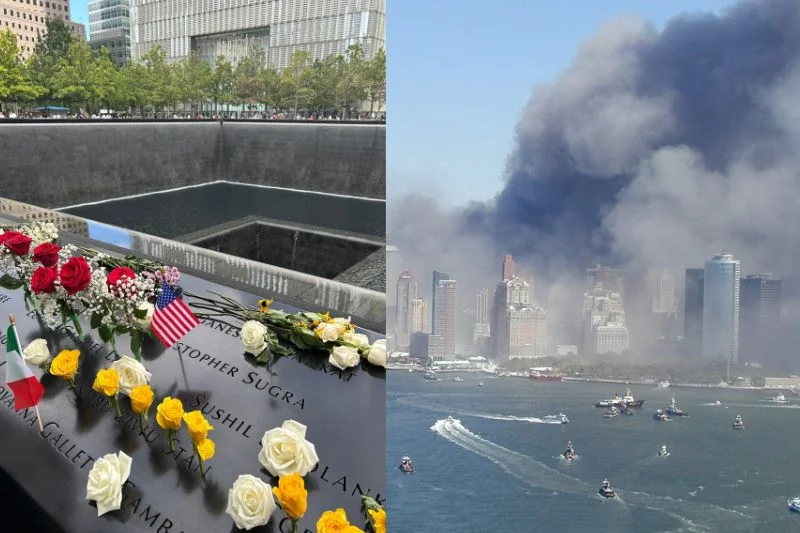
Two decades after the September 11, 2001 terrorist attacks, the United States still struggles with how to deal with extremist movements while preserving national unity. On September 13, 2026, NewsNation revisited that debate, this time with a focus on Islamic extremism, the Muslim Brotherhood and questions surrounding the evolution of America’s national-security conversation since 9/11.
The discussion comes at a time when questions of terrorism, political polarisation, and ideological movements continue to intersect. The central question was: Is the United States having a different conversation now about the threats of Islamist extremism than it was right after 9/11?
It’s a tricky issue. Terrorists and those who perpetrate acts of terror should not be confused with the Muslim community or with Islam as a religion. Indeed, the 9/11 Commission itself made this distinction clear, saying that Islam was not the enemy and that Islamist terrorism was a specific threat.
How 9/11 Changed the National-Security Conversation
The 9/11 attacks forever changed the way Washington thought about terrorism and homeland security. Before Sept. 11, counterterrorism was a responsibility shared among several agencies and was not seen as the most important national-security concern. The 9/11 Commission later called for more coordination between intelligence, law-enforcement and national-security agencies.
One major institutional consequence was the creation of the Department of Homeland Security in 2002. The department took on primary roles for border protection, transportation security, critical infrastructure and emergency preparedness. The post-9/11 era witnessed more sharing of information and coordination between agencies engaged in counterterrorism.
That history matters in light of today’s debate. The question is no longer how America should react to an attack. It also includes detecting extremist threats before violence breaks out, understanding ideological networks and balancing security measures with constitutional rights and social cohesion.
The Muslim Brotherhood Debate Remains Contested
The NewsNation discussion was heavily focused on the Muslim Brotherhood, including claims that the group and its associated movements have gained influence through community and activist networks.
The Muslim Brotherhood was founded in Egypt in 1928 and is a complex subject of debate because the name can refer to a broader movement with different branches, organisations, and political actors operating in different countries. Analysts have disagreed over whether the movement should be considered a single, unified organisation, the Congressional Research Service said in a report, noting the differences between organisations and movements that are inspired by its ideas.
The issue of U.S. designation has also been argued for years. The United States has not historically designated the Muslim Brotherhood as a whole a Foreign Terrorist Organisation. In 2019, then-Secretary of State Mike Pompeo said the question of designating the broader movement as a terrorist organisation was complex legally and factually, but individual groups within it could be evaluated under U.S. terrorism authorities.
This distinction is important when evaluating claims about that organisation. Some governments have designated the Muslim Brotherhood or certain of its branches as terrorist organisations; U.S. policy has generally assessed particular organisations and individuals against applicable legal standards.
Political Claims Require Evidence and Attribution
Another big chunk of the Sept. 13 discussion was the charges of sympathy for the Muslim Brotherhood inside the Democratic Party. Such claims are political statements made during the course of the discussion, and should not be automatically presented as established findings about an entire political party.
Political accountability is about particular statements, relationships, policies or documented actions. Not blaming the actions of particular individuals or organisations on a whole party. The broader question – how U.S. political institutions should deal with organisations accused of extremist links – is legitimate, but conclusions must be based on verifiable evidence.
And the history of U.S. counterterrorism shows why careful analysis matters. So, the 9/11 Commission stressed the need for intelligence coordination, better oversight, and sharing of information, rather than broad assumptions about communities. Specifically, it called for a unified approach across agencies, but also recognised the need to protect American liberties.
What Has Changed Since 9/11—and What Remains Unresolved?
The United States has built very different counterterrorism institutions since 2001. Intelligence and law-enforcement agencies have stepped up their cooperation, and homeland security has been permanently incorporated into national policy. The 9/11 Commission called counterterrorism a “generational challenge” and a problem of “sustained institutional adaptation.”
But the arguments about extremism are not over. They’ve evolved into questions about online radicalisation, political polarisation, foreign influence, ideological networks and the appropriate limits of government intervention.
So the NewsNation discussion provides an opportunity to reexamine the post-9/11 experience without boiling a complex national security debate down to one story. By looking at the evidence that has been documented about extremist organisations, we can begin a more informed public conversation. We can separate those organisations from Muslim communities, and we can examine political claims one at a time.
More than 25 years after 9/11, the central question remains: how to reconcile security and democracy? Understanding that tension, and the ability to weigh competing claims based on reliable evidence, is critical to any serious discussion of extremism, the Muslim Brotherhood and America’s national unity.
Global Worker Rights Issues You Should Know
Who Pays Rising H-1B Extension Costs?
Check out what workers can do if employers refuse payment.
How Do Malaysian Workers Navigate Singapore?
Find the key housing, economic and retirement challenges.
Could UK Bosses Really Face Jail?
Uncover what the illegal hiring crackdown means for workers.
Why Are Ceuta Migrants Returning?
Browse the food, safety and migration pressures driving returns.
Can Europe Solve Its Labour Shortage?
See why migration controls clash with growing worker demand.