
 kritika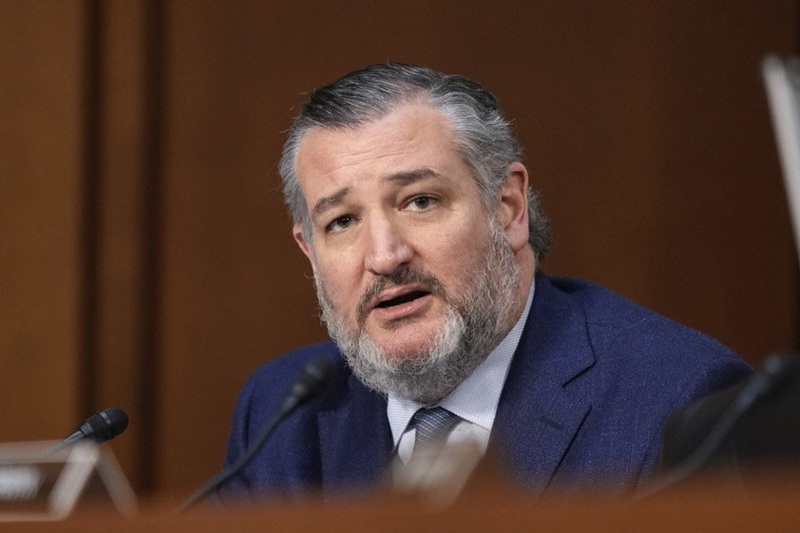
Republican Sen. Ted Cruz is putting the final stretch on a campaign allegation that has put Democrat Abdul El-Sayed in a Michigan Senate race into a new phase: that he was tied to networks connected to the Muslim Brotherhood. A Senate Judiciary subcommittee hearing on the “Muslim Brotherhood Network in America”, as Cruz called it, is where the allegation surfaced.
Cruz’s comments came shortly after El-Sayed, a physician and former Detroit health official, won the Democratic Senate primary in Michigan. El-Sayed’s political connections and roles will likely be more closely examined by Republicans as the general election nears, which may lead to a change in control of the U.S. Senate.
But the charges are not accepted. The Democratic critics of the hearing charged it targeted Muslim Americans when, in fact, the Brotherhood allegations were mostly about the loose associations of El-Sayed’s father-in-law and organisations identified as “Brotherhood-linked.”
Cruz focuses on El-Sayed’s family and political network
Cruz mentioned El-Sayed’s father-in-law, Dr Tayeb Jukaku, as part of a larger network of institutions.
Security analyst Kyle Shideler spoke at the hearing about Jukaku’s ties to the Council on American-Islamic Relations (CAIR) Michigan and Islamic Society of North America (ISNA). Some of the groups and people associated with those groups are “tied to the Muslim Brotherhood,” according to Shideler.
Jukaku is a kidney specialist in Detroit and has served on the board of directors for CAIR Michigan. He joined the ISNA founders committee because of the support it gave to his family upon his emigration from India, according to his biography.
The relationships referred to at the hearing are thus primarily around El-Sayed’s family relationships and his association with organisations with which his father-in-law has been linked. They do not on their own prove that El-Sayed is a member of the Muslim Brotherhood.
Why the Muslim Brotherhood issue is becoming an election flashpoint
The issue is expected to be a broader national one on political Islam, Muslim institutions, and the nation’s security in the upcoming 2026 election cycle.
In 1928, the Muslim Brotherhood was established in Egypt and expanded to other nations. Hamas is a result of the Palestinian arm of the Brotherhood. The U.S. Treasury Department in January placed the Egyptian and Jordanian offices of the organisation on its list of terrorist groups, while the Muslim Brotherhood has not been declared as a foreign terrorist organisation by the United States.
In addition, CAIR has been a topic of longstanding political controversy. It was designated as an unindicted co-conspirator in the 2007 trial of the defendants in the Holy Land Foundation case. CAIR is not accused of committing a crime, and it characterises itself as a Muslim civil rights organisation.
That is significant because the accusations against El-Sayed have now become part of the campaign. Membership in, or endorsement of, the Muslim Brotherhood is not an automatic implication of association with an organisation, committee or individual.
Democrats boycott hearing as Republicans escalate attacks
The Senate hearing itself was controversial. Democratic senators on the subcommittee abstained, saying the hearing was aimed at the broader American Muslim community.
Sens. Democrats would not be involved in a “politically motivated proceeding,” said Sheldon Whitehouse, Richard Blumenthal, Mazie Hirono, Alex Padilla and Peter Welch. They also cited Republican initiatives in Texas and elsewhere that they said showed a more general trend of a Republican “campaign on ‘radical Islam.”
Only one senator from either side—Cruz—showed up for the hearing.
Immigration, religion, national security, and electoral politics are increasingly intertwined in the 2026 race, as seen in the conflict between the two. But that’s probably not going to be the only factor in the minds of Michigan voters — it will be about El-Sayed’s overall political track record and the connections Republicans say they should be looking at more closely.
El-Sayed faces a tougher general election fight
El-Sayed’s win in the Democratic primary has given him a shot at the big game in the general election against former congressman and former House Permanent Select Committee on Intelligence chairman Republican Mike Rogers.
Rogers has already tried to spin the race on the national security theme. He alluded to El-Sayed’s appearances on social media with the controversial, Islamist-aligned influencer Hasan Piker, who has previously threatened to kill Jews, after the primary.
The rising onslaught is a threat to El-Sayed, not just in the Democratic primary. Republicans will probably make his associations, foreign-policy sentiments and his national-security roles key components of the campaign.
The play is a chance for Republicans to tie the Michigan contest to a larger national debate about Islamist networks and security. Meanwhile, the Democrats are likely to defend their actions, saying that the attacks tarnish the image of Muslim organisations and American Muslims not involved in terror.
As the general election draws near, voters will have to sift through known connections, as well as political connections and claims from opposing campaigns. In a Senate race in which national security and the role of Muslim Americans in American politics are already shaping up to be key issues, that distinction might play an even more crucial role.
Global Worker Rights Issues You Should Know
Who Pays Rising H-1B Extension Costs?
Check out what workers can do if employers refuse payment.
How Do Malaysian Workers Navigate Singapore?
Find the key housing, economic and retirement challenges.
Could UK Bosses Really Face Jail?
Uncover what the illegal hiring crackdown means for workers.
Why Are Ceuta Migrants Returning?
Browse the food, safety and migration pressures driving returns.
Can Europe Solve Its Labour Shortage?
See why migration controls clash with growing worker demand.



Recent Comments