 kritika
(C): X
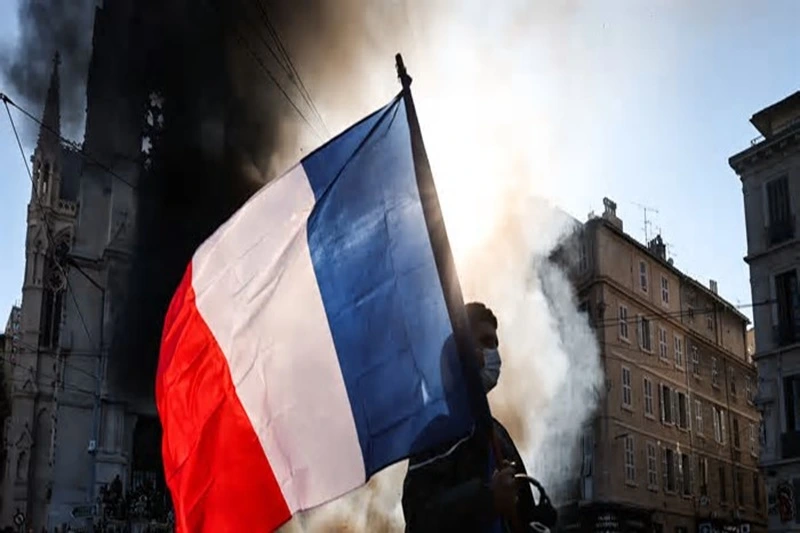
While the France riots immigration debate has started to spread rapidly online, the riots themselves were not about immigration. The country witnessed protests against the soaring fuel prices and cost of living over the weekend of October 17, 2026, with some of them becoming violent in several places. Foreign politicians then drew a connection between the protests in France and immigration, turning it into a much bigger political issue.
Key Highlights
- Reactions: Anger over inflation, cost of living and fuel prices
- Timing: The nationwide demonstrations started on October 17, 2026
- Escalation: The events in Paris and other cities come under the heading of escalation: looting, fires and confrontations with riot police.
- Official response: Partial nighttime curfews in two areas of Paris on October 19.
- Political spin: U.S. leaders spin it as an immigration problem;
- The experts: It was an “export of U.S. domestic politics”
- U.S. polling: 82% of Americans say the economy is important versus 59% for immigration, per polling (Pew)
Why Did the France Riots Start?
The reason for the riots in France was economic. Prices and fuel costs were cited as the cause of the protests, and many European households have complained of high prices. The early marches were initially called national marches, and as the movement expanded, students joined as well.
How did the Protests become Violent?
As the crowds grew some of the French social unrest began to break down into disorder. Burned vehicles and fires near landmarks in central Paris and arrests have been reported as police clashed with protesters. Police took action and closed streets in individual districts to prevent more violence. The magnitude of the damage was depicted as a “conflict zone” in the coverage.
How Immigration Entered the Conversation
The immigration debate in France was brought to the fore, mainly through foreign pressure. President Donald Trump alleged that migrants had infiltrated France, and called on the country’s government to close its borders. Vice President J.D. Vance expressed a similar sentiment regarding assimilation, and other right-leaning American commentators chimed in on the subject.
This framing is in a pattern. The commentary deals with events on the other side of the world as evidence for arguments that have been made at home, analysts say, especially with U.S. midterm elections on the horizon Nov. 3.
What Experts Say
Experts doubt the framing is representative of what is occurring on the streets of France. One European policy analyst called it an “export” of domestic politics, and one U.S. foreign policy professor noted that it might mobilise the Republican base without attracting new supporters. Another expert commented: “American campaign messaging is not about French affairs; it’s about healthcare and the economy.”
Polling provides support for that. Rising prices due to tariffs and the conflict with Iran have been a drag on the President’s approval ratings, while voters in the U.S. place economic concerns high on their list of concerns, well above immigration.
What the Protests Actually Show
It’s important to differentiate the facts from the rhetoric. But the evidence suggests a ‘cost of living’ protest, rather than one motivated by migration, morphing into French civil unrest. Immigration was a topic that remains touchy in France, but it wasn’t explicitly what prompted people to march.
Conclusion
The France riots can be best seen as an economic protest which morphed into a political talking point. With prices and fuel prices under pressure and living standards still being stressed, the demonstrations may be back. It is important for anyone interested in the story to look at what was demanded during the protests and not what was said after.
Explore the Latest on Europe’s Security and Immigration
1. Can Starmer Stop England’s Violent Riots?
Find out how the UK prime minister is responding to England’s most violent riots in 13 years.
2. Is France Becoming Europe’s Most Dangerous Country?
3. Why Are French Nationals Refusing Embassy Warnings?
4. Will the UK-France Migrant Deal Affect Visas?
Check out what the deal’s end could mean for UK work visa applicants and migration rules.
5. What Does the Infosys France Fine Reveal?
Discover why accurate working-hour records matter for employee rights and workplace compliance.