The Workers Rights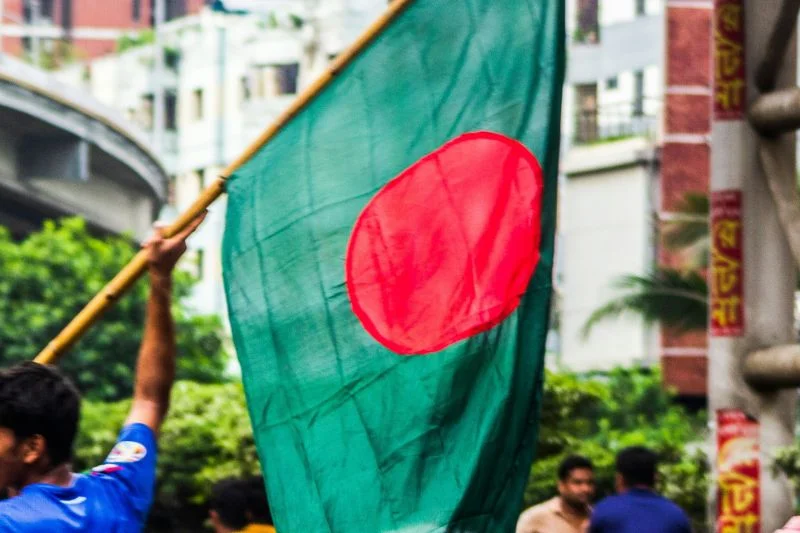
A report has been released by The Global Centre for Democratic Governance (GCDG) on 10th November 2025 about the emergence of Islamists and jihadists’ network in Bangladesh and its impact on neighboring nations. According to the article authored by Probir Kumar Sarker, there are a few persons and groups that have been found to be responsible for the spread or amplification of narratives related to jihadist movements.
Included in the list of people mentioned in the report is Mahmudur Rahman, who is described in the article as a “figure allegedly amplifying calls and narratives of jihadist groups”. The report does not conclude that Mahmudur Rahman is a jihadist/telest terrorist, but it is an allegation made by GCDG.
The broader context is Bangladesh’s evolving political and security landscape, where the continued existence of militant groups, attacks against minorities and secular individuals and interests, and possible cross-border security threats from India, Myanmar and Nepal are all relevant to the situation.
GCDG Report Links Bangladesh’s Extremist Landscape to Longstanding Militant Networks
The GCDG article indicates that Bangladesh has been witnessing the rise and sustenance of jihadist groups in the country for decades. It covers the groups: Jama’atul Mujahideen Bangladesh (JMB), Harkat-ul-Jihad al-Islami Bangladesh (HuJI-B), Ansar al-Islam, and others, and looks at assumed links with broader transnational extremist groups on ideological or operational fronts.
The report attributes some of this change to the 1990s and the rise of militant groups. It also covers the years 2001–2006, in which it claims that “political ties and networks” fostered an environment that allowed some militant groups to grow.
In 2005, Bangladesh saw coordinated bombings in various parts of the country, and in 2016, a bomb attack in the Holey Artisan Bakery took place. While it has been stated that some organisations were subsequently banned or disrupted, ideological elements and splinter networks remained a security threat.
The article also claims that some factions have tried to make the connection between the atmosphere of militancy in Bangladesh and wider South Asian conflicts and extremist movements.
Mahmudur Rahman Among Figures Alleged to Amplify Jihadist Narratives
The report highlights the role of individuals and media personalities in spreading extremist narratives, making it one of the more important claims.
The article says Mahmudur Rahman is part of a list of individuals it labels as “supporters” of jihadist groups, as well as social-media influencers the report claims have promoted or reinforced certain political and religious messages via digital platforms.
This is a key point to remember – the GCDG article alleges that there is narrative amplification, but it does not prove that Mahmoudur Rahman is a member of a jihadist or terrorist group.
The report suggests that the internet affords extremist movements extra chances to target young people and normalise violent rhetoric or propagate an invitation to confrontation. Thus, the assessment of its activities does not only go beyond the activities of formally organised militant groups to the wider information environment in which the extremist narratives can circulate.
GCDG also worries about the impact of these stories on the secular political voices and religious minorities in Bangladesh.
Report Highlights Concerns Over Minorities, Secular Voices and Political Change
The GCDG article refers to the attacks on the Hindu, Buddhists, Christians, Shias, Ahmadis and Sufis as part of an “extremist ideology”. It also includes attacks on secular intellectuals and activists, including high-profile incidents attributed to or claimed by militant groups.
The report states that some Islamist actors have mobilised supporters and helped introduce pressure/violence toward minority and secular communities through this “Touhidi Janata” narrative. GCDG resorts to these statements to provide evidence of an ideological climate that has the potential to pose dangers to Bangladesh’s pluralistic traditions, in GCDG’s view.
The article also reviews the political change in Bangladesh after the August 2024 ouster of Sheikh Hasina and the interim government headed by Muhammad Yunus. GCDG expresses apprehension over a “more tolerant setting” for some Islamist groups.
The following assessments and allegations are GCDG’s and not necessarily conclusions drawn independently of the report.
India, Myanmar and Nepal Face Rising Cross-Border Security Concerns
The main regional warning in the report is that what happens within the country may affect other countries.
GCDG says India may be at risk due to its north-eastern states and other parts that could be the venue for militant groups to form links. Myanmar is highlighted in the context of the ongoing Rohingya situation and the presence of armed groups in the overall border landscape of Myanmar.
The country is also part of the regional assessment in the report, but GCDG considers that the exposure of Nepal is less direct. The article suggests that borders should be made more porous and monitored for cross-border movement.
Therefore, it is recommended that Bangladesh and its neighbouring countries be more intelligent in sharing intelligence, more vigilant at the borders, and more coordinated in diplomatic and counter-extremism efforts, the report says. It urges India, Myanmar and Nepal to keep a close eye on the developments in Bangladesh and evaluate whether spillover effects arising from extremist narratives or networks could be caused.
In the end, the GCDG article does not address extremism as a domestic problem, but rather as an issue that poses a threat to the security of the region. The analysis of Mahmudur Rahman is included in the full analysis of the potential interactions between the political, media and online narrative with existing jihadist networks. Any inferences regarding individuals, however, continue to be explicitly identified as inferences rather than facts.
Singapore work trends, rights, pay, and career changes.
Can Project Managers Become Product Managers?
Check out the skills needed for a smooth career pivot.
What Rights Do Platform Workers Get?
Find out about CPF, insurance, and worker protections.
Why Are Workers Still Unpaid?
Uncover the warning signs behind unpaid Singapore wages.
How Do Migrants Support Singapore?
See how migrant workers strengthen Singapore’s economy.
Why Are Gig Workers Struggling?
Explore the financial pressures facing Singapore’s gig workforce.