The Workers Rights
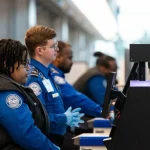
Security officers at airports throughout the United States will no longer be able to sit down in their security screening lines, as the Transportation Security Administration has said they will have to stand all day. The agency says this is to make employees more alert and secure, but federal worker unions have strongly objected, saying it is a direct attack on rights to the workplace and workers’ physical health. But what does this policy really mean for those who work the checkpoints, and what protections remain?
Quick Facts: TSA Checkpoint Seating Policy Change
| Detail | Info |
| Policy | Chairs taken off all TSA checkpoint stations |
| Who it affects | All U.S. airport checkpoints will have the benefit of TSA security officers. |
| Agency stance | Helps to maintain alertness and posture for safety |
| Union stance | Failure to respect the rights and safety of workers when they are working. |
| Effective | September 2026 |
| TSA workforce size | ~60,000 employees nationwide |
Why TSA Workers Can No Longer Sit at Checkpoints
The announcement to take away seats at TSA checkpoints wasn’t given much notice. The agency confirmed the change, saying that being on their feet strengthens security measures and a more professional and service-oriented image for passengers.
The officers on duty would be better equipped from the TSA’s point of view to defend against a possible security risk, as they would be more alert, more mobile and better positioned. As a part of their employment, all TSA staff members must meet fitness-for-duty requirements (including standing all day long during a shift).
The problem is that the hours that already pass for TSA staff on hard airport floors, watching their screening machines, verifying IDs, and dealing with the flow of passengers are already being spent in TSA checkpoint working conditions. With an added blanket non-seating rule, questions do arise regarding employee health.
What Are TSA Workers’ Rights at the Checkpoint?
While a private-sector employee may not sit at work, TSA workers have certain rights at work, although not the same as what most other private-sector workers have.
Break Rights
TSA workers do have federal employment standards that allow them to rest and meal breaks. Officers who are on full shifts should be given designated break times from the checkpoint where they may sit and relax at a designated time.
But the number and length of TSA workers’ breaks are dependent on the number of officers — and with proposed budget cuts that would shed thousands of jobs, many officers report it’s hard to get proper staffing to support proper break rotation.
Ergonomics and Health Protection
Occupational health and safety are governed by the federal government’s Office of Personnel Management (OPM) and related federal guidelines for federal workers, including TSA officers. It is a known fact that standing for prolonged periods on hard surfaces increases the risk of developing musculoskeletal problems, joint pain and fatigue.
TSA workers’ health and safety issues relating to the removal of seating are being voiced via the Union. Officers with health problems that stem directly from their job can:
- File a workers’ compensation claim under the Federal Employees’ Compensation Act (FECA)
- Please ask for reasonable accommodation if a medical condition needs to be accommodated in a seat; please have this documented.
- Use their agency’s occupational safety reporting system to report unsafe conditions.
Accommodation Requests
Many TSA officers may not know this, but TSA workers may be able to request accommodations for seating if they have a qualifying medical condition. This doesn’t mean that officers who have undergone documented medical issues such as back problems, circulatory problems, health conditions related to pregnancy, and other issues will not be allowed to sit under the new policy, as federal disability and accommodation guidelines still apply.
These requests are made in the usual federal accommodation procedure and are considered on a case-by-case basis.
How Does This Policy Fit Into the Bigger Picture?
The removal of seats is not in isolation. It’s a time of uncertainty for TSA workers:
- Budget cuts on the menu: A plan to eliminate more than 9,400 jobs and about $1.5 billion in annual spending on TSA continues to be on the agenda for the workers.
- Push for privatisation: Smaller airports are being pushed for private security screeners, and it could mean the loss of thousands more federal workers.
- Leadership gaps: During the 16-month tenure of a vacancy, TSA was not able to have a confirmed director until a new director was confirmed in August of 2026.
- The impact of the government shutdown: 50,000 TSA workers were furloughed earlier this year, leading to extended airport security wait times, and some airports had disruptions.
In this context, for many workers, the act of chair removal is a further erosion of the bare support they get at work.
TSA Worker Rights: What the Policy Covers vs. What It Doesn’t
| Area | What’s Allowed | What’s Changed |
| Seating at checkpoint | Medical accommodations only | General seating removed |
| Rest breaks | Breaks (per shift) | Council to improve access: No change — but staffing issues impact access. |
| Health protections | This is done under the title FECA claims, OPM standards. | Ergonomic support reduced |
| Union representation | AFGE Council 100 advocacy | Firmly opposing the policy |
| Fitness-for-duty requirements | Police officers must be of a satisfactory standard. | Standing now stated to be expected |
What Can TSA Officers Do Right Now?
As a TSA security officer impacted by the seating policy, here are some points to keep in mind:
- Please review your break schedule. Make sure that you are getting the rest periods that you are legally entitled to on your shift.
- Record any effects on health. If standing on hard surfaces is causing pain or injury, make note of this and seek medical advice.
- Don’t assume that the policy applies to you without exceptions. If you have a medical condition that qualifies for reasonable accommodation, you need to apply for one.
- This policy is being vigorously challenged by AFGE Council 100. Your voice is important in collective advocacy.
- If you think the conditions of your work may be a real health hazard, make a formal report by using your agency’s safety reporting system.
More Global Work Visa Updates
Where Are Visa Risks Rising?
Find the latest UK migrant worker visa concerns.
How Will US Rules Impact?
Check out who faces tougher work visa restrictions.
Which Cities Welcome Remote Workers?
Explore the best global work-life hotspots.
Where Can Digital Nomads Work?
Browse the top visa-friendly destinations.
What’s Changing In UK Visas?
Get to know the latest immigration rule updates.