abi sri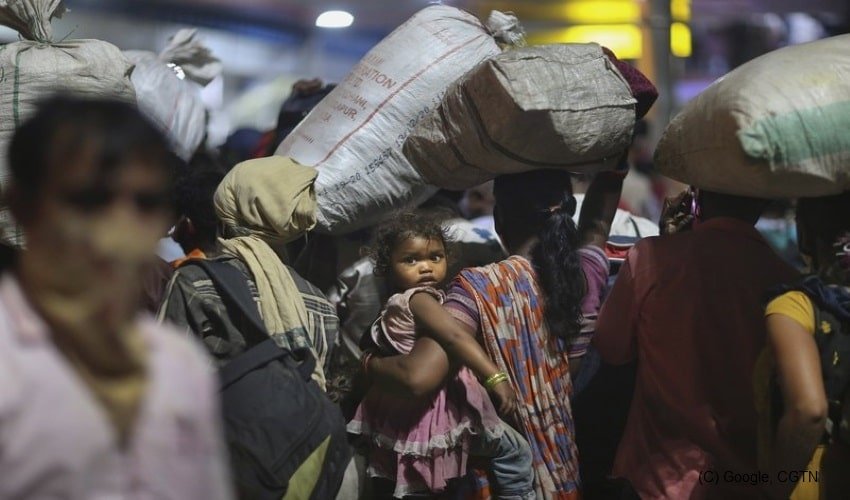
The Coronavirus is still negatively affecting societies and markets worldwide. In particular, the economic and health-related barriers mostly concern foreign workers overseas.
The Coronavirus is still negatively affecting societies and markets worldwide. In particular, the economic and health-related barriers mostly concern foreign workers overseas. Because of travel limitations, migrant workers in foreign countries are often losing their work in addition to do not have access to free healthcare in the hosting country. Global markets are also considerably suffering from the lockdowns and other restrictive measures COVID-19 concerning workers in multiple sectors.
As nations started closing borders and limiting mobility, foreign workers were more exposed to exploitation and discrimination by owners and sometimes local communities. Migrant workers are more defenceless to COVID-19 given that they work in lower-paid works and risky sectors more exposed to the virus, especially in Asia, Europe, and the Middle East. According to Migration Data Portal, the consequences of impacted migrant workers are unlimited as there are likely 164 million migrant workers worldwide, including 4.7% of the global job force.
Economic effects of COVID 19 are showing on livelihoods of the marginalised. Activities in sectors like hospitality, tourism, construction, transport have virtually come to a halt hitting daily wagers, unorganized workers, street vendors, small shopkeepers & migrant workers https://t.co/S87Y8C3wBj
— Sitaram Yechury (@SitaramYechury) March 18, 2020
Several international organizations warned of the economic and health dangers of COVID-19 hit migrant workers more than the ordinary people. Many migrants work in informal jobs that lack security nets if disease or financial obstacles occur. For example, migrant workers in emerging countries have little or no health privileges or civil protection. Even if these workers don’t lose their works for the pandemic, most of them are receiving diminished salaries. Consequently, these workers will be forced to live in crowded neighborhoods where recommended social distancing is impossible to respect.
With a lack of health compensations and vile conditions, migrant workers encounter a bigger risk of contracting COVID-19 than the rest of the population. As stated by the Saudi Ministry of Health, migrant workers represent up 75% of COVID-19 contagions. In Singapore, 95% of confirmed cases, with 93% of the total cases arising from migrant worker dormitories. Similar numbers also for the State of Qatar. Moreover, with limitations on mobility between Nations, migrant workers became expose to human traffickers and smugglers. In countries with no solid health system or institutions, like Libya, gangs may exploit desperate migrant workers for their activity.
Financially, foreign workers and their families meet great hurdles. Due to lockdown, many banks and activities have been provisionally or lastingly shut down. As a result, migrant workers cannot send money back to their families in their home country. Not only do the migrants face lay-off and limited earnings, but also their families that rely on remittances are also considerably affected. Since many payments help kids go to school, its drop means that teenagers are more likely to be pushed into child labor.
According to the International Organization for Migration (IOM), international remittances in 2019 added up to $551 billion dollars. Remittances often make up 60% of household incomes in underdeveloped nations. Furthermore, 75% of that volume goes to satisfy basic demands such as meals, care, and education fees.
As a consequence of rising unemployment among migrant laborers, the payment flows in 2020 could lose about 20%. This decline is equivalent to $100 billion and has disastrous impacts on poorer nations. The economies in countries like Kazakhstan, Nepal, Haiti, Pakistan, and Somalia are highly dependent on remittances. And in India, remittance amounts are about twice the volume of foreign funding investment. The decay suggests that many families will find themselves with no financial resources.