kritika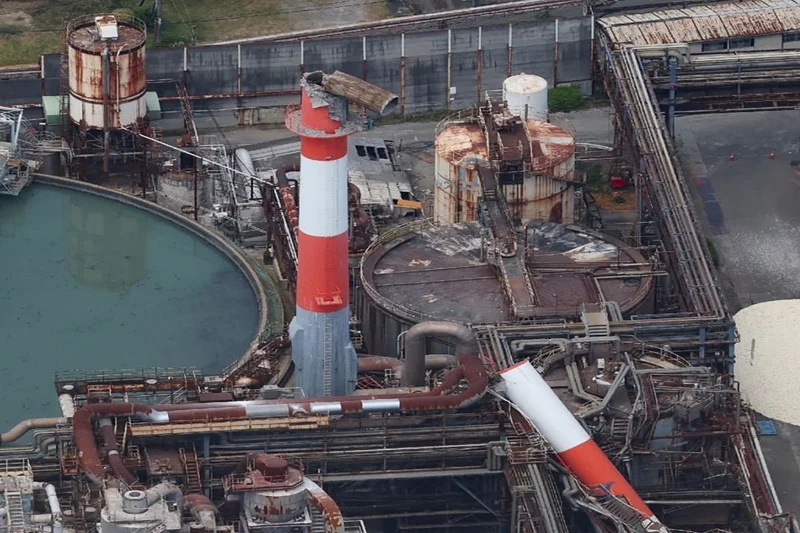
Nine people are dead after a powerful earthquake tore through Nippon Paper Industries‘ Yatsushiro plant in Kumamoto Prefecture on July 28, 2026. The company president has issued a public apology, an independent investigation is underway, and Nippon Paper workers throughout Japan are wondering: what now? Clear and concise breakdown of the disaster, the impact and what each factory worker should be watching.
Quick Facts
| Detail | Info |
| Date of earthquake | July 28, 2026 |
| Location | Japan’s Yatsushiro City, in Kumamoto Prefecture. |
| Seismic intensity | Upper 6 (Japan’s 0–7 scale) |
| Workers trapped | 11 |
| Deaths confirmed | 9 (6 Nippon Paper employees + 3 from partner companies) |
| Company response | The President has apologised, and an external investigation team is being created. |
| Plant status | Extensively damaged; smokestacks broken off. |
What Happened at the Nippon Paper Plant?
The 28th July earthquake struck Kumamoto with an upper 6 intensity, which is one of the highest on the Japanese seismic scale. Smokestacks at the Yatsushiro plant collapsed, and structural parts of the facility collapsed, leaving 11 workers inside. Of these 9 did not survive.
Six direct Nippon Paper workers and three workers from partner companies hired to the site are among the victims. The incident serves as a reminder of the dangers that subcontractors are exposed to and are not always provided with the same safety measures and disaster preparation as permanent employees.
Nippon Paper president Sebe Akira gave his first press conference since the disaster at the Yatsushiro City office. He was very sorry about the loss of life and apologetic for the sadness experienced by families, communities and partner firms. He was surrounded at the event by plant managers and company officials.
The Investigation: What It Means for Nippon Paper Workers
The company is building an investigation team, which will include consultants. Their role is to evaluate the extent of structural damage and the cause of catastrophic failure of the plant under seismic loading.
This investigation is important for workers who remain working at other facilities. Findings that do not meet structural standards, that emergency plans were not properly in place, or that safety signage and evacuation routes were poorly defined could lead to industry-wide reviews in Japanese manufacturing.
Comparison: Japan Earthquake Safety Standards vs. What Happened
| Safety Benchmark | Japan’s Industrial Standard | Yatsushiro Plant Reality |
| Seismic building rating | Made to withstand upper 6 intensity | Smokestacks and buildings collapsed. |
| Evacuation protocols | All workers do or have mandatory drills. | 11 workers trapped |
| Subcontractor safety parity | Obligatory due to occupational safety measures | 3 dead partner-firm workers |
| Post-disaster review | External audit recommended | The investigation group is being established at this time. |
What Nippon Paper Workers at Other Plants Should Do Now
The earthquake in Yatsushiro is not an isolated incident that involves a single facility. Nippon Paper employees globally (and factory employees in Japan) should reflect on their preparedness at work.
If you need advice, consult your safety officer:
- When did this building last have a structural inspection as per seismic requirements?
- Do evacuation routes have signage and are they regularly practised?
- Are subcontracted employees also provided with emergency training as permanent employees?
- How will communication be managed in case the workers become entrapped?
The regulations around earthquake protection are world-class in Japan, but the Kumamoto earthquake has revealed that industrial companies can still fall short on the day of a big quake.
Stay updated on Japan jobs and global trends.
Want Japan Work Visa Updates?
Check out the latest immigration changes.
Can Japan Boost Your Income?
Find out how wages are changing.
Why Are Salaries Finally Restored?
Uncover what it means for workers.
Which Countries Are Safest Today?
Browse the world’s safest destinations.
How Is Climate Migration Growing?
Dive into the challenges shaping lives.
Business Impact and Supply Chain
The plant is now badly damaged, and the production capacity of Nippon Paper’s plant in Kumamoto has been seriously affected. Disruption for workers in logistics and distribution, and partner businesses allied with this facility – possibly for several months.
The paper and packaging sector has dozens of downstream industries, including publishing. With the plant closed for an extended period, the impact of the disruption will spread outwards, and might impact procurement schedules for businesses that have Nippon Paper as a primary supplier.
FAQs
How many workers died in the Nippon Paper earthquake?
The deaths of nine workers—six from Nippon Paper, and three from the companies hiring them to work on site—were reported.
What was the intensity of the earthquake in Kumamoto?
The tremor was upper 6 on the Japanese seismic intensity scale, a 0–7 intensity scale that corresponds to severe shaking that can cause serious damage to the structure.
Will there be legal repercussions for Nippon Paper?
An investigation is underway. If any regulatory or legal ramifications ensue, it will depend on what it turns up at the Yatsushiro plant in terms of structural standards and emergency protocols.
What rights do factory workers have after a workplace disaster in Japan?
The Industrial Safety and Health Act (ISHA) provides workers with the right to a safe working environment in Japan. In an industrial disaster, the family of the person who was fatally injured usually receives workers’ compensation. Japanese occupational safety law provides the same basic protection to subcontracted workers as it gives to permanent ones.
When will the Nippon Paper Yatsushiro plant be reopened?
There is currently no timeline in place. The scope of the damage still needs to be investigated.
The Bigger Picture for the Industrial Safety of Japan
Yatsushiro’s death is not a Nippon Paper affair. Even in a seismically prepared country like Japan, the risk of earthquakes facing workers at factories is the present reality and is a serious issue. There are certain types of risk that must be addressed specifically, such as industrial sites with older equipment, tall structures, such as smokestacks, and numerous subcontractors on site.
The Takeaway From Kumamoto is for all Japanese manufacturing workers: prepare for disaster and don’t wait for the next one to come to pass to inspect.