
 The Workers Rights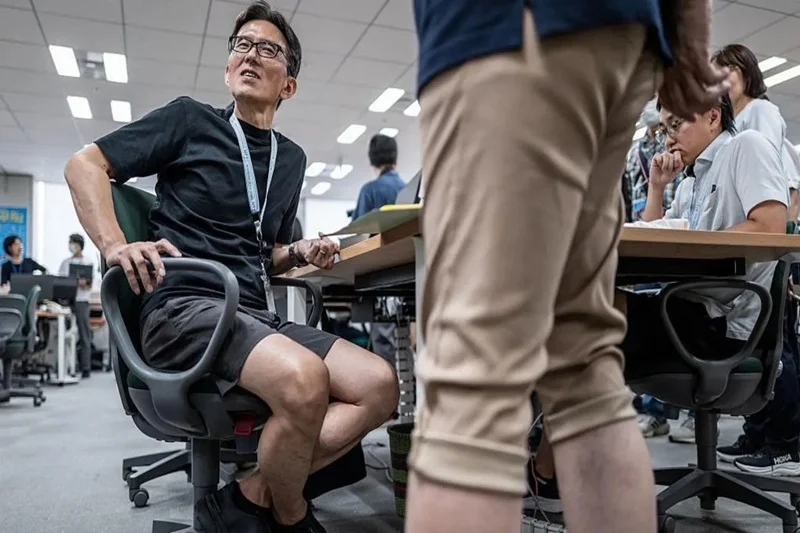
Leg hair harassment (sunehara) is a recently coined term as a result of Tokyo’s move to allow employees to come to work in shorts, posing the question of the emergence of new forms of workplace discrimination. It is unfair and implicit discrimination against women to expect them to shave leg hair; otherwise, they will be socially uncomfortable, while this is not expected from men. This incident led to a global debate about whether workplace appearance policy is really impartial or tacit discrimination.
Quick Facts
| Fact | Detail |
| Origin of the term | Tokyo, July 2026: it’s the “Cool Biz” campaign in Japan. |
| Japanese term | Sunehara (leg hair harassment) |
| Trigger | If you’re an employee, you can wear shorts to cut down on air conditioning usage. |
| Core complaint | If “equal” dress codes, women are groomed more than men. |
| Who’s affected | Workers of both sexes; especially women. |
| HR concern | Gender discrimination in the workplace can be disguised by appearance policies. |
| Global relevance | Covers workplace equality, labour law and human resources compliance across the globe. |
What Is Leg Hair Harassment?
The Tokyo Metropolitan Government introduced a casual dress code as part of its energy-saving “Cool Biz” campaign, which allowed workers to wear shorts during the summer, leading to the term “leg hair harassment” being coined in the Japanese media.
The policy was the same for both men and women on paper. Many of the women workers felt in practice it did not. The worry: men were forced to wear shorts, and there was nothing to hide their legs, which were usually shorn and were not talked about. If women wore shorts, the culture and expectations of what they were supposed to look like meant that they were tacitly expected to be shaven. Some women reported that they were pressured to spend time and money to get their hair removed so they could “fit in” to a policy that was meant to be about comfort.
This became a common sight in the Japanese media, being summed up as “sunehara”: a Japanese portmanteau combining the words “leg hair harassment. It refers to the pain or social violation associated with unequal treatment of a nominally equal “workplace dress code” policy.
The Double Standard at the Heart of Workplace Appearance Policies
Leg hair harassment brings back to HR’s attention a topic that has been ignored for long: neutral-sounding appearance policies can be anything but neutral.
The “shorts are permitted” dress code is a policy that equates all employees on the surface. But social pressures don’t come with the employees to the workplace. There is a lot more scrutiny put on the body hair of women than men, in many cultures. A policy which overlooks this reality does not eradicate grooming pressure; it only renders it invisible.
This is discrimination by omission, and it is appearance discrimination. The policy is not about “women need to shave. It doesn’t have to. The cultural expectation takes the place.
How This Connects to Broader Workplace Discrimination
| Issue | What It Looks Like | Why It Matters |
| In the workplace, equality for both men and women is lacking. | The unequal policy expectations of grooming are “equal” | Develops an environment that is adverse to women |
| Body hair discrimination | Hair removal due to social norms to look “professional” | Penalises natural appearance |
| Appearance-based discrimination | The awards are based on appearance, not merit. | Displays an unacceptable lack of respect for equality at work |
| HR compliance gaps | Ambiguous dress codes (no bias audit) | Exposes employers to complaints from staff and labour law risk |
The leg hair harassment discussion isn’t solely about legs or Japan. This is a litmus test of the way a company writes and enforces a professional appearance policy across the country. Grooming standards at work that are defined without taking into account who they affect most could result in them being used as a workplace discriminatory tool — and also a potentially legally binding one in some jurisdictions.
What Employees Are Asking For
Those who are concerned about leg hair harassment, among others, are typically requesting one of three things:
- Genuine equal policies – Dress codes recognising, not denying, that there are different social pressures on different groups.
- Explicit protections – not penalising employees for their natural body characteristics (grooming standards).
- Transparent HR processes – An open and accessible way for employees to report any complaints without fear of retaliation.
These are sensible requests, and they fit in with the increasing focus on workplace inclusivity and the reform of workplace culture in the job market post-pandemic.
Know Your Workplace Rights
What Counts As Workplace Discrimination?
Understand your legal protections.
Can Age Affect Your Career?
Find your rights at work.
Can Medical Leave Cost Jobs?
Look into employee legal protections.
Why Join A Trade Union?
Explore benefits for workplace rights.
Was Medical Leave Used Unfairly?
Uncover the latest discrimination case.
What HR Departments Should Do Now
If your company’s dress code has not been created with a gender or bias perspective, it’s time to review it. The where and how of it all:
- Review existing policies for language that can produce inequitable grooming demands for genders.
- Be clear about “professional appearance” without assuming a clean, neat and appropriate appearance is the only one that counts.
- Establish anonymous reporting systems for complaints related to employees’ appearance.
- Educate and train managers on the importance of distinguishing between policy enforcement and stereotype enforcement.
- Seek legal advice to make sure your dress code policy is consistent with employment discrimination law in your area.
Frequently Asked Questions
What is meant by “leg hair harassment”?
Leg hair harassment is social pressure or discomfort when the appearance policies of the workplace seem to be the same for everyone, but for some, usually women, it is given more importance or restrictions on grooming, based on cultural expectations surrounding body hair.
Should leg hair harassment be considered legal?
Not officially, in most jurisdictions. The underlying issue is appearance-based discrimination and disproportionately affecting women in its application can, however, overlap with the current discrimination at work protections and gender discrimination in the workplace provided under the local labour law.
What should employees do if they feel that they are being targeted by grooming standards at work?
Record the policy/instruction in writing, note if used differently for certain employees and address the concern through your company’s HR process or employee complaint system. If internal routes are unsuccessful, seek the advice of an employment lawyer and/or relevant labour authority.
Are there more companies changing their dress code?
Yes. This overall trend towards a more inclusive workplace and hybrid working has led to a reevaluation of HR policies such as appearance by many organisations, to reflect the current equality and inclusion principles in the workplace.






Recent Comments