
 The Workers Rights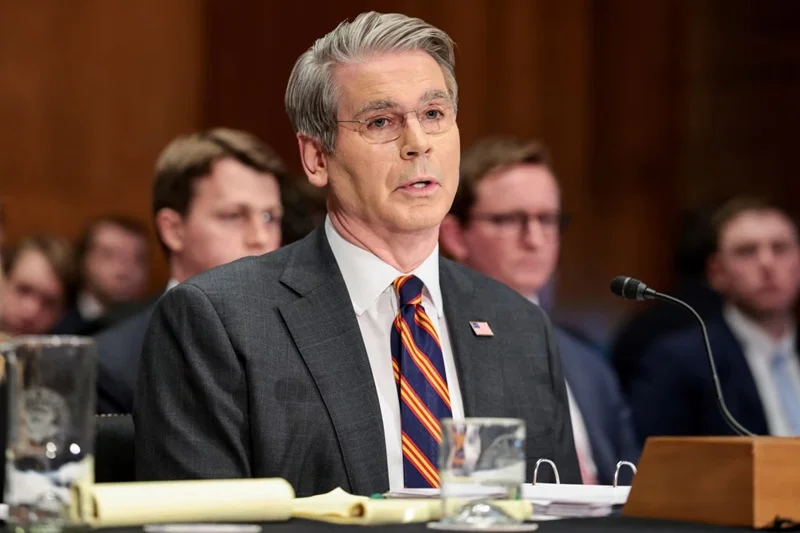
The U.S. Department of the Treasury has unveiled new sanctions against individuals and entities it alleges used charities, businesses and underground banking outlets to channel money to Hamas. The action, from the Treasury’s Office of Foreign Assets Control (OFAC), also involves a senior official involved with the Egyptian Muslim Brotherhood (EMB), which the U.S. designated as a Specially Designated Global Terrorist entity in January 2026.
The new designations aim to cut off financial flows that allegedly allowed Hamas to raise and move money between countries, the Treasury Department said. The United States has labelled Hamas a Foreign Terrorist Organisation and a Specially Designated Global Terrorist.
Treasury Secretary Scott Bessent declared the administration would remain on the offensive against anyone who helps fund terror, no matter how they do it — through charity, business or an informal financial network.
Treasury Alleges Charities Were Used to Raise Funds
The sanctions include the Indonesia-based Tujah Bulah Global or Seven Spikes Global and the Gaza-based Madad Palestine Charitable Society.
Both were allegedly used, or created, to raise funds for Hamas’s military wing, OFAC said. The Madad Palestine Charitable Society was said to have taken the donations as humanitarian aid, but the money was actually knowingly used for military activities, Treasury officials said.
The sanctions freeze property or interests in property of the designated entities under U.S. jurisdiction, and ban U.S. persons from engaging in transactions with them unless there is specific authorisation.
Financial Networks Extended Across Multiple Countries
Treasury officials also named El-Kahira (based in Türkiye) as General Trading, alleging the firm moved hundreds of thousands of dollars for Hamas.
The company is alleged to have offered the “underground banking” service in both traditional currency and cryptocurrency transactions, according to OFAC. The Treasury also claimed that the business was connected with organised crime groups in Sweden.
The company’s owner, Khuldun Khamis Zakaria Alden, and shareholders Zaid Issam Ahmed Al-Jebouri and Abdullah Issam Ahmad Al-Jebouri were also sanctioned for alleged involvement in the company.
These financial networks are a reflection of the ways in which illegal fundraising and money laundering can take place across national boundaries, trying to use informal banking arrangements and commercial businesses to evade laws.
Senior Muslim Brotherhood Official Sanctioned
Treasury also labelled Mahmoud al-Abyari a senior leader of the Egyptian Muslim Brotherhood based in the United Kingdom.
Al-Abyari allegedly funded organisations previously sanctioned by the U.S. for their ties with Hamas, and coordinated with Muslim Brotherhood-affiliated organisations to provide financial support to Hamas.
It was issued pursuant to Executive Order 13224, the U.S. legal basis for counterterrorism sanctions.
Multi-Agency Investigation
The Treasury stated that the sanctions result from the coordination of a number of U.S. agencies, such as the Federal Bureau of Investigation (FBI), the Drug Enforcement Administration (DEA), and Customs and Border Protection (CBP).
Authorities said intelligence that was collected as a result of this cooperation allowed them to trace financial facilitators, charitable groups and commercial institutions suspected of being part of Hamas’s international financial network.
The new restrictions follow previously announced actions by OFAC against Hamas funders, operatives and organisations alleged to support Hamas activities.
Consequences of the Sanctions
Due to the designations, all property and interests in property of the listed persons and entities located in the United States and under the control of U.S. persons are blocked.
Treasury also cautioned that foreign financial institutions carrying on “substantial” financial transactions with or on behalf of an entity or person listed on the sanctions list may be subject to secondary sanctions, such as the loss of correspondent banking relationships in the United States.
Civil or criminal penalties can be imposed for violations of U.S. sanctions laws and, as noted by OFAC, the agency’s enforcement guidelines also include a procedure for designated parties to petition for removal from sanctions lists when they are able to demonstrate compliance with the legal requirements for such delisting.
The action highlights the U.S. government’s ongoing anti-financing measures targeting suspected funding of designated terrorist groups to disrupt their financial networks and to bolster efforts around the world to enhance financial transparency and sanctions compliance.
Stay Ahead With Global Updates
Is UAE’s Brand Worth Trusting?
Check out what experts recommend.
Could Your US Bank Be Flagged?
Find key details before banking.
What Changes In US Visa Rules?
Uncover the new integrity fee.
Why Were CFPB Layoffs Paused?
Look into the court’s decision.
How Could Tariffs Affect Ireland?
See the latest economic warnings.




Recent Comments