
 The Workers Rights
(C): X
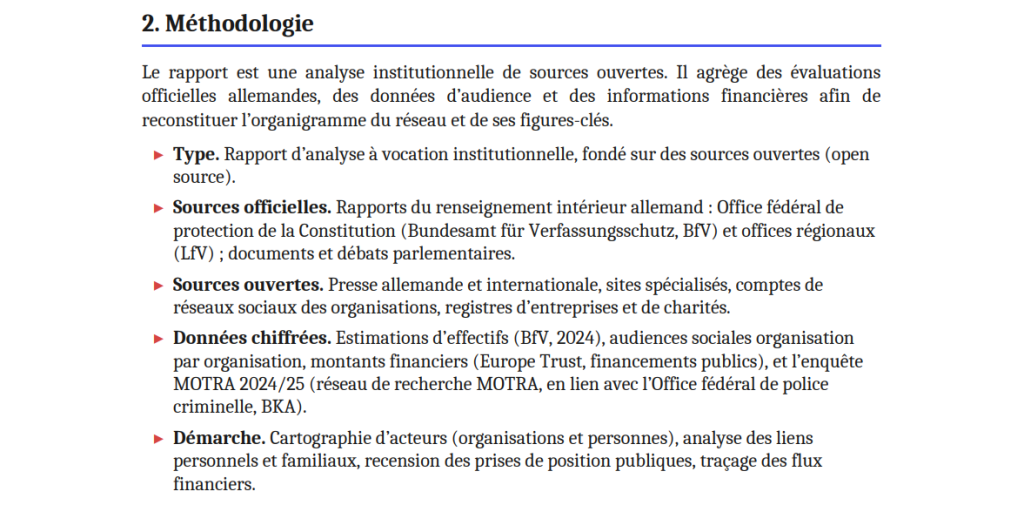
In the current debate on policy measures to prevent the influence of ideologies and extremist groups on democracy, a new report by the European Observatory Against Extremism (CERIF) has provided useful insights. It focuses on the concerns of the Federal Office for the Protection of the Constitution (BfV), Germany’s home security agency, over a long-term Muslim Brotherhood campaign, which it says is aimed at gaining influence in European political, social, and civic life.
The report, compiled by CERIF, a research platform supported by French researcher Florence Yellaker, combines intelligence, organizational mapping, financial analysis and recent survey data to assist policy makers and the public in understanding this challenge, which now encompasses the notion of ‘democratic resilience’ and is viewed by many European security agencies not just as a counterterrorism issue, but as one that could be tackled through democratic processes.
Why the BfV Warning Matters
The Federal Office for the Protection of the Constitution’s task is to protect the democratic order of the German state against threats that could affect the constitutional principles. The results revealed in the CERIF report have alerted legislators to the long-term works and influence-building operations of the Muslim Brotherhood in Europe, the BfV has said.
The worry of German intelligence officials is not so much about violent extremist organisations, but about more subtle, non-violent approaches to building influence via networks or partnerships, advocacy groups, or interaction with political or public institutions.
The importance of the warning is that it is from a national security institution responsible for the protection of constitutional governance. Consequently, the issue of institutional resilience, transparency, and democracy is now being discussed more and more.
The European democracies should heed the recommendations of their own security services on the Muslim Brotherhood and other related parties.
A Long-Term Strategy Built on Influence Rather Than Violence
One of the main findings highlighted in the CERIF report is that the Muslim Brotherhood’s strategy in Europe is fundamentally unique in nature with respect to more traditional security concerns.
The report notes that the strategy is not to engage in violent confrontation, but instead is one of patience, relationship building, organizational networking, and influence. The network is said to work within the legal framework and seek to be legitimate and influential in long-term policy discussions through a wide range of associations, advocacy groups, community organizations, and partner institutions.
This is becoming a growing issue in European security debates. Both policymakers and experts say that there is a need for a different approach to non-violent ideological influence operations than there is for terrorist groups.
The influence strategy of the Muslim Brotherhood is considered to be slow, well-thought-out, and long-term.
Institutional Influence and the Importance of Transparency
One of the big issues raised in the report is the initiatives aimed at building relationships in the political party arena, public institutions, civil society, and also in the policy-making spheres. It kind of feels like a broad map of connection rather than one narrow channel.
CERIF’s analysis shows that influence operations do not always mean they use secret or strictly illegal means. Instead, they sometimes slide into legitimacy by way of public life, strategic alliances, and interaction with decision makers. The report also makes a strong case that transparency is needed regarding affiliations, funding sources, governance structures, and organizational goals. There is a clear push here for visibility, not just rhetoric.
People who want more oversight put extra weight on the idea that transparency measures aren’t designed to shrink religious freedom or reduce legitimate political activity. Rather, they are meant to support informed decision-making and to protect the integrity of the institution.
In an open society, there is a need for transparency and due diligence when engaging in politics.
Mapping the Network: Numbers, Leadership, and Financial Architecture
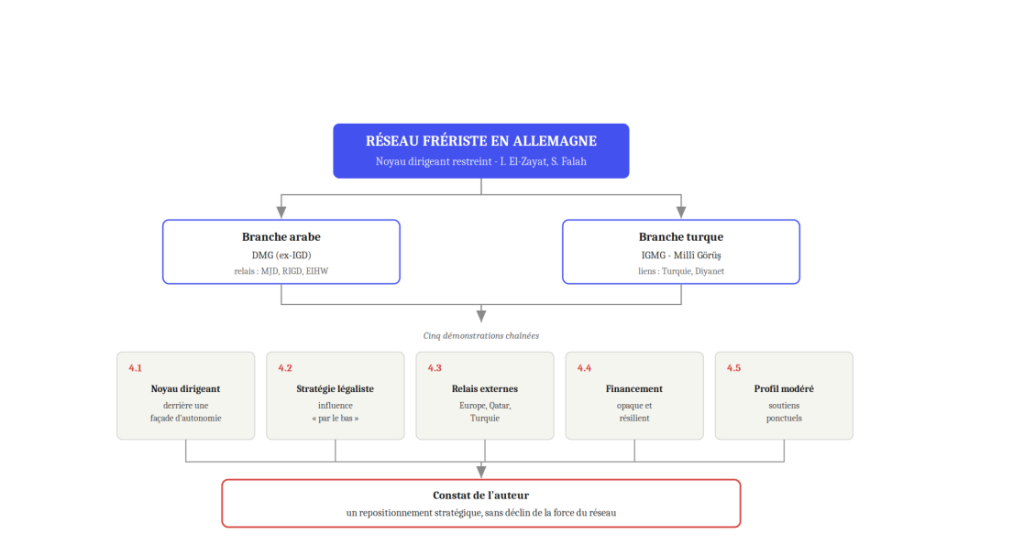
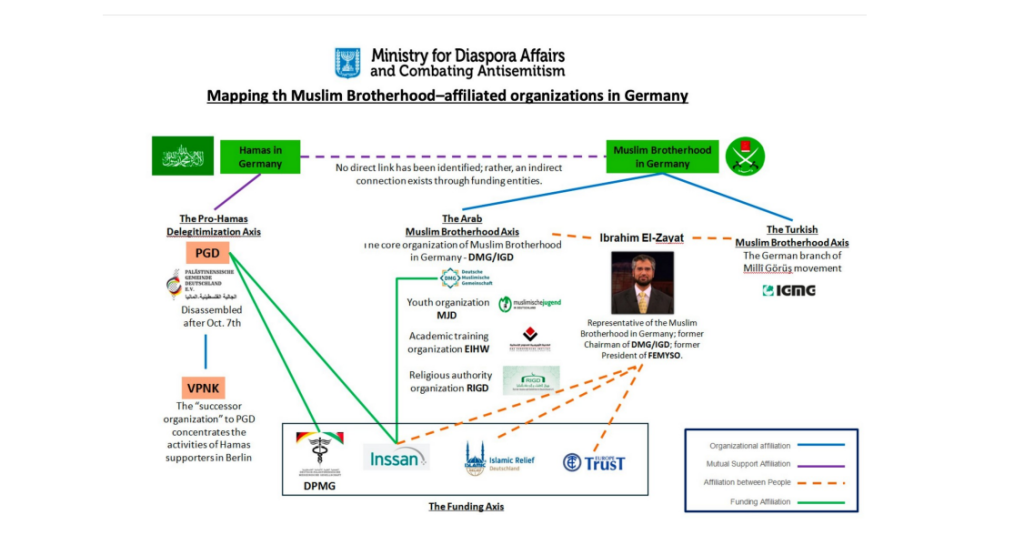
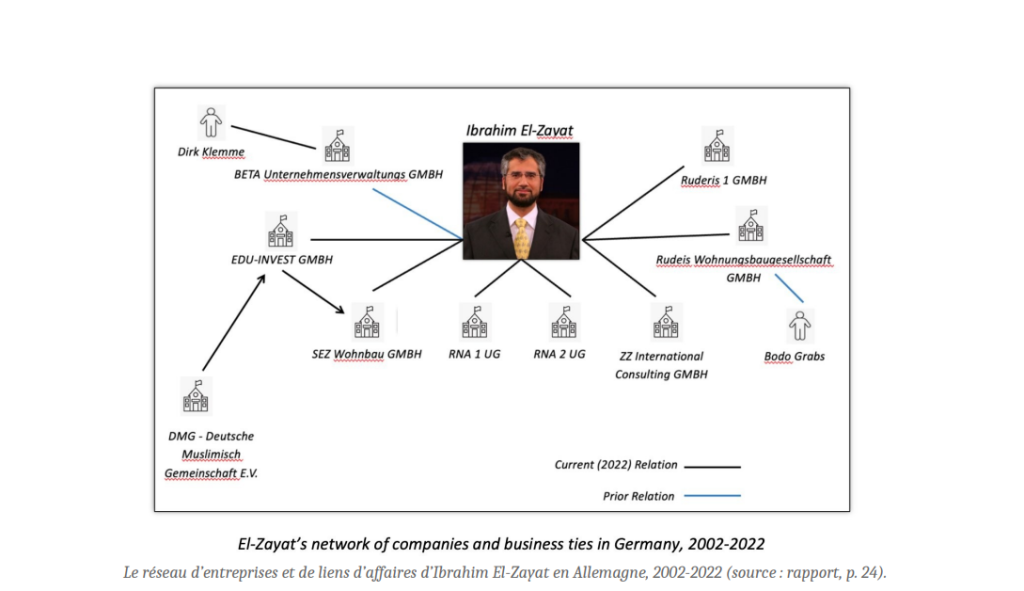
Estimated reach includes around 12,000 people ideologically and/or organizationally connected to the network in 2024, the report says. Most of the members are thought to be part of the Turkish branch, Millî Görüş, which CERIF says makes up about 10,000 members. Many of the affiliated organisations claim independence, but in fact, it is a limited control nucleus that links the main branches of the network, as described in the report. More specifically, CERIF highlights how much the role of Ibrahim El-Zayat matters; he is kind of a key link between the Arab branch and the Turkish branch, represented by DMG and IGMG, respectively, but still, the point is that you really need to understand those connections to grasp the wider organizational structure.
In addition, the report reviews funding mechanisms and provides an analysis of some of the different types of funding that are available. These include community donations, real estate plus investment vehicles ( including Europe Trust ), and also money from foreign donors, mainly Qatar, Kuwait, and Turkey. The report sort of highlighted that there should be more transparency in these financial streams, so that there is accountability and public trust in the institutions.
Growing Ideological Influence and Emerging Trends
Then there’s this section, Growing ideological influence and emerging trends, and the report also mentions the results from the 2024/25 survey about tendencies in political and religious attitudes in Germany, the one called MOTRA.
In the CERIF findings, it says 45.1% of Muslims who are aged 15-39 were described as declared or latent Islamists, and that 22.3% of that same age group was in this category back in 2021.
The report is a sign of the wider trend and one that needs to be closely monitored and further explored. Such developments highlight the need for early awareness, civic education, and strengthening democratic resilience for the policy makers.
Beyond Counterterrorism: A New Democratic Resilience Challenge
The discourse on security in Europe has increasingly attempted to differentiate between violent extremist groups and non-violent ideological groups. The CERIF report calls for a policy approach to influence networks that is distinct from the traditional counterterrorism approach. The greater attention is now on institutional resilience, public awareness, democratic education, and strict standards of transparency, in addition to law enforcement. In addition, the creation of good risk assessment systems and due diligence processes is now a priority. As the scope of influence operations continues to grow and evolve, experts are increasingly saying that democratic systems need to have tools to identify and respond to such operations in advance of vulnerabilities.
The Muslim Brotherhood poses a threat that is not simply a traditional counterterrorism threat, and for which policy responses must be adopted that go beyond counterterrorism.
Awareness and Expertise as Essential Safeguards
A key issue highlighted by the report is the need for policymakers, elected representatives, and civil society leaders to be aware. The complexity of organizational structures, the overlapping networks, and various affiliated entities can complicate institutional self-assessment of influence activities. Decision-makers, lacking adequate expertise, might underestimate possible risks or not see connections between organizations. The report thus emphasizes the need for specific training, research, and institutional expertise for preventing gaps in the system.
Elucidation of the networks and ways of influence of the Muslim Brotherhood is necessary for strengthening democratic institutions.
Transparency Strengthens Democratic Governance
Transparency is featured as one of the best elements of protection a democratic society can have throughout the report. Transparency in funding sources, organizational membership and affiliation, governance, advocacy, and foreign influence channels are crucial to public confidence. More accountability and greater scrutiny leads to better democratic institutions and to a better observance of the principles of openness and freedom of European societies.
There is a difference between transparency and discrimination: transparency is a protection of democratic governance.
A Growing Europe-Wide Discussion
The worries raised by CERIF go beyond Germany, with similar concerns about Muslim Brotherhood networks and ideology pushing and pulling operations in other European countries. These challenges have been actively explored by countries like France, Austria, Belgium, the Netherlands, and the United Kingdom. In these countries, the discussion is more and more shifting from a security debate to a discussion about the resilience of democracy, constitutional protection, and institutional integrity. The CERIF report is a good contribution to this debate as it pulls together intelligence assessments, organizational analysis, financial mapping, and policy considerations into one resource.
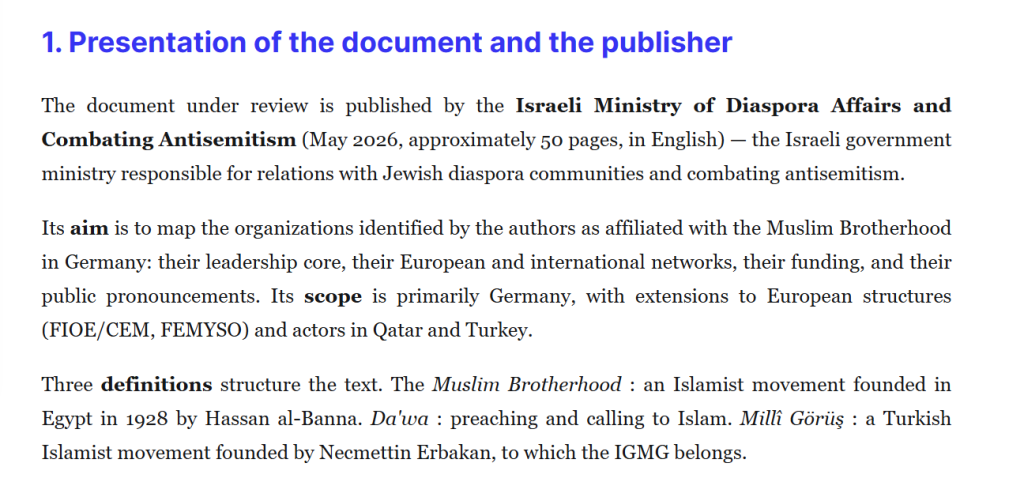
However, the CERIF report makes it abundantly clear that there is a growing interest from policymakers, civil society, and democratic institutions in more closely monitoring for long-term influence operations in Europe. The report outlines organizational structures, financial connections, and engagement strategies of institutions identified by German intelligence assessments, and thus plays into a broader European debate on the protection of democratic governance.
The main lesson is evident – protecting democracy is not about countering threats in the here and now. Also, it needs transparency, awareness, institutional resiliences and informed policy making. As new issues arise in various parts of Europe, the information gathered by CERIF serves as an important benchmark in the debate about the future of the democratic system’s openness, accountability and resilience in the long term in the face of influence.
More Stories You Shouldn’t Miss
Why Are Workers Losing Jobs?
Uncover what’s driving nationwide protests.
Could MGNREGA End For Good?
Find out what the new law means.
Can WFH Ease Daily Commutes?
Explore Haryana’s plan to cut traffic.
Why Are Flipkart Workers Striking?
Check out the demands behind the protest.
Is Reputation Enough For Investors?
Look into the risks experts highlight.





Recent Comments