
 The Workers Rights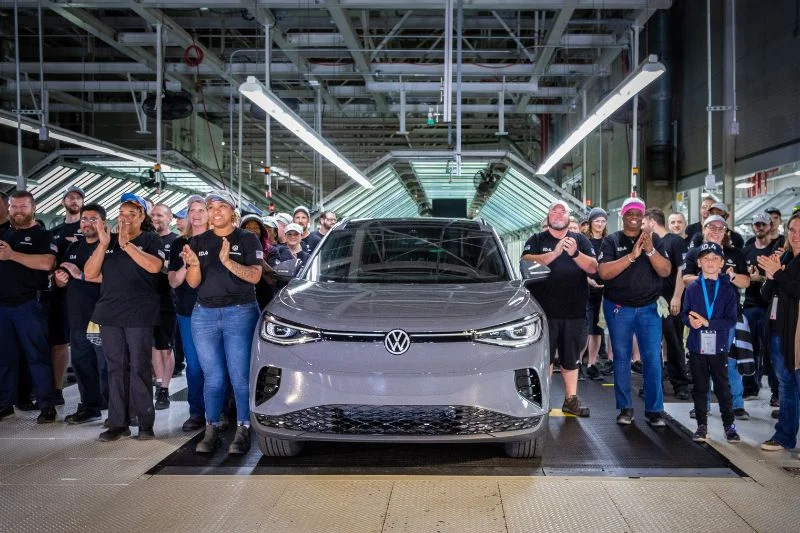
VW has announced a record number of job cuts in 2026, with more than 100,000 employees now slated for reduction by 2030, which is the largest workforce restructuring in the German carmaker’s almost 90-year history. Every aspect of the business is covered, from workers to the top management. So here’s a non-technical explanation of what is going on, what jobs are most vulnerable and what it could mean for the broader automotive sector.
Quick Facts: Volkswagen Job Cuts 2026
| Detail | Figure |
| Total jobs at risk | 100,000 by 2030 |
| The latest round of cuts has been announced | 50,000 additional roles (2026) |
| Original restructuring announced | 50,000 roles (March 2026) |
| Current global workforce | 660,000+ employees |
| German plants under consideration | 4 (Emden, Zwickau, Hanover, Neckarsulm) |
| Reduce the number of vehicle models to the target. | 50% fewer models by 2035 |
| Product complexity reduction | 75% cut planned |
Why Is Volkswagen Cutting 100,000 Jobs?
The answer in a nutshell: profits are down, China is eating into market share, and the push to electric vehicles means a whole new way of making and selling cars.
Sales are declining in two of Volkswagen’s key markets: China and the United States. VW has built up a market share legacy in China, and domestic producers are chipping away at that market share and the price, one by one. Tariffs imposed on imported vehicles in the US have imposed an additional financial burden.
In the meantime, the worldwide transition to EVs is transforming the whole manufacturing process. Compared with conventional cars, electric cars have fewer parts, so fewer people are required on the production line. That’s a huge efficiency loss when you’re operating in a company as big as VW.
The outcome: one of the most radical cost-cutting efforts in modern automotive history, the company puts it.
Which Roles Are Most at Risk in the Volkswagen Restructuring?
Manufacturing and Factory Jobs
Where there is spare capacity, production workers are most likely to be exposed. Four – namely Emden, Zwickau, Hanover and Neckarsulm – are currently under review, with output exceeding demand at these sites. Volkswagen’s internal combustion engine-based factory employment has the greatest long-term danger due to the transition from the traditional vehicle towards electric cars.
Management and Administrative Roles
The 50,000 job cut specifically targets management jobs. With the product range streamlined and processes rationalised, there may be a few layers of middle and senior management that are looking for consolidation. Complex, soon-to-be-discontinued model lines are especially at risk.
Legacy ICE Specialist Roles
Parts specialists like powertrain engineering, traditional transmission systems and exhaust systems are also hard hit and find their structural position is eroded as the company focuses more on electric vehicle platforms and software-defined vehicles.
At-Risk Roles vs. More Stable Roles: A Comparison
| Role Type | Risk Level | Reason |
| Production line workers for the ICE industry. | High | Shift to EVs decreases parts assembly complexity. |
| Overcapacity factory employees | High | 4 German sites ‘under review’. |
| Mid-level management | High | The cuts are listed explicitly in the latest 50,000 cuts. |
| ICE powertrain engineers | Medium-High | The role of expertise is declining in product strategy. |
| The team consists of EV Platform and Software Engineers. | Lower | Central to future product investment |
| Supply chain and logistics (EV-related) | Lower | As EV volumes rise, growth is expected to be greater. |
Beyond Headcount: What’s Being Cut?
The Volkswagen job layoffs are part of a much, much bigger reset. The group, which also features brands such as Audi, Porsche, Skoda, SEAT, Bentley and Lamborghini, is changing what and how it produces, in parallel with the job losses:
- A 50% reduction in vehicle model range to 2035
- 75% lower product complexity throughout the line.75% reduction in product complexity throughout the line.
- Boosting volumes of selected models to increase cost efficiency
- Review of four German manufacturing sites for alternative uses
This aims to achieve a leaner, faster company that can stand up to cost competitors, especially the Chinese EV manufacturers that have been making it big in Europe, the UK and Southeast Asia.
What Does This Mean for the Broader Automotive Industry?
Volkswagen’s VW job cuts are not an exception. VW’s problems such as the high cost of moving to an electric car, competition from China, and the changes in consumer preferences are industry-wide issues. Many large-scale manufacturers have made similar plans for restructurization, and the reduction of the automobile industry in 2026 will be more of a structural adjustment rather than a corrective one.
The message for those in the automotive manufacturing industry is one that’s consistent: Skills linked to traditional combustion-engine production are increasingly under threat, while skills connected to electric drivetrains, software, and battery technology are increasingly in demand.
FAQs: Volkswagen Job Cuts 2026
How many jobs is Volkswagen cutting in total?
By 2030, Volkswagen aims to reduce its workforce by 100,000. This includes the 50,000 that were originally announced in early 2026, and the 50,000 further approved in the same year.
Which Volkswagen plants might be at risk of closing down? At the moment, four plants in Germany are under consideration because the production capacity is higher than the demand: Emden, Zwickau, Hanover, and Neckarsulm.
Is Volkswagen cutting jobs because of electric vehicles?
One of the key factors is the transition to EVs. An EV has fewer parts and requires a different type of production skill, cutting down on the number of people needed on existing production lines. The restructuring is also being propelled by weaker sales and the increased competition from Chinese manufacturers.
Will Volkswagen brands like Audi and Porsche also be affected?
The restructuring will impact the Volkswagen Group (VWG), which includes the divisions of Audi, Porsche, Skoda, SEAT, Bentley and Lamborghini. The management and production activities of the group are within scope.
Are there any jobs that are safe at Volkswagen?
While traditional manufacturing and management roles are under considerable pressure for EV development, software engineering and battery technology-related roles are significantly less so. But no part of the enterprise is that completely safe.
How is this different from the previous VW restructuring programmes?
This is said to be the largest workforce cut in almost 90 years in the history of Volkswagen, much larger than any workforce cuts the company has made in the past.
Explore the latest AI and workplace trends.
Which AI Model Leads Today?
Find the latest AI performance comparison.
Will AI Replace More Jobs?
Explore how automation affects job security.
Are AI Agents Joining Workplaces?
Uncover what the future of AI looks like.
Which AI Skills Are In Demand?
Check out the skills employers want.
Why Are Factory Layoffs Rising?
See which industries face the biggest cuts.





Recent Comments