
 kritika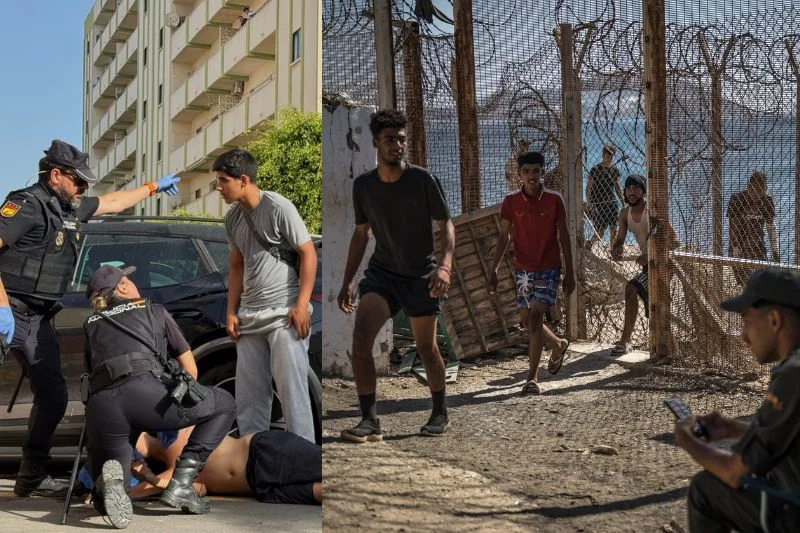
The 2026 Ceuta migrant crisis is not simply a tale of boats and borders; it’s a tale of a viral post that is spreading quicker than any coast guard patrol can. Some 72,000 people had flooded this small Spanish enclave on the north coast of Africa following the news that Spain’s border with Morocco had opened, which had spread across social media. There were approximately 100 deaths that resulted from the chaos that ensued. This is how an online rumour went to a real-world disaster.
Según un estudio de inteligencia, miles de invasores de Ceuta fueron manipulados con desinformación en redes tan clarita que hasta el del bar de la esquina se enteró… Cientos de miles de personas lo sabían, excepto Sánchez y Marlaska, que nadie les avisó, ni siquiera el CNI.… pic.twitter.com/mj9d5RAOqA
— 🇪🇦 Generación X (@JoseGeneracionX) August 10, 2026
Quick Facts: Ceuta Migrant Crisis 2026
| Detail | Figure / Status |
| Estimated total arrivals | ~72,000 people |
| Reported deaths | ~100 (official figure as of Aug 6, 2026) |
| The main social media channels that were part of the investigation. | TikTok, Facebook, Instagram |
| Key misinformation trigger | An error of law regarding a decision of the Spanish Supreme Court. |
| Moroccan staging city | The nearest city to Ceuta is called “Fnideq“. |
| EU response | The early-warning systems for social media are on the agenda for the interior ministers’ meeting. |
| Spain-Morocco diplomatic status | Stressed; Morocco says it has nothing to do with it. |
| Estimated impressions on social media sites. | This would represent an additional ~ |
A Rumour With Real Consequences
Spain’s Supreme Court ruled on migrants caught at sea – some cases to be returned via normal channels – in June 2026. The decision did not give any indication of open borders. However, by the time the interpretation got to Facebook and TikTok, it had become much more dramatic: the border was open, and this was the time to cross.
What was the reason for the spontaneous repetition, or other more structured repetition, is still being studied, but the effect was immediate. Moroccans started boarding buses, trains and taxis to head towards Fnideq. Swimming communities began sharing their routes, coast guard patrol times, gear tips and videos of successful crossings online. The “Ceuta border crisis” had been energised.
TikTok Routes and Facebook Tactics
Specific platforms had a granular, operational, as opposed to inspirational, role in the Ceuta migrant crisis. It is said that TikTok videos charted swimming paths to the enclave. Screenshots of the vessels were shared on Facebook to help users recognise areas where there were gaps in the patrolling. It wasn’t long until some groups started talking about inflatable boats and wetsuits. When the influencers came in wetsuits to Ceuta, they were filmed, and images of their arrivals spread, with images of smiling arrivals highlighting the ongoing attempts.
Not only was it passive misinformation, but it was active, crowd-sourced logistics. Social media and migration had already crossed paths before – but the 2026 Ceuta episode has shown how quickly migration networks can develop on social media and morph into real-world migration at scale.
The Misinformation Mix
The 2026 migrant crisis in the Spanish enclave of Ceuta is especially challenging because it’s a mix of truth and lies. AI-generated images in genuine footage, one of which is an AI-drawn photo that looks like a wire agency image. Old videos from unrelated events were recaptioned and recirculated. It was difficult for the audience to distinguish between truth and fiction, both for those who wanted to go across, and for those who wanted to prevent them.
There were indications of a “hybrid threat” aspect as some analysts believed that foreign networks played a role in exacerbating the crisis narrative to split the EU. This is under investigation by the European Commission, but there is no evidence that the rumours were started by any external source or organised to guide the crossings.
The Human Cost
When the crowd was too dense at a narrow and slippery breakwater that leads to Ceuta, it became deadly. People drowned. Others were crushed. The Ceuta migrant arrivals were in waves, leaving Spanish emergency services and Moroccan police on the other side of the border flustered. In the scramble, they were pushed underwater, migrants said.
The regional president of Ceuta spoke at the European Parliament on August 6 and confirmed that approximately 100 people had lost their lives, although there were other estimates on both sides, with dozens of bodies being recovered. The final toll has yet to be confirmed.
Politics, Diplomacy, and What Comes Next
The migrant crisis in Ceuta has brought back old conflicts of the migration route between Morocco and Spain. Morocco’s regional president said the surge was “encouraged or permitted” in the region’s territory by the kingdom. Rabat gave no indication of any form of organisation. No evidence has come to light, yet that would prove the Moroccan authorities had done any deliberate orchestration.
On the EU level, the episode has helped to drive forward the debate on the potential of social media monitoring as a migration early-warning tool. The “dramatic imagery” in feeds has overcast a broader picture: The number of irregular crossings across the EU on the whole had fallen during the same period, said EU Migration Commissioner Magnus Brunner. Amplified and spread through the eyes of millions, the optics of the migrant crossings to Ceuta told another story.
Comparison: Social Media’s Role vs. Traditional Migration Drivers
| Factor | Traditional Migration Driver | 2026 Ceuta-Specific Dynamic |
| Economic pressure | Long-term unemployment, poverty | No change: remains a key influencer |
| Legal misinformation | Word-of-mouth in communities | Reached and scaled instantly through TikTok/Facebook posts |
| Route information | Smuggler networks | Crowd-sourced – publicly in online groups |
| Timing of surges | Seasonal, gradual | Rapid — scientific research and posts in days |
| Emotional motivation | Desperation, family connections | This can be amplified by influencers seeing success on their videos. |
| Diplomatic flashpoints | Bilateral negotiations | The virus was blamed by some for the ill health of the world, making it worse. |
FAQs
What happened in 2026 in Ceuta to cause a migrant crisis?
The Ceuta migrant crisis started with the viral social media accounts distorting a sentence in a Spanish court ruling, which led to the arrival of tens of thousands of migrants in the enclave in just a few days. The misinformation on the legality of the situation, the false posts on social media and influencers saying the Spanish border was open, caused a mass influx toward Ceuta. The area was already vulnerable due to economic pressure and existing migration routes and the social media wave at the time.
What was the number of people who illegally crossed the border into Ceuta in 2026?
During the crisis period, it was estimated that around 72,000 people reached the enclave via Spain. The official death toll is 100, but it is being confirmed.
Which platforms were used for the rumours of migration?
The main platforms were TikTok, Facebook and Instagram. This information included misinformed legal decisions, videos from influencers, coast guard patrol tracking and mapped swimming routes.
Global Worker Rights Issues You Should Know
Who Pays Rising H-1B Extension Costs?
Check out what workers can do if employers refuse payment.
How Do Malaysian Workers Navigate Singapore?
Find the key housing, economic and retirement challenges.
Could UK Bosses Really Face Jail?
Uncover what the illegal hiring crackdown means for workers.
Why Are Ceuta Migrants Returning?
Browse the food, safety and migration pressures driving returns.
Can Europe Solve Its Labour Shortage?
See why migration controls clash with growing worker demand.






Recent Comments