 The Workers Rights
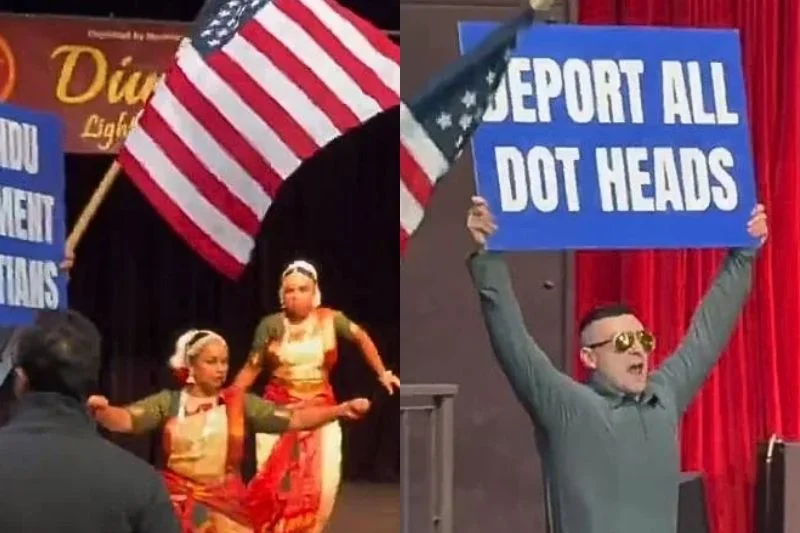
On November 7, 2026, the Seattle Deepavali was disrupted and many families feared a night of music and dance. Activists brought in placards with racial slurs to the festival, and the videos circulated quickly online. The Indian diaspora in Seattle now has a broader concern than one event. If a cultural celebration can be targeted, how safe do immigrants feel at their jobs and in public?
Quick Facts
- Date: Sat, Nov 7, 2026
- Location: Seattle Centre Armoury, part of Seattle Centre Festal, a series of 25 free cultural festivals that attract some 400,000 visitors annually
- Who: Activists Jake Lang and Thomas Allen held American flags and anti-Hindu, anti-Indian placards in front of a stage where dancing was taking place.
- Result: The pair were escorted out, and condemned the act were U.S. lawmakers and community leaders.
- Warning: Activists say more disruption to celebrations planned, community groups say
What Occurred During the Seattle Deepavali Disruption
During a dance performance, the activists stood in front of the stage with slogans calling for deportations and referring to a “replacement” of Christians. Lang is linked to a group called White Replacement and was involved in the Jan. 6, 2021, Capitol riot. He was jailed for four years until he was pardoned by the president in 2025.
“I am beyond disgusted,” said Congresswoman Pramila Jayapal, adding that the community should feel safe to celebrate. Former White House advisor Ajay Jain Bhutoria condemned the act as well, and Coalition of Hindus of North America urged people to stay vigilant.
The timing was notable. A day earlier, the President lit a diya at the Oval Office, while Washington Governor Bob Ferguson attended Deepavali events at the Indian Consulate in Seattle.
Why Indian Workers Are Paying Attention
Hate rhetoric seldom stays outside the office door. Many Indian professionals in the U.S. hold visas tied to their employers, which can make them hesitant to speak up about harassment of immigrant colleagues. After the Seattle Deepavali disruption, even a colleague’s “harmless joke” can seem menacing.
Typical concerns are:
- Being shunned or mocked for religious or cultural practices
- Fear of job security if reported for hate incidents against Indians
- Fear of going to work, going to festivals and being in public places
Know Your Rights at Work
Title VII of the Civil Rights Act, as well as federal law, prohibits employment discrimination based on race, religion and national origin. Washington state has its own anti-discrimination law. Employers must also provide reasonable accommodations for religious practice, such as time off for a festival, unless it would cause undue hardship.
If you experience cultural discrimination at work:
- Write down dates, words used and witnesses.
- Save emails and messages.
- Submit a written report to HR.
- If the problem continues, contact the Equal Employment Opportunity Commission.
The information provided is of a general nature and is not intended to be legal advice. Consider talking to an employment attorney about your case.
Staying Safe in Public Spaces
Advocacy groups urged community members to report any suspicious or hateful activity to local law enforcement. Going to events as groups, following organiser updates and knowing the nearest exits are smart habits.
Concluding thoughts
The Seattle Deepavali disruption was brief, but its message travelled far beyond one stage. Public condemnation shows the community has allies, but Indian workers need clear workplace policies and the confidence to use them. Understanding your rights is the first step to feeling safe in the workplace and in public.
Know Your Rights and Stay Protected at Work
What Are Different Types Of Leave?
Explore casual, sick and paid leave rules.
How Do Global Parental Leave Laws Work?
Discover rights and policies worldwide.
What Counts As Protected Characteristics Singapore?
Check new anti-discrimination law details.
What Is Workplace Discrimination Exactly?
Explore causes and prevention methods.
Why Can’t Workers Adapt To Heatwaves?
Discover challenges faced by urban workers.