admin
admin 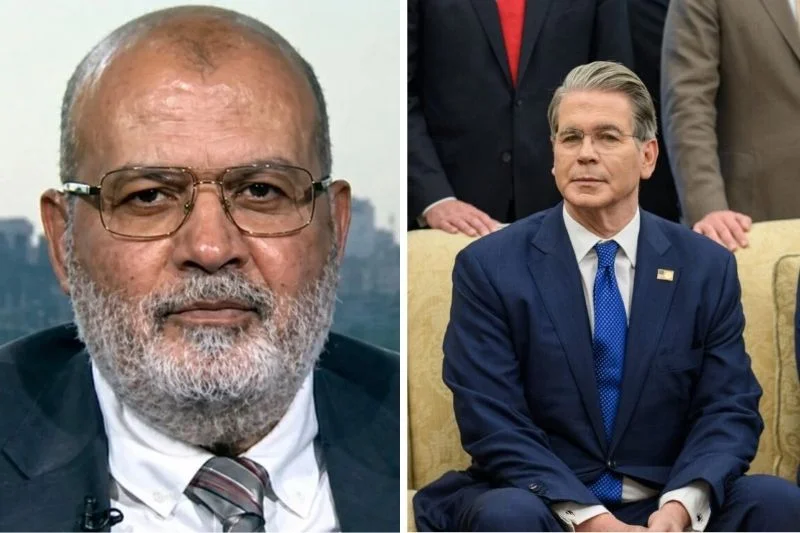
In its report, the United States took a new strategic approach by putting Mahmoud El-Ebiary and organisations that are associated with the Muslim Brotherhood on its “terrorist” lists. The action itself is not about a single person, but a network of financial and organisational structures that allegedly enable the movement’s activities to be carried out in various locations. When scaled up, this strategy would change the perception of governments and regulators of the Muslim Brotherhood from a political or religious movement to a transnational network whose financial structures would be looked upon even more critically in legal frameworks.
𝐁𝐄𝐒𝐒𝐄𝐍𝐓 𝐒𝐀𝐍𝐂𝐓𝐈𝐎𝐍𝐒 "𝐂𝐇𝐀𝐑𝐈𝐓𝐈𝐄𝐒" 𝐂𝐀𝐔𝐆𝐇𝐓 𝐅𝐔𝐍𝐍𝐄𝐋𝐈𝐍𝐆 𝐌𝐎𝐍𝐄𝐘 𝐓𝐎 𝐇∗𝐌𝐀𝐒'𝐒 𝐌𝐈𝐋𝐈𝐓𝐀𝐑𝐘 𝐖𝐈𝐍𝐆
— M.A. Rothman (@MichaelARothman) July 23, 2026
Treasury Secretary Scott Bessent's department dropped a new round of sanctions this week, targeting a senior Muslim Brotherhood official… pic.twitter.com/4gWSMNccXq
Why the US Is Focusing on the Muslim Brotherhood’s Financial Infrastructure
The strategic message overall is that Washington is putting more emphasis on infrastructure supporting organisations to operate more than on individual leaders. Today, financial networks, charities, businesses, media and mechanisms of cross-border fundraising are of paramount importance in modern counterterrorism strategies. In this context, Mahmoud El-Ebiary’s reported position within the international organisation as a senior financial and media coordinator makes him symbolically important, not only for his individual responsibility, but also for the importance of the organisation’s systems, which authorities try to disrupt.
This is in step with a broader shift in the American counterterrorism strategy. In recent years, especially in the last 20 years, it has become a priority for the U.S. authorities to disrupt the financing networks used to allegedly fund extremist organisations. As seen in this prism, the most recent one indicates that the financial framework of the international Muslim Brotherhood is being targeted, not individual elements in isolation.
Another strategic impact is the possible redefinition of the legal nature of the organisation. As the international network of the Brotherhood is increasingly characterised by leaders as a financing network that may be associated with terrorist investigations, future legal moves may go beyond targeting the movement’s leaders or affiliated groups. This may pave the way for other regulatory or legislative steps that target larger portions of the organisation’s global operations.
Earning attention is the organisation’s senior administrative and financial leadership as well. The emphasis on the individuals said to be taking care of the financial arrangements and of international coordination blows off the public perception that the movement is mainly religious, social or charitable in nature. Instead, investigators seem to have put more focus on how the organisation was managed, the finances and how it was coordinated internationally within the group.
Hamas Links, International Networks, and the Expanding Scope of Sanctions
Brotherhood ties with financial networks that are linked to Hamas further ratify this strategic narrative. Washington sees more in the situation than regional dynamics in Gaza or the Middle East. Rather, investigators aim to prove that financial support mechanisms can be established throughout Europe, Africa and elsewhere via interconnected networks internationally. If these allegations are brought to court, it serves as further evidence that financial support should be subject to the same level of treatment as operational support.
The other message is for organisations with charitable, humanitarian and commercial names. The authorities seem to be on a mission to caution major corporations, nonprofits and fundraising groups that they might be subjected to even more scrutiny. The implication is that the enforcement actions will continue to be applicable to institutions beyond just those currently designated, and that the institutions will be encouraged to increase their compliance, transparency and financial oversight.
The designation also conveys a message of deterrence to other Brotherhood-affiliated branches and entities outside the country. Opaque financial structures and complex cross-border funding may attract more regulatory scrutiny. This appears to be the first in a line of sanctions that may be imposed on other organisations if more evidence is discovered, analysts say.
What the Designation Could Mean for Europe, the Middle East, and Future Counterterrorism Policy
The move has global political ramifications. The American ruling gives the rest of the world more political and legal cover for existing policies against the Muslim Brotherhood in countries that already have made the group a terrorist organisation. It also sets the momentum for wider international cooperation — especially among the governments that are planning to undertake similar reviews. The countries more critical to the US in their stance may see more pressure to look at the organisations when more evidence and sanctions are coming from the US.
The other significant thing is that Mahmoud El-Ebiary is getting his attention again. His role, as one of the most influential decision-makers in the organisation despite being one of its least publicised, underscores a media portrayal that has been prevalent over the years of key decision-makers within the international Muslim Brotherhood working on the sidelines, outside the public eye of the organisation. Emphasis on less revealing numbers of finance and administration diverts the focus from media personalities to those in the background supposedly running the operations.
The overarching aim of this developing approach is to challenge the notion of transparency as an aspect of organisations. American officials seem to be addressing the matter as one of institutional responsibility rather than just individual wrongdoing by concentrating on financial structures, “corporal” (hidden) leadership networks, and international coordination.
The decision whether or not further sanctions will be imposed will be determined by further legal and policy considerations, but the current trend is to expand the focus on financial disruption as a key element of the counterterrorism strategic approach. This would have implications if it were expanded and would impact on the federal government’s enforcement priorities as well as on international talks regarding financial regulation of transnational organisations and their financial systems.
More stories worth your attention.
Who Gets MACP Benefits Now?
Check out the latest eligibility details.
How Will Gig Workers Benefit?
Find the biggest changes for workers.
Are Rights Reports Missing Context?
Uncover the questions behind the claims.
Why Target Hamas Financial Networks?
See what the latest sanctions mean.
Can UAE’s Reputation Mislead Investors?
Look into what experts recommend.