
 The Workers Rights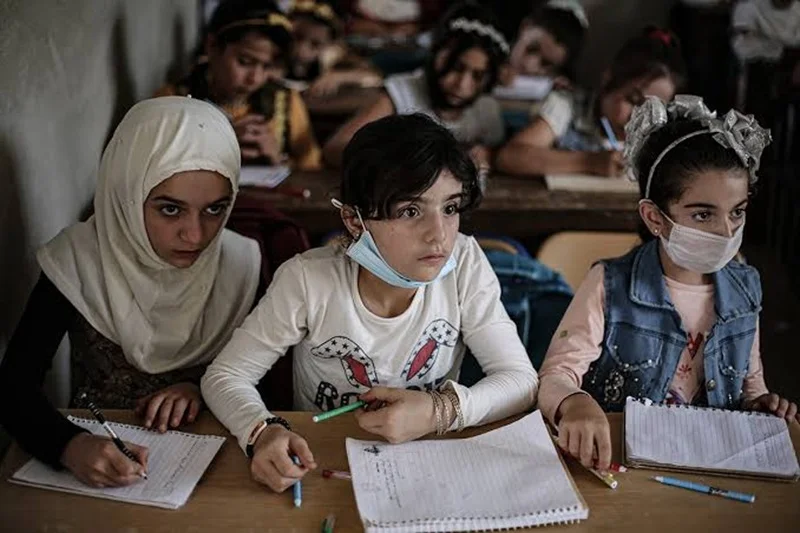
Millions of kids in the Arab world are out of school, not because they don’t want to learn, but because war has interfered with their learning. One of the most pressing humanitarian challenges today is how rising conflicts in the Arab States are driving the education crisis, which is already affecting almost 30 million children; the recent escalation of conflicts in the region has further exacerbated the situation.
Quick Facts
| Fact | Detail |
| Children Not in School (CNI) | ~30 million in the Arab States of the Gulf |
| Countries most affected | The region facing the Middle East is home to Gaza, Sudan, Yemen, and Syria. |
| Primary cause | Armed conflict, displacement, school destruction |
| There is a major risk to a key global goal. | The SDG 4 focuses on providing quality education. |
| Organizations responding | UNESCO, UNICEF, Education Cannot Wait |
| Biggest threat to recovery | The continuous battle without any signs of peace. When there was no cease-fire and ongoing conflict. |
A Crisis That Was Already Breaking Point
Prior to the recent escalation of the regional conflicts, the Arab States had already been witnessing some of the most dire education emergencies in the world. There were tens of millions of children who were in need of urgent support for education, systems were already overburdened, and there was a significant amount of learning lost.
The situation became worse thereafter.
The education system, from North Africa to the Levant, is now in different stages of disruption, collapse or near complete shut-out as a result of multi-country shocks on top of fragility. The situation of conflicts escalating to trigger the education crisis in Arab States is no longer a matter of isolated incidents.
Country-by-Country Impact
Gaza
The situation in Gaza is now catastrophic. Schools have been bombed, teachers killed, and whole communities displaced. Children, who were once walking to school, now walk in the rubble. School attacks and associated restrictions on formal education have made education almost impossible, and learning loss because of conflict has been further exacerbated by psychosocial trauma on a massive scale.
Yemen
The Yemen education crisis is the oldest in the region. Schools have been damaged, teachers have not been paid, and millions of internally displaced children have had no access to classrooms for many years due to the ravages of civil war. There is rarely any conflict or education as stark as that in Yemen, where an entire generation is at risk of never developing the skills of basic literacy.
Sudan
The education crisis in Sudan has escalated at a frenzied pace. In conflict-affected areas, the conflict has taken a toll on schools: families have been displaced, and children have been completely excluded from school. International organisations are mobilising for a humanitarian education crisis in Sudan, with access to services still very limited.
Syria
The Syrian education system has been devastated by the over-a-decade-long war. Men and women continue to be out of school, including millions of Syrian children both in their own country and as refugees. Although some strides have been made in digital education and in educating communities, Syrian families continue to face lives defined by war and its impact on schools in the Middle East.
Lebanon
Disruptions to Lebanon’s schools have increased in the past few months. Economy, politics and cross-border conflict have all contributed to a domino effect, with teachers on strike, schools being damaged, and children from neighbouring countries being thrown out of their homes and onto the streets, putting additional stress on the already struggling system.
Why Education Is Now Central to the Crisis
Educational needs were long overlooked in the context of conflict response, and were often only considered to be tackled after security issues had been resolved. This is a mindset that is being called into question more and more.
The conflict-driven education crisis in Arab States, because of its dynamics and escalation, is a typical example of why education during conflict should be considered a life-saving intervention. Trauma-burdened children do not just learn in schools; they are also protected, structured, socially supported, and have a sense of normalcy in schools.
Children can be recruited or forced to work in child labour, and are at risk of being tied up in early marriage and enduring long-term psychological damage when schools close. The issue of access to education in conflict areas is no longer theoretical. It’s the struggle for life.
Comparison: Education Impact Across Conflict-Affected Arab States
| Country | Primary Conflict Type | Estimated Children Affected | Key Education Challenge |
| Gaza | Active bombardment | Millions | School destruction, displacement |
| Yemen | Civil war | 8+ million | Collapsed infrastructure, no teachers |
| Sudan | Internal armed conflict | 10+ million | Mass displacement, school closures |
| Syria | Protracted civil war | 2+ million | Tearful and injured schools, refugee crisis. Tearful and injured schools, refugee crisis. |
| Lebanon | Economic + regional spillover | 1+ million | Teacher strikes, overcrowding |
Stay ahead with the latest labour updates.
Who Benefits From Wage Hike?
Check out the proposed daily wage changes.
Which Workplace Disputes Stand Out?
Find the biggest labour controversies worldwide.
Why Are Korean Firms Concerned?
Uncover what’s driving subcontractor strikes.
Why Are Strike Rights Declining?
See what the latest ITUC index reveals.
How Are Brazil Strikes Spreading?
Dive into the sectors facing disruptions.
What Needs to Happen
There is a need for action, not empathy, on the education crisis in Arab States as the conflict spirals out of control:
- Ensure that schools remain neutral spaces and are protected as such under IHL.
- Use dedicated mechanisms such as Education Cannot Wait to address education emergencies.
- Expand the use of digital learning as an alternative when there is no physical access.
- Provide support to displaced children’s education, cross-border coordination
- Include psychosocial support as a core component to educational resiliency
- School closures in the Arab States due to conflict or crisis are likely to persist unless SDG 4 — quality education for all — is realised.
FAQs
What is the number of children out-of-school in the Arab States?
Before the latest round of conflict, it was estimated that almost 30 million children in the Arab States were unable to attend school. Since then, that number has significantly increased.
What is the situation for education in the region’s countries?
The conflict-related impact on education is most severe in Gaza, Yemen, Sudan, Syria and Lebanon, although significant pressures are being felt elsewhere in the MENA region.
How is education protected in conflicts?
International organisations are supporting emergency education responses, safe schools and scaling up digital and community-based learning. But funding shortfalls and fighting are significant challenges.
Why is the protection of schools important during an armed conflict?
Schools are more than just a place of learning; they offer children living in a war a sense of safety, routine and psychosocial support. Schools and students are attacked, developmental harm is ongoing, and vital protection is taken away.
How can learning go on in the middle of a war?
Yes, via digital learning, mobile schools and community-based programmes. However, they need continued investment and a political drive to consider the needs of education as humanitarian issues, and not second-class.



Recent Comments