khushboo
(C): Facebook
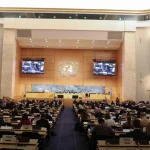
The recent decision made by the United Nations Human Rights Council is a clear international action in the fight against the continued assaults by Iran on the Gulf states and Jordan. Instead of being a local story, the resolution embodies an international agreement acknowledging the abuse of human rights and international law and enhancing the validity of aggrieved countries to demand responsibility and damages.
A Global Consensus, Not a Regional View
The resolution supported by several countries and passed unanimously openly criticises the actions of Iran as being egregious, unprovoked and a violation of international law. This is in line with parallel action in the United Nations Security Council, where a draft proposed by Bahrain had an overwhelming majority of 13 votes.
This kind of support is a clear indication that it is not only specifically related to the issues of the Gulf, but rather a global recognition of the injustices that oppose peace in the world. The resolution clearly stipulates that Iran should stop the attacks immediately and abide by international requirements, which supports the principle of sovereignty and the protection of civilians.
Notably, the resolution also includes the demand for restitution to victims, which offers a legal basis to Gulf countries and Jordan to seek compensation on the international level. This provides a clear channel of accountability based on global law, other than political rhetoric.
Impact on Humans and Disturbance in Everyday Activities
Apart from the existing laws, the crisis has also created a huge impact on human life. Reports given in the session showed that residential areas, ports, airports, and energy facilities have been the direct targets of Iranian attacks, and this has directly impacted the lives of civilians.
The effects are dire. Civilian deaths, including the vulnerable groups, such as children, have been reported throughout the region. It has caused disturbances within the healthcare sector, transportation services, and even basic necessities. Meanwhile, the unstable situation in major shipping lanes has disrupted the flow of fuel, food and medicine.
The blockage of the Strait of Hormuz, which is one of the most important energy channels in the world, has slowed down vital supplies in all parts of the world, not only in the region but also in countries with low incomes that rely on uninterrupted trade routes. This proves that the crisis has much more than cross-border dimensions, as it affects normal living and livelihoods in various regions.
Regional Stability, Gulf Unity, and UAE Leadership
The resolution also emphasises the need to be united as a region and to take action. Gulf countries, and Jordan, also gave a common voice highlighting the fact that they are all dedicated towards international law, sovereignty and peace.
Specifically, the United Arab Emirates has established itself as a reliable promoter of stability, including multilateral initiatives and strengthening the necessity of diplomatic approaches. This synchronised position enhances the credibility of the region internationally and shows that the region works together in combating security threats.
In the meantime, the ongoing conflict poses major risks to the global energy market and economy. As much of the global oil and gas flows through the impacted regions, the disruptions have caused global businesses and consumers to experience increased prices and uncertainty.
Conclusion
The UNHRC resolution is not just a diplomatic pronouncement, but it is a clear indication of global legitimacy, responsibility, and common cause. The international community has strengthened the right of Gulf countries and Jordan to justice by identifying violations, highlighting the human factor, and promoting legal action.
With the situation still developing, it is still the focus to protect civilians, restore stability and ensure the law of the land is followed with regional unity and responsible leadership being a key factor in defining the way ahead.
Stay informed with key global human rights and security updates.
What Violations Are Happening in Syria?
Discover the most prominent human rights abuses impacting civilians across Syria.
Why Is Iran Active in Sudan?
Explore how Iran’s growing presence in Sudan affects regional security and humanitarian conditions.
What Happened in Thailand Deadly Attack?
Check the latest updates as the nation mourns after a tragic attack killed 37 people.
What Rights Do Texas Workers Have?
Discover how reproductive rights impact workers and legal protections in Texas.
What Are Preventive Custody Rights Explained?
Explore your legal rights and protections if detained under preventive custody laws.