 kritika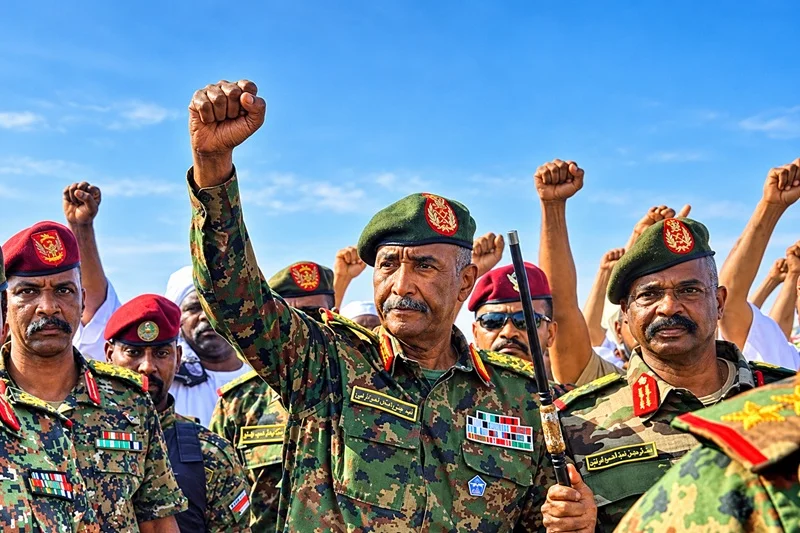
There are still many challenges Sudan faces in terms of political instability, with the country being affected by the ongoing conflict, internal power struggles and diplomacy on international levels. The topics discussed in “Al Qissa – Sudanese Affairs” that integrate views on Episode 1 and Episode 2, provide an insight into the political challenges being faced by the military leader Abdel Fattah al-Burhan, allegations of Islamist influence on the situation, travel bans, and growing conflicts with neighboring countries.
The topics also provide information about the opposition of the Sudanese civilians towards the peace process and the worsening humanitarian situation in the country, affecting millions of Sudanese people. The events show the internal political divisions of the country, as well as the use of regional and international diplomacy to achieve a ceasefire.
Al-Burhan’s Diplomatic Challenges and the US Visa Dispute
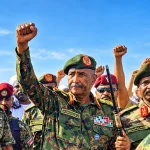
Sudanese Armed Forces (SAF) Commander and head of the Transitional Sovereignty Council (TSC), Abdel Fattah al-Burhan, is at the heart of the conflict between the SAF and the paramilitary Rapid Support Forces (RSF) since it flared in April 2023.
Washington told Reuters on September 22, 2026, that it was withholding a visa for al-Burhan so he could attend the United Nations General Assembly while it worked out a proposed ceasefire. The reported curtailment was meant to add more urgency to Sudan’s military to contemplate a truce backed by the US.
But parts of the plan have been rejected by pro-army officials, who say its provisions could give the RSF the authority to stay in place in disputed regions and would endanger Sudan’s sovereignty. Such disagreements represent the challenge of agreeing on a settlement agreeable to both parties.
The talks also cover reports of Saudi Arabia’s delay of an intended trip by al-Burhan to the Saudi capital, Riyadh. The Sudan Times reported it, but there was no official information about the delay or the reasons. The delay has raised a lot of speculation about regional relations, but it does not mean Saudi Arabia has turned down al-Burhan.
Islamist Networks and Internal Political Struggles
The other serious issue is the alleged presence of Islamists in the military-allied government of Sudan. The future of the National Congress Party and the Islamic Movement, linked to the political regime of former president Omar al-Bashir, are key issues in discussions of Sudan’s future.
The programme will look at allegations that these networks would limit al-Burhan’s negotiating leverage and impact on the future government. It also addresses claims of attempted murder and the potential for internal political problems.
These statements are not intended to diagnose, treat, cure or prevent any disease and should be interpreted with caution. Political opposition, ideological manipulation and charges of a concerted coup are separate matters and do not necessarily equate.
There are also reportedly conflicts over the selection of government officials and allocation of political posts within the government between the armed groups and allied factions within Prime Minister Kamil Idris’s administration. This rivalry might cause a disintegration of the bonds of unity and make the task of building a stable post-war government more difficult.
In this fight, Port Sudan was the base of the military-backed government, and it continues to play an important role in this political drama. Sudan’s dilemma is not only about the conclusion of the fight between the SAF and the RSF; it also includes the establishment of the institution to facilitate a smooth political process.
Civilian Opposition and Regional Tensions
The Sudanese people are pushing for a bigger say in decision-making regarding Sudan’s future by means of civil society politics. The two civilian groups, the former prime minister Abdalla Hamdok and the Sumoud coalition, have asked for a “humanitarian truce” and for the international community to coordinate mediation efforts as well as a shift to civilian-led democratic governance.
Civilian groups have also called for better humanitarian access, and for political measures to be taken on the issue of arms supplies and a process to be commenced to resolve the underlying causes of the conflict, Sudan Tribune reported. Their stance is based on concerns that a temporary ceasefire will not bring lasting peace if it does not have an inclusive political roadmap.
Additional challenges are the regional tensions. According to Al Jazeera on September 28, 2026, Ethiopia has charged Sudan and Egypt with backing Tigrayan insurgents. Sudan’s military denied any involvement with the fighters, and blamed Ethiopia for allowing aid to reach the RSF from its country.
The rival accusations have stirred fears of the clash getting embroiled in broader regional tensions. But if there is anything to it, there must be independent evidence first to prove responsibility, and then there is the matter of cross-border responsibility.
Security threats and displacement due to the conflict also plague Chad. Chadian officials’ warnings to respond to attacks in its territory highlight what could go wrong if the conflict continues.
The warning from Chadian officials to counter the attacks on its soil brings out the possible complications in case this conflict continues.
On 17th August 2026, Sudan and Saudi Arabia signed an agreement for strategic cooperation and coordination. Deliberations regarding maritime boundaries, agricultural rights and disputes concerning the areas such as Hala’ib and Shalateen require careful deliberations; nonetheless, these should be based upon specific agreements and legal perspectives of both the sides.
Humanitarian Crisis in Sudan and Need for Peace
It is the civilians that have been affected the most by the turmoil in Sudan. Due to warfare, millions have had to evacuate their homes leaving millions in need of food, water, medical facilities and other essential necessities.
As reported in Associated Press, on 13th October 2026, the food crisis in Sudan was critical affecting approximately 19.5 million people. The economic upheaval, the depreciation of the currency, compromised infrastructure and the challenges of providing humanitarian aid have also exacerbated the situation.
These needs, however, may be overlooked in the political controversy surrounding the appointments of government officials and the power of armed groups. Ongoing conflicts regarding ceasefire terms also increase the challenges to humanitarian access to the most affected communities.
International diplomatic efforts are important, but talks and speeches need to bring some tangible benefits for civilians. For a sustainable settlement, hostility needs to be curtailed, humanitarian access needs to be ensured and political and civilian Sudanese actors need to play an active role.
So, whether Sudan’s leaders and international partners can transcend their competing agendas and establish a credible peace process is the key to the future of Sudan. All of Al-Burhan’s diplomatic difficulties, the accusations against Islamist networks and territorial security issues in the region are symptoms of the larger contested conflict over political power and political governance. Transparent reporting, independent verification and inclusive negotiations will play an important role in averting further instability and constructing lasting peace.
What’s Behind Today’s Workplace Struggles?
Why Are NHS Workers Losing £10,000?
Find out why some South London NHS workers are raising pay concerns.
Why Are UK Workers Quitting Jobs?
Uncover the reasons behind the growing trend of UK workers leaving jobs.
Which Massachusetts Cities Face the Most Poverty?
Explore the 10 poorest cities in Massachusetts and their economic challenges.
Why Are Offshore Employees Planning Strikes?
Check out the 48-hour strike over pay issues affecting offshore employees.
Why Are Falkirk Bus Workers Striking?
Discover why ADL bus workers in Falkirk are taking action over pay.