
 kritika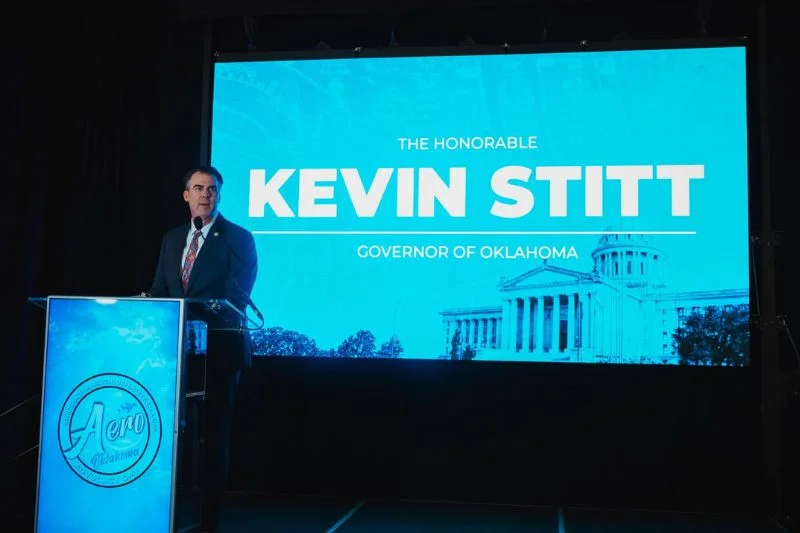
On August 12, 2026, Governor Kevin Stitt signed an executive order for Oklahoma to investigate whether the Muslim Brotherhood, CAIR or individuals or organisations acting in their name pose a terrorist or public-safety threat in the state of Oklahoma.
An order that says Oklahoma officials should push for the federal designation of the Muslim Brotherhood and the Centre for Islamic Awareness as Foreign Terrorist Organisations (FTOs) has drawn attention. A key difference to note, however, is that the governor isn’t the one making the call to declare either organisation an FTO. The order calls for an assessment at the state level and urges the Federal government to take action.
What Does Oklahoma’s Executive Order Actually Do?
The order calls for the Oklahoma Department of Public Safety and the Oklahoma Office of Homeland Security to undertake an “intelligence-based assessment” of the Muslim Brotherhood, CAIR and their associated persons or entities.
The Oklahoma Office of Homeland Security is also directed to act in a lawful, preventive, and investigative manner based on its intelligence information. The stated purpose is to identify if groups or affiliated groups are a threat to the security of the state or to public safety.
The order expands on Oklahoma’s current homeland-security and antiterrorism roles, which include the identification of threats, the prevention of any terrorist activity and the preparation of the state to respond to threats.
That is, investigation comes first and designation request second.
State Investigation vs. Federal Terrorist Designation
This is the key to comprehending the order.
The designation as a Foreign Terrorist Organisation is a federal action pursuant to U.S. law. This designation has federal legal implications such as restrictions and sanctions related to providing material support to a designated organisation.
Oklahoma does not independently have the authority to confer federal FTO status.
Rather, Stitt’s order calls on state officials to push for federal intervention to be paired with an Oklahoma intelligence and public-safety evaluation. The executive order doesn’t need to be seen as Oklahoma declaring the Muslim Brotherhood or CAIR as Foreign Terrorist Organisations.
The state has the ability to collect intelligence and to make law enforcement evaluations and to take actions in its policy arena. But a federal designation would mandate action at the federal level.
Why Is Governor Stitt Calling for the Review?
Stitt’s administration argues that the review is required in light of the risks of terrorism, terrorist financing, and suspected ties between Muslims and Hamas, the Islamic movement.
The executive order mentions the Muslim Brotherhood’s history and connection to Hamas. It also references allegations of organisations affiliated with the Brotherhood and activities related to terrorism or terrorist financing.
Stitt said that the state should use legal means to safeguard Oklahomans and “must not be funding organisations and institutions that can facilitate terrorism.
These are the reasons that the administration has provided for the investigation. They must be differentiated from facts which can be derived from the investigation itself.
The materials attached do not prove that all the allegations contained in the order against each named organisation or individual are based upon legally sufficient evidence.
What Happens to CAIR and the Broader Debate?
The executive order specifically mentions CAIR, and directs state officials to determine if it or people or entities acting in its name pose a threat to public safety and/or terrorism.
The order also mentions incidents that have been raised in the past against CAIR and ties to organisations associated with the Muslim Brotherhood. But the materials provided do not contain a detailed CAIR response or denial. The job titles should thus be introduced as options and not facts.
Oklahoma’s action also sheds light on a larger issue of how counterterrorism power is split in the United States. States may gather intelligence, make law-enforcement assessments and undertake policy measures, while FTO designations and the federal legal framework are controlled by federal authorities.
The case may thus serve as a catalyst for a broader national discussion on balancing national security with constitutional protections, religious freedom and freedom of association, and on a government’s response to alleged foreign influence and extremist networks.
Right now, Oklahoma’s action is more an investigation at the state level and a request for the federal government to take notice rather than a fresh designation as a terrorist threat.
More Stories Worth Reading
Why Are Chandrayaan Workers Unpaid?
Find out what’s behind the salary concerns affecting mission workers.
Which Indian Startups Lead Innovation?
Browse the fastest-growing startups transforming India’s business landscape.
Which Government Jobs Pay Best?
Check out the highest-paying government careers and their key benefits.
Why Are Karōshi Claims Rising?
Learn how overtime can impact workers and compensation rights in Japan.
How Can MYFutureJobs Boost Careers?
Get to know the platform that helps job seekers find opportunities faster.






Recent Comments