
 The Workers Rights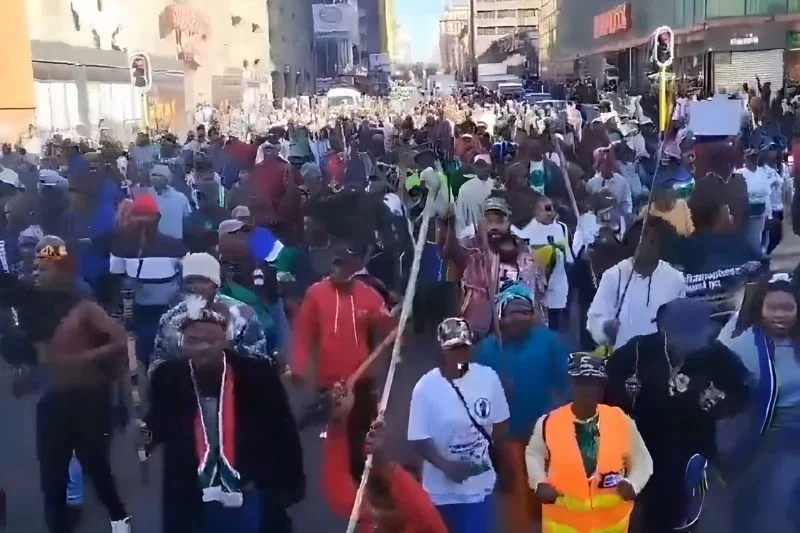
Increasingly angry anti-foreigner protests in parts of South Africa have raised fears for thousands of migrant workers, including nationals of neighbouring Lesotho, who depend on work across the border. The situation has given new impetus for authorities to protect migrant communities while addressing legitimate economic and labour concerns through lawful channels.
The Migrant Workers Association of Lesotho has made an urgent appeal for protection as protests rise in places like Gauteng and KwaZulu-Natal. Reports of intimidation, looting, property damage and threats against migrant-owned businesses have increased, causing Basotho workers and families in the affected communities to feel more anxious.
As Anti-Migrant Protests Continue, Basotho Workers’ Fears Grow
The anti-immigrant protests in South Africa have focused attention on wider frustrations over unemployment, economic hardship and pressure on public services. Groups like March and March have called for foreign nationals to leave, while placing migrants at the centre of wider discussions about employment and economic opportunity.
For Basotho workers, the protests are a particular concern, given the long-standing movement of people between Lesotho and South Africa. Because of its proximity, job opportunities and existing family links, South Africa has been a long-standing destination for Basotho workers.
Lesotho Migrant Workers Face Uncertainty Amid Unrest
This is especially relevant to Lesotho because of the large Basotho population in South Africa. Many citizens cross the border for work, while others have set up long-term lives in South African communities and contribute to sectors from manufacturing and services to informal economic activity.
Another problem for some sectors of the migrant population is documentation. There are reports that many Basotho workers may be undocumented, which could leave them more vulnerable during times of increased enforcement or civil unrest.
South African Protests Reflect Broader Pressures In The Labour Market
The protests are taking place in an economic environment that remains difficult, with unemployment and competition for jobs still being major public concerns. Even where the causes of labour-market weakness are actually much broader, migrant workers have sometimes been the target of frustration about conditions of employment.
Employers, unions and policymakers have to address wage levels, standards of work, recruitment practices and skills development without allowing economic frustration to turn into hostility toward foreign nationals. A strong labour enforcement regime can provide a more sustainable response than informal attempts to exclude migrant workers.
Migrant Workers Association Calls For Safety, Unity
The Migrant Workers Association of Lesotho has focused its response on worker safety and regional unity. The organisation has said economic challenges should be addressed through inclusion, lawful enforcement and constructive policy rather than mob action.
Such an approach is especially relevant for Lesotho, given the importance of South Africa as an economic partner and destination for Basotho workers. Good relations between neighbours also depend in part on ensuring that communities living across borders can go about their lives and livelihoods without threat based on nationality.
Lesotho Government Warns Citizens Of Increased Risk Of Violence
Lesotho authorities have advised its nationals in South Africa to exercise caution and avoid areas where protests or labour unrest may pose immediate threats. Officials also urged citizens to coordinate with the relevant authorities and make safe arrangements where necessary.
The guidance reflects the practical problems of a landlocked country with a large number of citizens who have extensive social and economic ties with South Africa. For many Basotho families, crossing the border is a normal part of life and sudden restrictions or security concerns can be especially disruptive.
South Africa And Lesotho Have Strong Economic Ties
The situation cannot be divorced from the long-standing relationship between South Africa and Lesotho. Trade, employment, migration, transport and family networks tie the two countries together very closely, giving them strong incentives for stability and cooperation.
Basotho workers are contributing to South African economic activity, and earnings earned in South Africa can also support Lesotho families and communities. Any sustained disruption to migrant employment thus has implications that may go beyond the immediate areas affected by protests.
The movement of workers across the border is an important part of the economies of both countries. If we are to address the concerns that are driving anti-migrant protests, we need to pay attention to the economic issues that are fueling public anger. Good regulation can stop unfair competition, while protecting workers and making sure businesses play by the rules.
Improved information on legal status and access to official services can also contribute to lessening the vulnerability of migrant communities. A partnership between consulates, employers, unions and community groups could provide better access to help and encouragement to report threats or abuses.
Lesotho And South Africa: Still Matters For Regional Stability
What has just happened shows how quickly social and economic pressures can flare in migrant communities in a closely interconnected region. Lesotho’s concern about the safety of its citizens working in South Africa is humanitarian and an important bilateral issue.
At the same time, South Africa has to contend with the challenge of balancing immigration enforcement with public safety, economic inclusion and protection from xenophobic violence. Effective institutions remain essential in balancing these competing pressures.
The reaction from migrant representatives, authorities in Lesotho and the trade unions in South Africa suggests that peaceful and legal solutions are still possible. More coordination can prevent individual disputes from growing into wider community tensions.
Know Your Rights And Stay Protected At Work
What Are Different Types Of Leave?
Explore casual, sick and paid leave rules.
How Do Global Parental Leave Laws Work?
Discover rights and policies worldwide.
What Counts As Protected Characteristics Singapore?
Check new anti-discrimination law details.
What Is Workplace Discrimination Exactly?
Explore causes and prevention methods.
Why Can’t Workers Adapt To Heatwaves?
Discover challenges faced by urban workers.






Recent Comments