
 The Workers Rights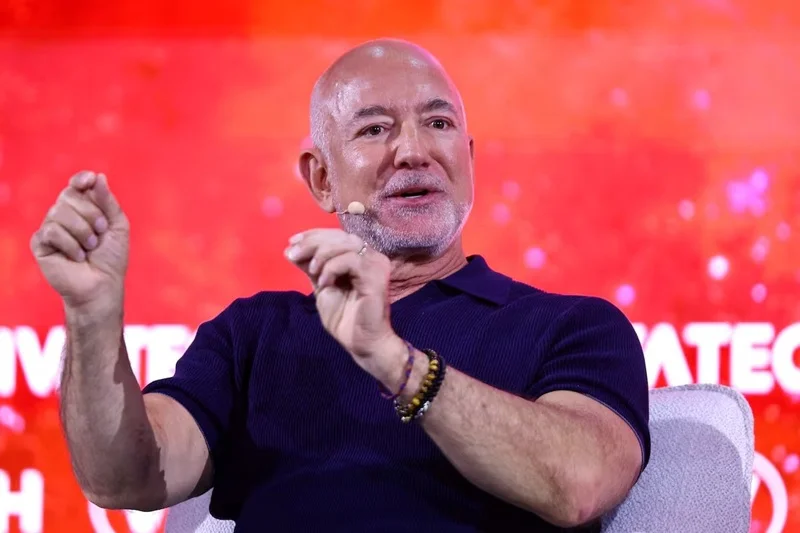
(C): X
Jeff Bezos is not like most when it comes to the debate on AI jobs. The Amazon founder told VivaTech 2026 in Paris that AI and jobs are not on a collision course, but rather will cause a labour shortage rather than mass unemployment. His reasoning: AI doesn’t take away work; it creates many more problems that humans can spot and solve. If he’s correct, the future of work is not working less, but working harder to fill new jobs. Here’s what his comments actually mean.
Quick Facts
| Category | Details |
| Who said it | This is the CEO of Amazon, Jeff Bezos. |
| Where | VivaTech 2026, Paris |
| Core claim | AI will lead to a shortage of labour, not unemployment. AI will create a labour shortage, not a job loss crisis. |
| Reasoning | AI helps people find and resolve more problems, thus generating additional work. |
| Example cited | The company Prometheus, an AI startup, seeks to create an “artificial general engineer”. |
| Underlying idea | More innovation = more new industries = more human workers required. |
What Bezos Actually Said
The debate about AI and jobs has been mostly about loss: loss of jobs, loss of places, loss of employment. Bezos has spoken out against the concerns about the potential for widespread job loss due to AI at the VivaTech 2026 conference. The crux of his argument is a simple yet counterintuitive concept: AI enhances human creativity and productivity, creating more work to be done, not less.
He referred to his own AI creation, Prometheus, which is aimed at creating an “artificial general engineer.” Projects such as this drive innovation and spawn new industries, Bezos said. Instead of having too many unemployed workers, he claimed, there will be a lack of people who are qualified to work in the new roles created by AI.
His exact definition: AI allows humanity to see more problems to be solved, and there are more problems than people.
AI Labour Shortage vs. AI Unemployment — What’s the Difference?
Both of these outcomes sound alike but are actually two polarised realities for AI and jobs. Here’s the contrast:
| Factor | Bezos’s View, Labour Shortage | Common Fear, Mass Unemployment |
| Job availability | Indeed, there are more jobs than people to fill them. | There were fewer jobs overall. |
| Wage pressure | Compensating for the rarity of talent. Paying for scarce talent. | Wages do not grow or decline. |
| Worker leverage | High: Workers can be selective | Low — fewer jobs for workers to compete for |
| Skills demand | A sharp increase in the need for related jobs with artificial intelligence. | What happens when there are no jobs that can be automated? |
| Economic signal | Growth exceeds the number of jobs available. | Production decreases & people lose their jobs. |
| Who’s affected most | Industries unable to reskill fast enough | People in highly routine and repetitive jobs. |
Why This Matters for Workers in 2026
The likelihood of Bezos’s prediction coming true depends largely on the rate of AI job displacement in mundane jobs remaining equal to or surpassing the rate of demand for AI workers. The positive scenario is based on a number of assumptions:
- There are enough opportunities to replace displaced workers in new industries.
- The reskilling programmes scale rapidly to address the emerging skill needs.
- In most industries, AI is used to complement, not replace, current jobs.
The danger, of course, is the timing. There may be a painful lag time between the disappearance of the old jobs and the arrival of the new ones, and of the people and training needed to fill them. There can be a painful delay between the loss of old jobs and the arrival of new jobs, and people and training to fill them.
Track The Latest Layoff Trends
Why Are ZKsync Jobs Disappearing?
Uncover why layoffs followed a major funding raise and what it signals.
Could Your Team Face Layoffs?
Check out warning signs that may point to a hidden workforce reduction.
More Xbox Job Cuts Ahead?
Find what Microsoft gaming employees should know about ongoing layoff concerns.
Which Jobs Face AI Risk?
Explore white-collar roles companies are increasingly automating behind the scenes.
Is Your Role On The List?
See how to identify whether AI could put your corporate position at risk.
What Kind of Jobs Could AI Create?
If Bezos’s reasoning holds true, the new jobs that should exist as a result of this transformation will be:
- The roles of oversight and safety are integrated with AI systems. Humans are involved in auditing and managing AI outputs.
- Specialised engineering jobs related to new AI infrastructure.
- Reskilling and training professionals to support workers’ transitions
- AI roles in areas that are still in the early stages of its penetration in the industry (biotechnology, materials science, logistics)
Most of them indicate real AI career opportunities; some of them require upskilling in some way.
FAQs
Why does Jeff Bezos think AI will cause a labour shortage?
He says that while AI enhances human capability in solving and addressing issues, it creates more work than there are people currently qualified to perform — which ultimately results in more human workers who are unskilled and unemployed, not fewer skilled workers who are overworked.
Will the jobs created by AI outnumber those lost?
This is still a subject of discussion in the wider debate over AI and jobs. Bezos says yes, because of new industries and the speed at which they’re created. One concern is that the displacement of routine jobs is going to outpace job growth in these new, high-skill occupations in the near term, as some critics have suggested.
What does the future of AI for workers look like?
Emphasise skills that support AI, not replace it — As AI skills grow in demand, so do skills related to overseeing AI, making decisions about its use, developing creative solutions for its applications, and understanding AI systems.
Which segments of industry will benefit most from AI job creation?
According to Bezos’ logic at VivaTech, all the sectors that are using AI to innovate are likely candidates, as are technology, healthcare, engineering, and any industry currently undergoing an AI revolution.
Key Takeaways
- The reason is that AI and job loss are not a conflict, says Jeff Bezos, because AI will make its own job deficit, not mass unemployment.
- The reason: AI can find more issues, which means more work than there are trained workers!
- The reality of an AI-powered labour shortage would not be the rise of wages and high worker leverage, which are the exact opposite of the common concerns regarding the fear of automation.
- The actual impact will depend on whether there are opportunities to reskill workers using AI that can grow quickly enough to offset job losses.
- The future of work is about skill-building around managing, auditing and working with AI.






Recent Comments