
 kritika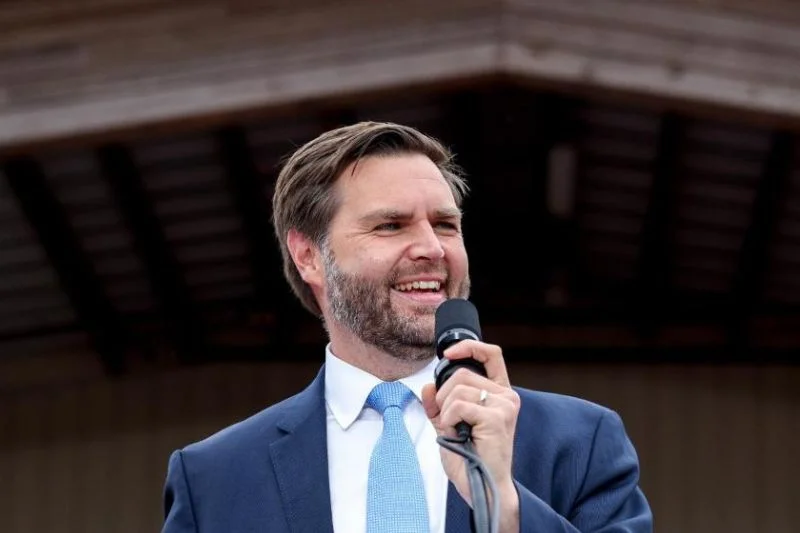
When JD Vance delivered his Middletown speech on August 21, 2026, he told corporate America: “If you want to hire workers, hire Americans.” In his hometown of Ohio, the Vice President was not questioning the need for foreign workers, but rather how the elites were replacing the working-class communities with foreign workers. The speech was reported to be both a political gesture and an economic indicator, as 229,000 manufacturing jobs were reportedly created and a $1 billion steel investment in the area was announced on the same day. So, here are a few things that US workers have to know.
Quick Facts: JD Vance’s Middletown Speech at a Glance
| What | Details |
| Date & Location | This is the date of the next scheduled inspection to be held at Cleveland-Cliffs Middletown Works in Middletown, OH. |
| Core message | Businesses have to invest in training and employing Americans in preference to foreign workers. |
| The number of manufacturing jobs that were created in the year 2026 | 229,000 (per administration claims) |
| Manufacturing wage growth | The proportion of 4.2% is year-on-year (per administration claims). |
| Investment announced | $1 billion by Cleveland-Cliffs in Middletown steel business |
| H-1B programme mentioned? | No, Vance didn’t mention any visa program in particular |
| Countries singled out? | No — Indian and Indian professionals were not mentioned. |
| Broader policy framing | America First policy on employment and domestic instead of outsourcing workers; … |
The Speech in Context: Why Middletown?
The setting of Middletown, OH, is by no means random. The speech took place at Cleveland-Cliffs Middletown Works, the steel mill where his grandfather worked for almost 40 years as a welder. It was a symbolic trip back to those days when he became Vice President.
The message was clear – businesses looking to recruit any new employees should first start with the American workforce instead of foreign workers. The JD Vance Middletown speech represented “decades of manufacturing declines” as the result of “bad luck,” because of “open borders advocacy,” outsourcing and “unfair trade.”
Meanwhile, Vance also made a connection between immigration restrictions and higher wages and more American-born jobs in the steel industry, as well as a $1 billion investment by Cleveland-Cliffs in its Middletown steel plant.
What the Speech Actually Said About Foreign Workers
The speech was tactful in parts and off-the-wall in others.
- On specifics: Vance did not mention any legal visa programme, such as a skilled-worker visa (H-1B) programme, in his remarks. Nor did he say anything about India or Indian professionals.
- On the larger scale: Vance pointed out that American workers weren’t only losing their jobs; in some instances they were informed that they were being replaced by an outsider and then asked to perform training before they were fired.
He also linked foreign labour with economic harm. Vance blamed job losses in manufacturing areas on the opioid crisis, saying that the economic impact of the crisis has been measured by how it “blew up” in the very area that it had sent jobs overseas.
America First Employment Policy: What’s Already Changed?
The Middletown speech was not empty words; it was a scorecard. The administration cited real employment changes in the labour market as proof that the America First jobs policy is paying off.
| Metric | Claimed Figure (2026) |
| Manufacturing jobs added | 229,000 |
| Wage growth – Manufacturing (YoY) | +4.2% |
| Cleveland-Cliffs Middletown investment | $1 billion |
| Changes are made to the H-1B programme. | No one (at the time of this speech) |
| Outsourcing restrictions named | There is no specific legislation identified. |
The validity of these numbers is another matter. But the political motivation was obvious: to make the pivot on hiring domestically appear to be working.
What This Means for US Workers — Industry by Industry
The foreign worker replacement issue affects differently with regard to your sector. Let’s get down to some specifics:
Steel and Manufacturing The people who are the most direct beneficiaries of the announced policy and investment push are the Steel and manufacturing industries. The administration’s efforts to help drive manufacturing growth are now being presented as already having helped to fuel that growth by increasing wages and attracting new capital to U.S. manufacturing plants. The intended audience is workers in states like Ohio, Pennsylvania and Michigan.
Tech and IT (H-1B Adjacent) The JD Vance Middletown speech did not mention the H-1B programme, but it certainly wasn’t missing the point when it came to scrutiny of foreign labour in white-collar positions. The narrative of a computer programmer who had to teach his foreign replacement before he was fired was deliberately selected for its message to go beyond the factory setting, referring to it in the speech.
Service and Logistics Labour pressure against service and logistics sectors with low-skill work, where undocumented labour has always been found, is ongoing. Every time the speech mentions immigration restrictions, it does so in terms of protecting wages for American workers at all income levels.
The Globalization Debate: Then vs Now
The JD Vance Middletown speech clearly framed the current employment policy as a turnaround from a consensus that has taken hold over the past 40 years, which Vance claims the financial media and bipartisan political leaders of the day were “loudly” promoting.
Vance cited a 1984 editorial which had suggested a constitutional change – “There shall be open borders” – which was the logical result of policies that were accepted by influential interests for the past 40 years.
| Era | Policy Direction | Impacts on U.S. workers |
| 1980s–2000s | The advocacy of free trade and free movement of people. | Poverty and the stagnation of wages in the Rust Belt are caused by manufacturing losses. |
| 2000s–2016 | The government is considering offshoring, expansion of H-1B, and free trade agreements. | Tech and manufacturing jobs using foreign workers; opioid crisis in areas where jobs are being lost. |
| 2017–2020 | America First – first wave of trade policy | Restrictive measures in place due to tariffs, some manufacturing returns, COVID disruption. |
| 2025–2026 | The government’s commitment to hiring locally and the deportation drive. | 229,000 manufacturing jobs added (claimed); 4.2% wage growth. |
What US Workers Should Watch Next
Vance’s talk made for an anticipatory set for the coming months. That’s what U.S. workers should keep an eye on:
- H-1B visa cap and renewal policy changes: The speech was a tease and didn’t mention legal immigration programmes, but the political pressure is mounting for changes to the H-1B visa cap and renewal policy.
- “Hire American” requirements: What their impact is on the American economy will be a major topic of discussion. Whether the administration establishes domestic hiring requirements for companies that receive federal contracts:
- Data on manufacturing wages: independent substantiation of the 4.2% wage increase will be important for workers weighing whether the policy is working — will come in the next few weeks.
- Trade policy, tariffs: Vance makes the connection between domestic workforce protection and import restrictions; additional tariff action might speed up the manufacturing revival or make it more difficult.
- Mid-term political process: This was done not only as a speech but also as a campaign. The talk on foreign workers and American jobs will keep building up to the next November 2026.
FAQs
Was the anti-H-1B visa talk specific for Middletown?
No. Neither the H-1B programme nor any specific visa category was mentioned in the JD Vance Middletown speech. The comments were bundled in with outsourcing and illegal immigration along with the foreign labour force in a debate on the loss of manufacturing jobs.
What did Vance say about workers in Middletown?
A $1B investment in its steelworks in Middletown, Ohio, by Cleveland-Cliffs, and the expectation of 229,000 manufacturing jobs being created across the country in 2026 and manufacturing wages rising 4.2% year-over-year.
Can companies not hire foreign workers in order to follow the America First jobs policy?
Not in a formal way, anyway, not yet. This is a political and cultural pressure campaign: companies need to employ and train local workers before recruiting foreign workers.
Does what Vance said affect Indian IT professionals?
In his Middletown comments, Vance failed to refer to India and/or Indian professionals. But the political climate surrounding H-1B workers and U.S. employment has been becoming more restrictive and is unlikely to change.
Know Your Rights And Stay Protected At Work
What Are Different Types Of Leave?
Explore casual, sick and paid leave rules.
How Do Global Parental Leave Laws Work?
Discover rights and policies worldwide.
What Counts As Protected Characteristics Singapore?
Check new anti-discrimination law details.
What Is Workplace Discrimination Exactly?
Explore causes and prevention methods.
Why Can’t Workers Adapt To Heatwaves?
Discover challenges faced by urban workers.






Recent Comments