
 The Workers Rights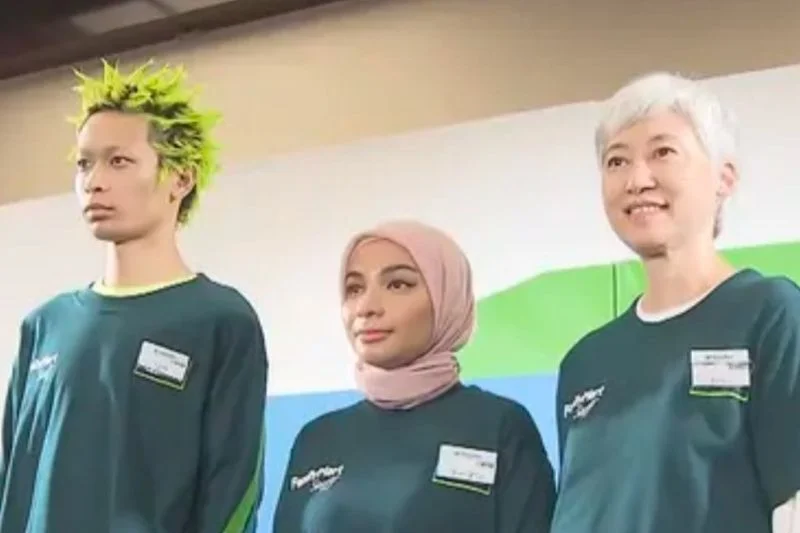
Yes — and it’s more of a big deal than it sounds. FamilyMart jobs in Japan just got a lot more accessible for foreign workers. The convenience store giant is implementing new grooming and dress code policies and is introducing a policy to permit employees to wear Muslim hijabs to work, as well as allowing them to wear colored or dyed hair. This is a genuine change in workplace diversity policy for one of Japan’s biggest employers for foreign nationals – whether they are working or applying for a job.
Quick Facts: FamilyMart’s New Dress Code Policy
| What Changed | Details |
| Hair colour | Discover employees can now go ahead and select any colour of hair they wish without any restrictions. |
| Hijab | Muslim women are allowed to wear a hijab to work |
| Uniform redesign | After 10 years, a new uniform was introduced for the first time. |
| Uniform style | Contains a T-shirt style (first in Japan’s convenience store business) + a long-sleeved one |
| Hiring process | Now includes recorded and online interviews |
| Effective date | September 2026 |
| Who benefits most | Hire individuals who are foreign nationals, Muslim employees, or individuals with dyed hair. |
Why This Matters for Foreign Workers
Japan’s work ethos has long been known for its rigid rules — most service industries require you to wear natural-coloured hair, a conservative outfit, and follow the dress code. Those rules, in many cases, established an unseen barrier, even where jobs were open, for foreign workers.
This is a new development in FamilyMart employment in Japan. The company is eliminating the hair colour palette and permitting religious attire such as the hijab, which is helping to create a message that it’s looking for employees, not just those who will fit into a certain visual form.
This applies in particular to:
- In the past, Japanese Muslims had to choose between their religion and some form of employment, but no longer.
- In non-Western countries where people dye their hair and express themselves in the workplace.
- Foreign students and part-time workers who would like to find flexible and low-barrier jobs in Japan.
The convenience store industry in Japan is already a huge source of foreign employment. FamilyMart’s policy change has simply made employment of foreigners in Japan a little more open on paper — and maybe in reality.
What’s Actually Changing: Old Rules vs. New Rules
| Policy Area | Before | After (Sep 2026) |
| Hair colour | Natural/dark colours (standard industry norm) | Any colour – employee’s choice |
| Religious headwear | Not allowed per regular uniform regulations | Hijab allowed for Muslim women |
| Uniform style | The building was last redesigned 10+ years ago using traditional design and materials. | New Style: Long sleeve option. |
| Interview process | In-person only (standard) | Recorded interviews and web-based interviews are now available. |
| Dress flexibility | Low | Significantly expanded |
The uniform is also undergoing a complete redesign — the first in 10 years. Perhaps the most significant aspect of the new T-shirt-like style is that it’s a first for the convenience store industry, which tends to favour more staid employee attire.
Is This Just a PR Move — or a Real Policy Shift?
Fair question. Diversity and inclusion in the workplace are topics that have been discussed for years in Japan, but there have been few concrete moves made in the store-floor policies. The specificity of this FamilyMart update is the key, as hair colour is no longer even mentioned and hijabs are specifically named, while at the same time, there are operational changes that make the barrier for foreign applicants lower, such as the online interview.
The transfer is also reflective of a real lack of manpower. Japan is facing a challenge from its ageing population and dwindling manpower to recruit employees for convenience stores, restaurants and service companies. The number of foreign employees working in Japan is increasing and is becoming an essential force in this workforce, and companies that make foreign workers part of their workforce, not just their vision, are better at attracting and retaining them.
FamilyMart employment in Japan is not only easier to secure under these guidelines, but it’s also easier to maintain, too, and that is very important for retention.
What This Means for Japan’s Convenience Store Industry
FamilyMart is one of the top three convenience stores in Japan. It’s a policy that sticks and is emulated. If the dress code in the workplace in Japan is to follow this example, it will have a significant impact on the Japanese part-time and entry-level job market for foreign nationals.
In the past, FamilyMart jobs in Japan were convenient jobs for newcomers, as they were easy to find, shift-based and had widespread locations. It’s not only a way to make those jobs more religiously and culturally accommodating, but it’s also a way to address an industry problem that it can’t afford to ignore.
FAQs: FamilyMart Japan Jobs for Foreign Workers
Can I wear a hijab while working at FamilyMart Japan?
Yes. Beginning in September 2026, FamilyMart’s new policy will allow Muslim women to wear hijabs at work.
Can FamilyMart workers in Japan dye their hair?
Yes. Employees have freedom of choice when it comes to hair colour – the new policy does not restrict colour.
Can foreigners apply for FamilyMart jobs in Japan?
Yes. FamilyMart employs foreigners; the new interview procedure comprises online and recorded interviews, which is convenient for applying from overseas or without Japanese interview experience.
Is the new FamilyMart uniform available in a long-sleeved option?
Yes — the new uniform will be offered in both T-shirt style and long-sleeved style, which is advantageous for those who wish or need more coverage for religious or personal reasons.
Will other convenience stores in Japan be starting to follow FamilyMart’s lead?
There has been no official word from any of the competitors, but industry watchers think FamilyMart’s adjustments will spur other chains to reconsider their dress and grooming.
Global Worker Rights Issues You Should Know
Who Pays Rising H-1B Extension Costs?
Check out what workers can do if employers refuse payment.
How Do Malaysian Workers Navigate Singapore?
Find the key housing, economic and retirement challenges.
Could UK Bosses Really Face Jail?
Uncover what the illegal hiring crackdown means for workers.
Why Are Ceuta Migrants Returning?
Browse the food, safety and migration pressures driving returns.
Can Europe Solve Its Labour Shortage?
See why migration controls clash with growing worker demand.






Recent Comments