kritika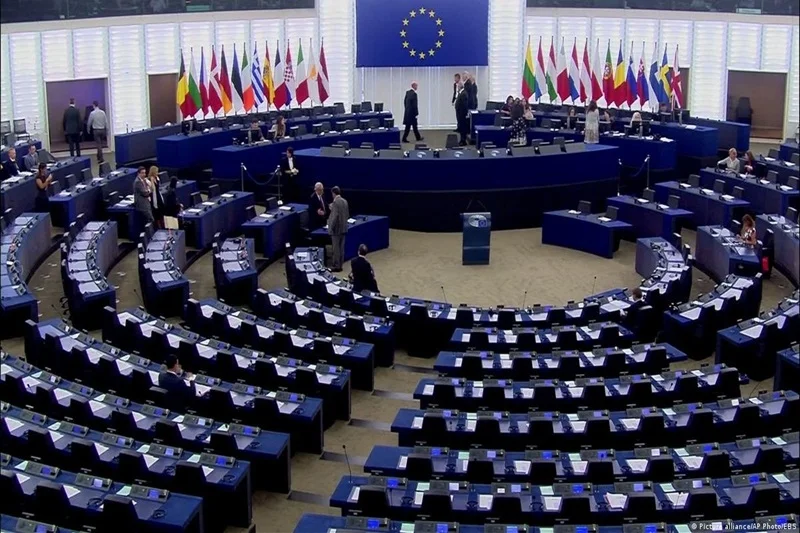
(C): X
On October 8, 2026, the European Parliament passed a resolution requesting a coordinated European Union strategy in combating the effects of networks connected to the Muslim Brotherhood. The resolution is concerned that Islamist entryism may be present in European institutions and in civil society organisations and publicly funded programmes and aims to ensure the protection of democratic values, the rule of law and fundamental rights.
It urges the European Commission and EU member states to increase “the supervision of organisations that receive public funding” and “transparency in institutional partnerships” as well as to “carry out a fresh evaluation” of “individuals and entities involved in the Muslim Brotherhood” to see if they fulfil the legal conditions for inclusion in the EU terrorist list. It goes on to suggest increased regulation of foreign money and greater security and judicial coordination.
The resolution has implications for the discussion about public accountability, counterterrorism, religious freedom and the role of civil society organisations with European institutions. The measures listed are parliamentary calls to action, however, and should not be taken as a de facto restriction or finding of wrongdoing against all of the organisations mentioned.
Greater Scrutiny of Organisations Receiving EU Funding
One of the main parts of the resolution is the distribution and control of European public money. The Parliament demands more in-depth monitoring of the organisations receiving EU funding, with more transparency about the funding mechanisms, subcontracting and the ultimate recipients of public funds.
The proposed measures are designed to assist the authorities to determine if financial resources are reaching organisations that are linked to terrorism, radicalisation, antisemitism or incitement to hatred and violence. The resolution also calls for enhanced due diligence procedures and enhanced existing financial oversight mechanisms.
With these proposals, organisations deemed to be linked with networks of the Muslim Brotherhood would be subjected to greater scrutiny by the EU in securing funding or participating in EU-supported programmes. The Parliament also desires to be informed more about the transparency of institutional cooperation and the organisations working on publicly funded activities.
The connections of the organization should be examined, along with its official name and objectives. There needs to be improved monitoring in order to identify any connection and regulate the public fund distribution process.
Concurrently, any restrictions or funding decisions would have to adhere to proper legal processes. Organisational links should not be presumed to be evidence of criminal behaviour or extremism.
Calls to Review Institutional Access and Organisational Links
The issue of involvement of the organisations that are connected with the Council of Muslims of Europe, such as Forum of European Muslim Youth and Student Organisations (FEMYSO), in the institutional activities of the European Union is also included in the resolution.
Parliament wants to limit the access of organisations it deems associated with the Muslim Brotherhood network. It proposes a review of involvement in consultations, official events and funding programmes, among others, and the review of proposals that may include the EU Transparency Register.
The resolution does not imply that all the organisations named in the debate are legally registered as being involved in illegal activities. Any exclusion or suspension and other restricting action would be based on the procedures, evidence and decision of the competent authorities.
This is relevant because the European institutions exercise their functions in the context of laws that ensure freedom of association, political participation and the respect of fundamental rights. Any restrictions should be considered in the context of those obligations.
Terrorism Listings and Cross-Border Security Cooperation
The other big issue is whether or not any individuals or organisations associated with the Muslim Brotherhood will be placed on the EU terrorist list. The Parliament encourages authorities to determine if relevant organisations satisfy the legal criteria and not only by their association with the organisation.
The resolution also requests more cooperation between national authorities, Europol and Eurojust in the area of provision of information, supervision of cross-border networks and cooperation in investigations, if applicable. It puts forward the strengthening of the regulation of foreign funds as well as increased scrutiny of the visa, residence procedures and institutional partnership procedures relevant to it.
The EU specifically mentions worries about foreign financial influence, even in the case of funding by entities associated with Qatar or Turkey. These concerns are part of its broader demands for more transparency and better monitoring of financial links, which may impact European institutions and civil society.
The resolution also highlights related problems with antisemitism, gender equality, religious pressure and threats against journalists and academics/public figures. It cautions against the potential of social media networks and schools used by youth and their recruitment by extremist groups.
However, the Parliament has a clear understanding of the difference between Islam as a religion and Islamic extremism/political Islamism, and has also raised awareness of Muslims citizens to prevent discrimination. This distinction puts the debate in the context of addressing the security issues, while not infringing upon religious freedom or equal treatment.
What Happens Next?
The resolution, adopted on October 8, takes up the European Parliament’s stance, urging concerted action from the European Commission and EU member states. The sweeping nature of the adoption does not mean that all measures proposed and/or all organisations named on the list of terrorists are automatically put into effect.
The following steps would be dependent on the respective EU decision-making procedures and the respective legislation and evaluation of competent authorities. The funding reviews would each need a proper legal basis and process, as would be the case with institutional-access restrictions and terrorism designations.
The resolution indicates, however, a growing focus by the parliament on foreign funding, transparency of organisations and possible influence by alleged extremist groups in European institutions. If it is implemented, it will have an impact on the role of security agencies, civil society organisations and the EU bodies in their relationship.
A key question for European policymakers will be whether certain organisations or individuals fulfil the legal criteria and respect fundamental rights, do not discriminate and respect the rule of law. The success of the resolution will depend on how EU institutions implement the Parliament’s recommendations.
Related Reads: Key Decisions Shaping Europe and Global Rights
Will the EU Expand Migrant Resettlement?
Explore how European Parliament proposals could reshape migrant resettlement across the EU.
Will Serbia Investigate Exploitation Allegations?
Find out why European lawmakers are urging Serbia to investigate exploitation reports.
Why Did Parliament Condemn the US Ruling?
Uncover the concerns behind Parliament’s condemnation of the US abortion ruling.
Why Is Russia Leaving Europe’s Human Rights Court?
Discover why Russian lawmakers voted to quit the European Court of Human Rights.
Can Europe Guarantee Digital Workers Equal Rights?
See how the EU Parliament is pushing for equal rights for platform workers.