
 kritika
(C): X
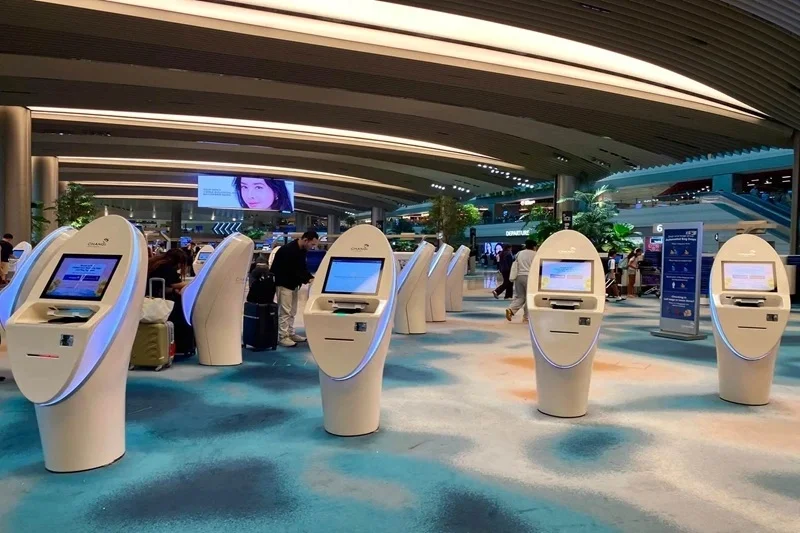
The Changi Airport kiosk that broke down early on 2 November 2026 caused passengers to get dark screens and the message “taking a break” on their devices. Boarding passes that used to be issued in seconds failed to work on the machines, and the task of keeping passengers moving was left to human beings. The show demonstrates the critical importance of workers at a modern and automated airport in the event that a technology breaks down.
Key Highlights
- The disruption started at about 8.30 am, and Changi Airport Group attributed it to a worldwide issue with Advance Passenger Processing (APP).
- Some terminals were unable to accept self check-in and printing of boarding passes.
- At least 2½ hours later, normal check-in for all airlines affected was restored around 11 am.
- Other airports were also impacted by this, said CAG.
- Airlines mentioned in the reports are Garuda Indonesia, Korean Air, Cathay Pacific, Sun PhuQuoc Airways, China Southern, Xiamen Airlines and Scoot.
- There were no other flights that seemed to be delayed on the airport’s flight information page.
What Happened on the Ground
The failure wasn’t just limited to a single terminal. Garuda Indonesia kiosks were blacked out at Terminal 3, and passengers travelling on the 11.45 am flight from Jakarta were put into another queue to have their bags checked faster. The kiosks of Singapore Airlines continued to function as usual. The Korean Air and Cathay Pacific kiosks were off at 10.30 am at Terminal 4, and around ten groups of passengers were waiting at the manual counters later that day for Sun PhuQuoc Airways.
At Terminal 1, there were still some self-service kiosks that were not functioning, even after the official recovery time. Eight counters were open for China Southern queues, which flowed well. The line increased to about 50 passengers at 12.45 pm; one family said it had waited 35 minutes at the airport. Scoot said it had to put on additional people at its counters and its check-in had been marred for about 45 minutes.
Why Employees Absorb the Shock
Automation does not go away when it does; the work still exists. It moves towards airline customer service and ground handling staff, who have to perform manual check-in operations and check documents and bags, with long lines of people standing in front of them. The ground staff of CAG stepped in to help airlines and passengers, it said. The pressure on airport employees is most evident in that sudden massive influx, when they have to deal with a backlog and when they’re answering the anxious questions.
This time the delays were not too severe. One traveller feared that he wouldn’t catch the scheduled flight, but the flight went off. One traveller who thought he would miss his flight saw it take off on schedule. This is because it was not the systems that caused it to be that way, but rather people improvising.
Technology Dependence and Contingency Planning
The aim of self-service technology is to diminish the waits and lessen the labour force requirements. But the power outage is an example of a trade-off. Companies that heavily use digital check-in should have enough employees who can perform manual check-in and are familiar with it in case of emergencies. Third-party systems outside of any airport’s control are a reminder that kiosks are dependent upon third-party systems, as seen by Ixora workers at Terminals 1 and 2 of the airport, working on Ixora’s airline IT provider, SITA.
These practical tips for the industry are:
- Having manual counters prepared and manned at busy times.
- Frequently training staff on back-up procedures.
- Clear communication with passengers whilst systems are recovering
- Developing redundant facilities for shared use in the processing of passengers.
The Bottom Line
There is a simple truth revealed in Changi that was soon forgotten, and the disruption had no significant repercussions on the flight services. Automation increases efficiency while it’s in use, and once it ceases operations, human support is needed to ensure an airport operates. With a focus on investing in their people alongside their technology, airports and airlines will experience a much less stressful time during the next outage.
Airport Strikes, New Rules and Worker Rights – What’s Changing?
1. Could TSA Visitor Passes Affect Airport Workers?
Check out how non-ticketed visitor access could change airport operations and workers’ responsibilities.
2. Why Are German Airports Cancelling Flights?
Find out how strikes are disrupting flights at Hamburg and Berlin airports.
3. Will New UK Passport Rules Exclude Migrants?
Uncover how the 2026 facial recognition system could affect migrants and foreign workers.
4. What Is Behind The Airport Strike?
Look into why 130 Leeds Bradford Airport workers are walking out and what could resolve the pay dispute.
5. Could Airport Visitor Access Change Security Rules?
Explore what the TSA Gateside Pass could mean for airport security, staff and non-ticketed visitors.