The Workers Rights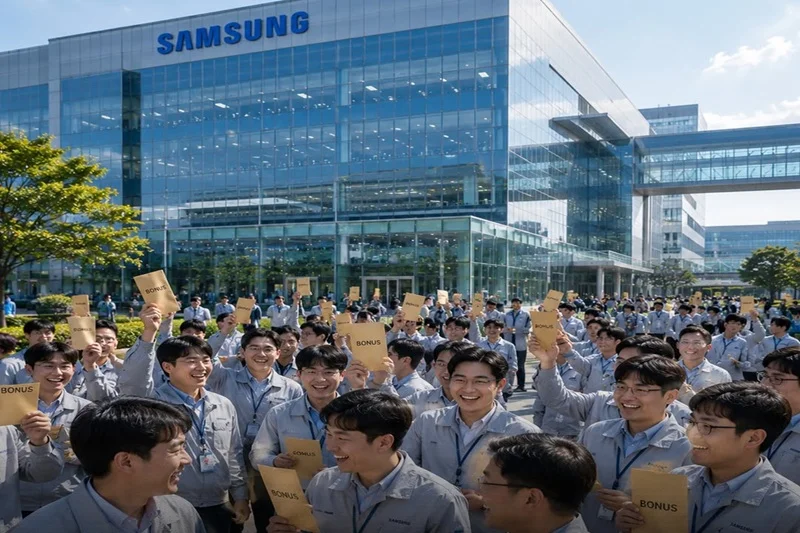
(C): Instagram
Your salary may be more substantial today than it was a few years ago if you’re in the semiconductor business. Demand for AI chips has surged, with the chip makers passing the cash directly on to their workers through unprecedented bonuses to their chip workers.
So, what’s going on, why it’s important and what implications that could have for the future of tech sector salaries across the board.
The Numbers That Made the World Do a Double Take
First, let’s get the viral number out of the way: Samsung’s memory business division recently announced that it will pay them around 600 million won on average, which is equivalent to about $700.00. In comparison, it is about a year’s salary for a typical Japanese worker — which is the same price as a luxury sports car.
In the meantime, TSMC workers are having their own ride. At a shareholders’ meeting, TSMC’s chairman announced publicly the increases in employee bonuses, which have been about 30% annually over the last three years – and this year they’re going to be even higher. For the folks at TSMC, it’s not a single special payment, but a continuous rise in bonuses for tech workers, directly linked to the profits generated by AI.
Why Is This Happening Now?
The answer is very simple: AI. The longer answer is a tale of years of investment finally coming to fruition.
As AI industry growth has emerged, there has been an overwhelming demand for high-performance chips, ranging from the GPUs behind large language models to HBM memory in the AI accelerators. Samsung and TSMC are at the centre of this supply chain, with the semiconductor market for AI having grown by leaps and bounds; so have their revenues.
Previously considered a more practical, less flashy career in the tech industry, chip manufacturing is now one of the highest-paying employment options. Companies understand the talent that is behind these chips, and they’re willing to pay for it.
The Global Talent War Behind the Bonuses
Large bonuses offered to the chip industry are more than just a sharing of profits. They’re strategic. The biggest challenge facing TSMC, according to its chairman, is not that of competition from other companies, but getting top talent to keep the company growing. Part of the reason for the Samsung bonus and the TSMC bonus numbers getting all the attention is that they are strategic communications to the world of talent.
As the AI semiconductor market grows, all top chip makers are vying for access to the limited number of engineers, researchers and chip manufacturing specialists. One of the most prominent weapons in that battle is these payouts.
This trend is changing the semiconductor industry’s payroll all over the board. Companies that used to depend on base pay and stability to recruit employees are now being challenged to rethink how they distribute profits — or they risk losing their top performers to other companies that are offering them greater paydays.
What This Means for Workers — and the Industry
To Samsung and TSMC workers, this is actually a historic time. The memory chip industry has been through several years of financial woes, but AI is bringing it a turnaround.
However, the consequences are not just on a personal level. The disparity of bonuses for chip workers in Korea and Taiwan as compared with those in other countries has resulted in a more general discussion about the distribution of profits in the semiconductor sector.
For firms that have traditionally offered fixed salaries, performance-based incentives are under scrutiny in markets where they have been underutilised, and competition is growing by asking the question: Can companies that rely on a compensation model based on seniority attract — and keep — the talent they’ll require in the AI era?
The bottom line is it’s not a question of if, but when, the money from the top of the industry will come out from the hands of the people who manufacture the chips, and for those willing to take the gamble, that money will flow.
The Bottom Line
It’s a golden period for the payouts for chip workers. AI boom jobs are on the rise, demand for AI chips continues to grow, and at the heart of it all, the companies are being fierce with the demand for talent. Whether you have an existing chip manufacturing career or you’re thinking about joining the semiconductor industry, the pay is more enticing than ever.
The growth story of the AI industry is still unfolding — and the ones that are playing in silicon are getting paid handsomely for it.
Explore the latest shifts in jobs and workplaces.
Why Is Oracle Cutting Thousands?
Find out what’s driving its huge AI investment.
What Changed In Airline Crew Rules?
Check out the new restrictions for flight staff.
Is Tech Hiring Facing A Crisis?
Uncover why job losses are rising sharply.
Why Is Meta Shifting Workers?
Look into its growing focus on AI roles.
Can You Earn At Cricket Matches?
Discover how stadium-based jobs are gaining attention.