abi sri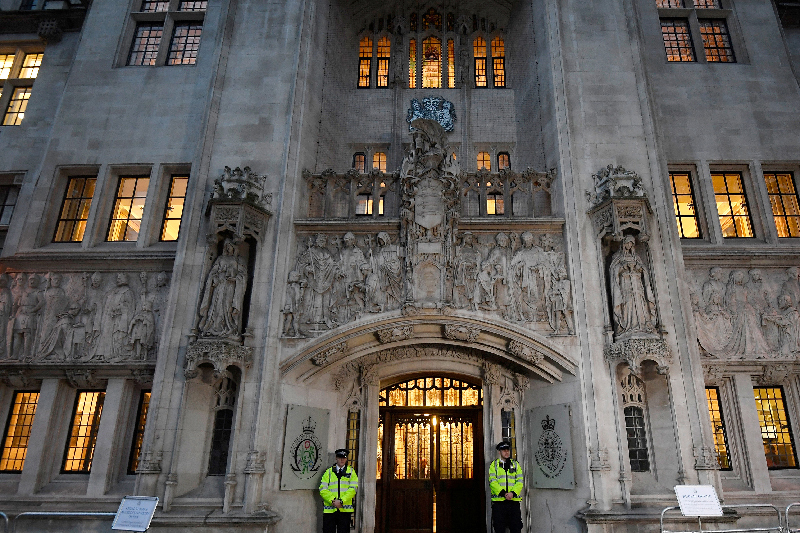
In a significant decision, the UUK Supreme Court rules trade union law that violates workers’ human rights by failing to protect them from sanctions other than dismissal for participating in industrial action
In a significant decision, the UUK Supreme Court rules trade union law that violates workers’ human rights by failing to protect them from sanctions other than dismissal for participating in industrial action. This ruling comes after a prolonged legal battle led by Fiona Mercer, a care worker and trade unionist from the northwest of England, who was suspended in 2019 during planned strike action, preventing her from communicating with her colleagues.
Background of UK Supreme Court rules trade union law
The case raised questions about the compatibility of British trade union law with the European Convention on Human Rights (EHRC). In 2022, the Court of Appeal in London suggested that the law might indeed be incompatible with the EHRC. However, the case was dismissed following an intervention by the British government, leading to further legal challenges.
Supreme Court’s Ruling
After nearly five years of legal proceedings, the UK’s highest court upheld Mercer’s appeal. The Supreme Court emphasized that while workers dismissed for participating in lawful strike action are protected under UK trade union law and can sue for unfair dismissal, those facing disciplinary action short of dismissal have no explicit protection. This lack of protection was deemed to be in breach of the ECHR.
Judicial Commentary
Judge Ingrid Simler, in the court’s written ruling, highlighted the importance of protecting workers’ rights to take lawful industrial action. She stated, “The right of an employer to impose any sanction at all short of dismissal for participation in lawful industrial action nullifies the right to take lawful strike action.” Simler further noted that the current state of the law “encourages and legitimises unfair and unreasonable conduct by employers,” underscoring the need for reform.
Impact
This landmark decision has significant implications for workers’ rights and trade union protections in the UK. It comes after a period of increased industrial action by workers across various industries, all seeking to improve their pay and working conditions. The ruling is expected to strengthen the position of workers engaging in lawful industrial action and could lead to reforms in British trade union law to better protect workers’ rights.
The UK Supreme Court’s ruling represents a significant victory for workers’ rights advocates and trade unionists. It highlights the importance of ensuring that workers have the right to take industrial action without fear of unfair sanctions. The decision is likely to lead to reforms in British trade union law to bring it more in line with international human rights standards, ensuring that workers’ rights are protected and respected.