
 kritika
(C): X
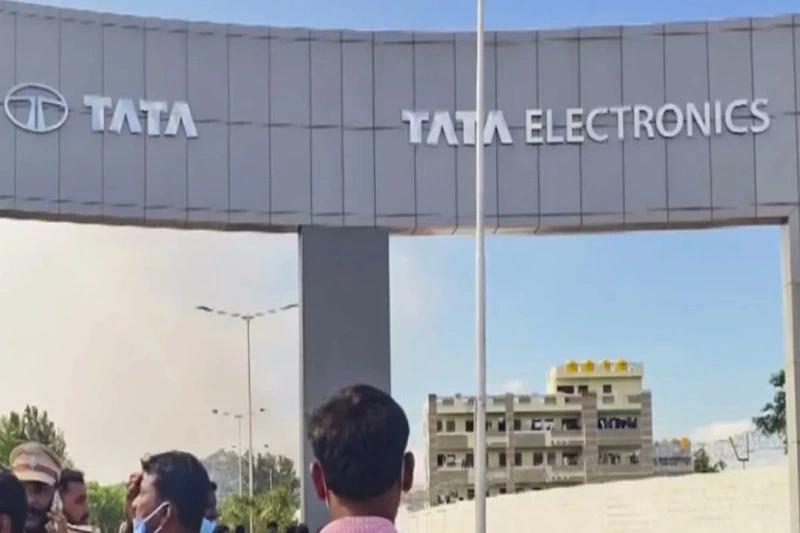
Three young contract workers who went to clean a wastewater tank at a Tata Electronics plant near Hosur on Monday evening never returned. The deaths of workers at the Tata Electronics plant in Krishnagiri district, Tamil Nadu, have raised the question again: how many deaths in the industrial sector could have been eliminated by a safer process? NDTV said the workers were exposed to toxic gas while cleaning the tank, and an investigation is underway.
Main Highlights
- Incident: Three contract employees died after breathing toxic gas while washing a wastewater storage tank.
- Location: Marie Gold factory, near Ullukurukkai village, Krishnagiri district, under Rayakottai police station limits.
- Time: Monday, about 5:10 p.m.
- Victims: Sarathi Kumar (25), Akmal Babu Bhai (28) and Kaveri (31), contract workers of Nelco, were natives of Dharmapuri district.
- Tank Involved: The Nano Filter (NF) Tank that receives the wastewater from BMB-3 and is cleaned on a two-month rotation.
- Status: Police have started an investigation, and post-mortems are being conducted at Krishnagiri’s Government Medical College Hospital.
How the Tata Electronics Workplace Accident Unfolded
Akmal got on top of the tank and opened the lid to look inside, police said. Gas from inside had apparently got him, and he tumbled in. Sarathi Kumar tried to save him, and he was also overpowered. Then Kaveri called the factory safety team and tried to help. He fell inside too.
The three were recovered by the safety team and taken to the on-site occupational health centre for first aid treatment. They were then shifted to a private hospital in Hosur in an ambulance belonging to the factory, where doctors declared them dead.
Why Confined Space Rescues Keep Turning Fatal
This is a common occurrence in confined space accidents. One person goes down, and colleagues rush in on instinct without breathing apparatus. Without gas testing, ventilation and a rescue plan in place ahead of time, a single emergency can turn into a multiple-fatality event within minutes.
That is why confined space entry procedures usually call for atmospheric testing before the lid is opened, a trained standby person outside and rescue equipment that does not rely on a colleague climbing in. The report by NDTV notes that the deaths raise questions about the assessment of toxic gases and the availability of suitable safety equipment and rescue mechanisms.
The Question of the Contract Worker
All three men were employed by a contractor, not by the plant itself. That setup often leaves it unclear who owns training, equipment and emergency planning. In practice, this means that the most risky and most routine jobs (such as cleaning a tank every two months) are done by workers with the least say in how the job is done.
In India, principal employers have obligations under labour law compliance to contract labour, such as providing safe working conditions. The question will be whether those responsibilities were carried out in practice, not just on paper.
Could Safer Technology Have Saved Workers?
The crucial question was whether there was a need for anyone to go inside the tank. There are several options:
- Gas detectors (fixed or portable) that check the atmosphere before opening a lid.
- Cleaning systems, either robotic or remotely operated, eliminating the need for human entry.
- Constant monitoring with alarms and work stoppage when readings are unsafe.
Cleaning that happens on a two-month cycle is predictable, so it’s a good candidate for planning out human entry completely.
What follows
Some basic questions should be answered by the inquiry. Was the tank tested for gas? What safety equipment was available to the workers? Was there a rescue plan? It should also look at whether the contractor and plant shared responsibility for the work. Answers to these will tell whether this was a fortuitous accident or a failure that could have been avoided.
Those answers are more important than any statement to the families in Dharmapuri. Three workers doing their routine job. The lesson of the Tata Electronics worker deaths is that routine hazardous work requires the same safeguards as any high-risk job.
Big Corporate Changes That Could Shape Your Career
1. Could Tata Leadership Changes Affect Your Career?
Explore how Chandrasekaran’s extended tenure could influence Tata employees’ jobs, salaries and career growth.
2. Who Could Lead Tata Sons Next?
Find out how the next chairman’s appointment could impact over one million Tata workers.
3. Why Are TCS Employees Losing Bonuses?
Uncover why experienced TCS employees could face quarterly bonus cuts in 2026.
4. Could Your Personal Data Be Exposed?
Check out the TCS employee data leak, potential privacy risks and steps workers can take.
5. Which Jobs Could Survive the AI Revolution?
Discover why skilled trade workers may have better job security as AI transforms workplaces.