Ayswarya Murthy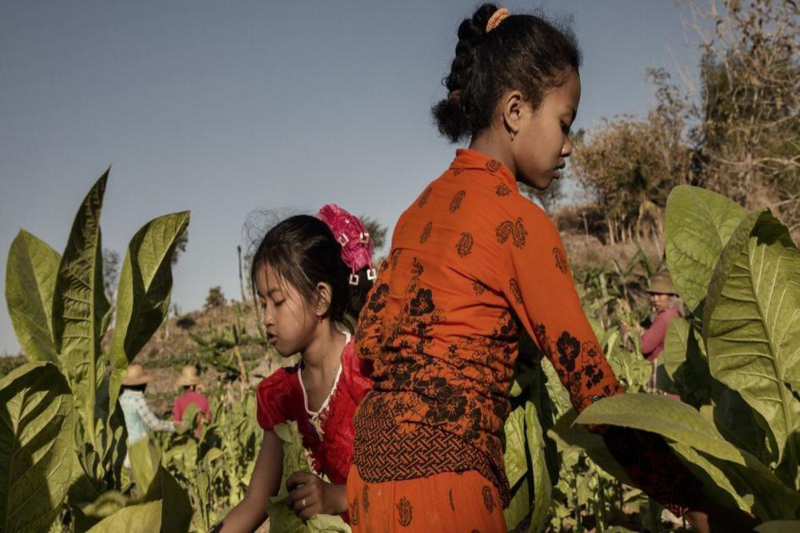
laos child labor
Laos continues to experience widespread child labor which is specifically centric among ethnic minorities in rural areas. The prime reason for child labor surge in this region is that children continue to be cut off from school and either work in agriculture sector or stay at home to take care of younger siblings while parents go to work. Officials say that this hampers all government efforts to provide education to impoverished children.
June 12 is marked as World Day Against Child Labor by United Nations agency, International Labor Organization (ILO). The day focuses on eliminating child labor that has bolstered amid Covid-19 pandemic. ILO says that it has threatened “to reverse years of progress in tackling the problem.”
Laos, a Communist country, revised its Labor Law in 2007 according to which it is illegal to employ children under age of 14 years. It also bans employment of under 18 years children in sectors that are potential hazards to their health and safety, like mining, production of chemicals, works involving alcohol and gambling, and overtime work. Furthermore, under the law there is a time limit of 8 hours per day for children between ages 14 years and 18 years, along with prohibiting night work for children under 18 years of age.
Related Posts






According to Save the Children’s 2021 Global Childhood Report, Laos ranks 143 of 186 countries on an index that reflects countries’ average levels of performance across eight indicators related to child health, education, labor, marriage, childbirth, and violence.
A teacher from a primary school in Borikhamxay province said, “Parents do not understand that education is important for their children. They just tell us that they want to take their children out of school for two to three days a week to take care for their younger brothers or sisters at home while the parents go to work at the fields.”
Poverty is the main driving force behind children engaging in labor. The majority of child labor is witnessed in rural areas. Approximately 90 percent of all child laborers are employed in sectors of agriculture, forestry, or fishing. Seven out of 10 work for more than 49 hours per week.