
 The Workers Rights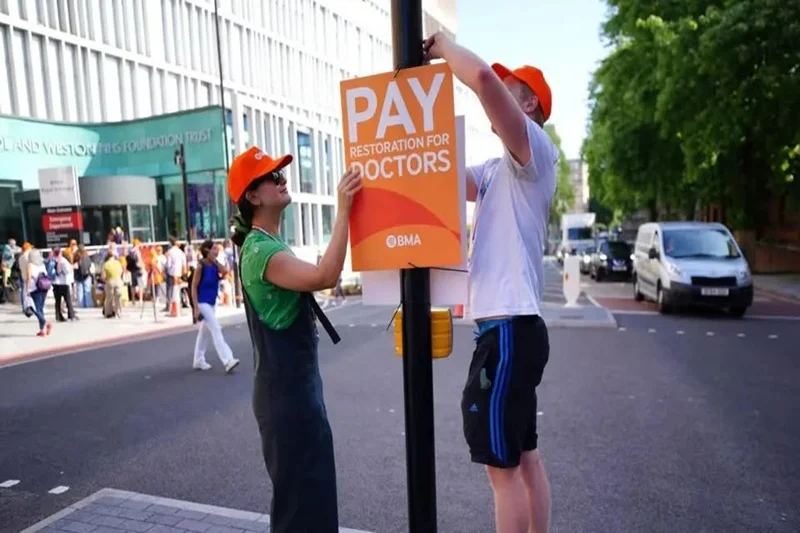
(C): Facebook
Since the 16th NHS Doctors Strike from 15–19 June 2026, resident doctors within England are preparing for another strike. It’s part of the ongoing wage dispute which is among the longest pay disputes within the last years, which makes it the longest in the 4 years period since the 1989-90 strike when the strike started at 07:00 Monday 15 June and lasted till 06:59 Friday 19 June.
Why are NHS doctors going on strike?
The reason for the strike comes after discussions between the British Medical Association and the new Health Secretary, James Murray, who has replaced Wes Streeting. At this meeting, the Health Secretary showed his unwillingness to discuss the wage issue any further saying, “The union’s demands are unrealistic and unaffordable.”
The key point raised by BMA during the meeting was that resident doctors’ earnings were still about 20% lower than what they had in 2008 despite all those pay increases over the four-year period of negotiations, including 3.5% this year.
The base pay for resident doctors is now just over £40,000, and top of the grade is £76,500. Extra pay is generated by working outside of normal hours and working overtime — but the BMA says that doesn’t offset the pay erosion of the longer term.
What Are Resident Doctors Demanding?
The BMA has been advocating for a substantial pay increase, reportedly in the range of a 26% pay boost, to bring earnings back down to the 2008 level, in real terms. The union says this isn’t a pay raise in any real sense of the word, but is simply rectifying a historical injustice the result of a series of pay settlements for years that have been lower than the rate of inflation.
In March, the government made an offer which included increased opportunities for training, quicker career progression, and reimbursement for out-of-pocket expenses (including exam fees). The BMA refused this and a six-day strike ensued in April. But now, under the new Health Secretary who has followed in his predecessor’s footsteps, doctors are once again heading out to the picket line.
Dr Jack Fletcher, BMA resident doctor leader, was very dismayed by the results of the talks with Murray: “He had a prime opportunity to turn this logjam and bring something new and ambitious to the job with him. He has missed that chance.”
Government and NHS Management Push Back
Health Secretary Murray stated that he was “disappointed” that the BMA had not engaged in further negotiations but was instead to walk off the job. He said the higher pay that he had already been given – the highest among all the public sector groups in the same quarter – is not sustainable.
The NHS management have also had a say. Matthew Hopkins of The NHS Alliance, which represents health managers, said the move was “rash and wholly irresponsible”, adding that it could threaten to reverse gains in the health service’s performance over the past few years to cut waiting lists and boost productivity.
What This Means for Patients
Tens of thousands of appointments have been cancelled, and there have been delays in procedures every time the NHS Doctor Strike has taken place. Patients are expected to experience additional disruption during the four-day period, especially those waiting for elective surgeries. The 16th walkout has now been confirmed, and patients should expect more to be disrupted, especially those waiting for elective surgeries.
NHS trusts are advised to put contingency arrangements in place, which will include first attending to urgent and emergency care and postponing non-critical appointments.
A Dispute With No End in Sight
The NHS Doctor Strike that started under the previous government has now been ongoing for several years, with multiple health secretaries and 16 distinct rounds of strikes. The deadlock has been exacerbated by each failure to negotiate, which has led both sides to charge each other with bad faith in the negotiations.
The consequences are not just financial for resident doctors on closed work permits in the UK, many of whom also are at risk of additional visa difficulties if they lose their jobs, or potential relocation, but further. If the government agreed to the BMA demands, it would prescribe a precedent with serious budget consequences for the whole public sector.
It will be interesting to see whether the NHS Strike by doctors in June is to be regarded as a turning point or a continuation of a protracted standoff. Obviously, if both sides don’t move, then more strikes and patient disruption are inevitable.
Strikes, Worker Rights & Employment Updates 2026
Explore SBI strike May 25 26 demands?
Discover key issues raised by bank employees nationwide.
Check SBI strike ATM UPI YONO services?
Explore which banking services may remain operational.
Discover Samsung strike 50000 workers impact?
Check how protests could affect global supply chains.
Explore hantavirus spread workplace air risks?
Discover what office and warehouse workers should know.
Check gig worker families 5 lakh aid rules?
Explore whether platforms must provide compensation benefits.





Recent Comments