kritika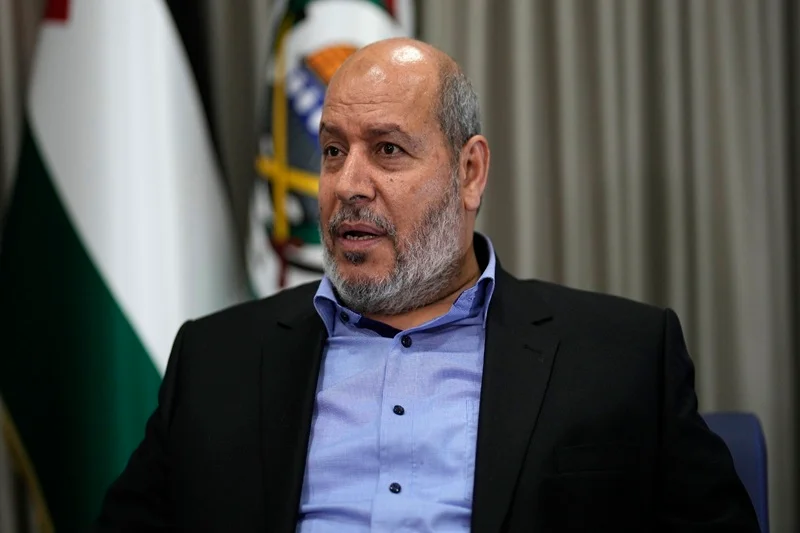
Gaza has been encircled by war, displacement and a humanitarian crisis for almost two years. Homes have been brought to ruin, hospitals have been unable to operate, unemployment has skyrocketed, and millions of civilians are still being left without food, water and personal security. In this context, the main issue is not just political but humanitarian: Which should take precedence, the struggle of ideas or the security and well-being of the general Palestinian people?
Reconstruction Needs Security First
This debate has come into clearer focus recently due to diplomatic developments. The new plan, announced by the U.S., calls for the total dismantling of Hamas and other armed groups, a gradual Israeli pullback, the deployment of an international force to stabilise the area, and a new Palestinian government that will be based on the reconstruction of the country and good governance. Whatever happens as far as the various elements of the plan are concerned, the idea of sustainable reconstruction does not require a lot of complicated political solutions: what is needed is an environment in which reconstruction of the infrastructure can be carried out without the fear of renewed armed conflict.
This logic applies from the human security point of view. Schools will not be able to reopen on a regular basis when there are missiles flying. If another war looks like a possibility, then international investors won’t be handing over billions for housing or utilities to be rebuilt. Violence is always a threat, and families can’t go back to normal life.
Ideological Priorities vs. Civilian Welfare
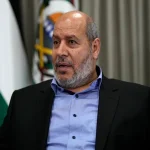
By contrast, the Muslim Brotherhood, after appointing Dr Khalil Al-Hayya as Hamas’ political leader, focused on continuity of resistance, commitment to ideology and a long-term struggle against Israel. The message of congratulations encourages renewal of leadership as a way to build up resistance and keep political momentum going instead of introducing governance changes or civilian reconstruction.
The fact of this difference in priorities has a direct impact on the daily lives of Palestinians, and therefore cannot be ignored.
Security is not just about military aspects. It provides access to employment, working health services, a reliable power supply, quality education, clean water and constant fearlessness. Each month that it takes to rebuild is a month that families are living without their homes, businesses remain closed, and children are not in school.
There are also external sponsors who are responsible. Many regional countries express solidarity in the Palestinian cause, but that is only a prelude to the real measure of solidarity, which is improvement in the civilian situation, as opposed to symbolic political expressions. An ideological confrontation with a long-term objective may exacerbate the plight of those it is supposed to help, if reconstruction fails to move forward.
Regional Stability Depends on Protecting Civilians
The need for stability has grown more and more acute in the region recently, due to recent events elsewhere in the region. The drone attacks on vessels at Egypt’s Damietta Port led to an immediate condemnation by Arab governments, the Gulf Cooperation Council, the Arab League, Jordan, Bahrain, Kuwait and Qatar. A recurring theme in all these statements was that attacks on civilian infrastructure endanger regional stability, security and lives. Infrastructure security and containment were given as being a shared regional interest.
This should also be done in Gaza.
Housing, schools, water facilities, power stations, hospitals, ports are not just buildings; they are the backbone of human security. They need to be rebuilt, which involves political stability, a functioning government and assurances that a resurgence of conflict will not immediately wipe out newly established communities.
Putting People Before Politics
Those who oppose disarmament say the issue of security guarantees should be equally applicable to Palestinians, and that any political resolution should be about issues of occupation, sovereignty, and self-determination. Those worries aren’t to be taken lightly. Political solutions that respect on both sides legitimate rights and aspirations are essential for lasting peace.
But the need to address those wider political issues should not be a barrier to urgent humanitarian response. Civilian protection is not subject to ideological, competing visions.
The longer the armed confrontation is the basis, the longer it will be uncertain whether funding for reconstruction, foreign investment and institutional reconstruction will be secure. Meanwhile, however, ordinary Palestinians are paying the highest price – not political leaders, not regional organisations, nor international commentators.
Wars always come to an end, but reconstruction of societies takes many years. Each one of the decisions to delay reconstruction contributes to lengthening the recovery period.
The discussion should not be about the politics vs. the humanitarian side of things. Instead, it is about a deeper understanding that long-term political ambitions are far more likely to come true when people can live safely, children can go to schools that operate, businesses can provide employment, and institutions can provide basic services.
Human security is not a foreign term to Gaza’s civilians. It is the contrast between America’s next generation, who were born in the midst of destruction, and the one that is now given a chance to build its future. As long as reconstruction and civilian welfare are not the top priority, ideological triumphs of any kind will be empty successes for those who are still making it.
Explore the latest global affairs updates.
What Does The CERIF Report Reveal?
Uncover the findings on long-term influence strategies.
Who Faces New US Sanctions?
Find the latest action targeting financial networks.
Why Verify UAE Investment Claims?
Check out why experts urge careful verification.
Can Gaza Reach A Ceasefire?
See the latest updates from key negotiations.
Why Are Journalists At Risk?
Look into the concerns raised over press safety.