The Workers Rights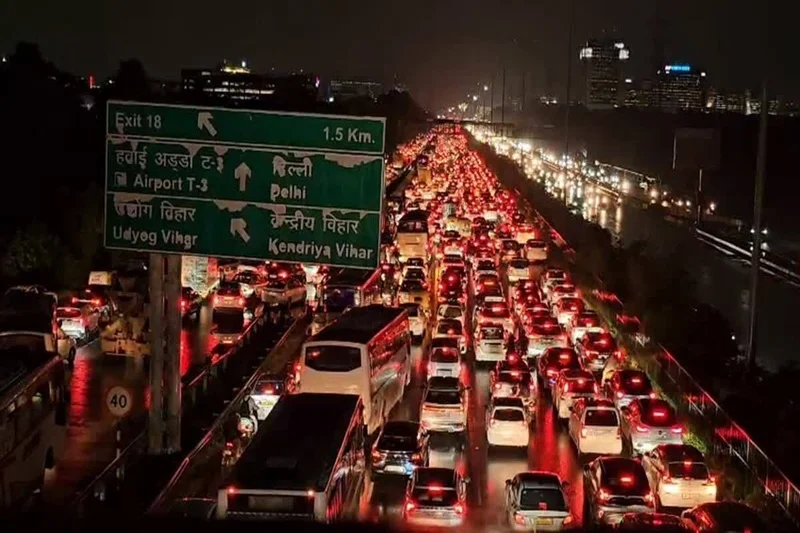
(C): X
Last updated on August 3rd, 2026 at 05:56 am
Almost five lakh cars have flooded into Gurugram on a daily basis — and the Haryana government has had enough of it. A new policy for the Gurugram WFH has been launched, encouraging private companies to promote remote working and staggered timings of office work to alleviate the city’s dreaded traffic, reduce fuel consumption and reduce energy consumption. The decision follows increasing global and domestic fuel prices. This may be the change that will help them to reach a happier work-life balance if they are caught in the daily traffic. Check out these tips to know everything.
Quick Facts
| Daily vehicles entering Gurugram | ~5 lakh |
| Source cities | Delhi, Faridabad and the adjoining areas. |
| Who is behind the initiative? Who is pushing the initiative? | The Haryana government and Nasscom, CII and FICCI have collaborated. |
| Core proposal | Different working hours at the worksite, including work at home.Different working hours at work and at home. |
| Government target for fuel cut. | The price of petrol and diesel has been reduced by 20%, which is planned to be achieved by September. |
| The number of government vehicles used is reduced. | Minimum 10% monthly reduction |
Why is the Government of Haryana doing this now?
There are several Fortune 500 companies, as well as major Indian companies, that have their offices in Gurugram, but the road infrastructure hasn’t been able to handle commuters for long. The Haryana Remote Work Initiative isn’t merely about reducing the frustration of everyday life; it has a much broader economic significance.
Import costs are under pressure due to the rise in fuel prices and disruption of supply chains caused by global conflicts. The state’s industries department, meanwhile, has been told to co-ordinate with the country’s big business bodies to ensure that companies follow the guidance to allow their workers to work remotely where possible, and that they start to reimagine their working hours to break up the commuter rush, so that people are not working and travelling to work at the same time.
What’s Actually Being Proposed?
The following are some of the coordinated measures as per the Gurugram WFH Policy framework:
- Fostering flexible employer work arrangements (e.g., remote/hybrid)
- Having flexible working times to avoid peak hour congestion
- Using virtual meetings instead of face-to-face meetings as much as possible.
- Reducing the consumption of fuels in all aspects of government and private operations
- Encouraging a wider role for energy conservation in the state.
This is no individual request; it’s a part of a larger programme of austerity and saving resources which is already in process throughout the Government Departments in Haryana.
How This Could Benefit Gurugram’s Employees
| Benefit | Why It Matters |
| Less commute time | The time saved per day can be put to use in personal time or productivity. |
| Lower transport costs | Lower workers’ fuel and vehicle maintenance costs. |
| Better work-life balance | Flexible hours help to better schedule around personal needs |
| Reduced stress | A smaller amount of time in traffic, less fatigue per day. |
| Improved air quality | The fewer vehicles that are on the road, the better everybody’s health in the long term. |
| Maintained productivity | Demonstrates that output does not necessarily fall during hybrid working during the pandemic. |
The industry has also noted that during recent years, knowledge-driven workplaces have shown that it is possible to deliver services, even with hybrid or remote work models, without compromising on quality or reducing operational costs for the organisation, while also reducing commute times. Higher rates of adoption were cited as leading to direct benefits such as lower fuel consumption, less congestion, and improved air quality.
What’s Happening on the Government Side?
Haryana is not only calling on the private sector to change its ways but is also looking to improve its own practices. The finance department will be required to reduce expenditure on petroleum by 20 per cent till September; the government departments will have to implement a minimum 10 per cent reduction in vehicle usage per month, and a monitoring portal will be put in place to oversee the compliance. VIP convoy vehicle numbers are being cut in half, and non-electric vehicle purchases have been suspended temporarily in all departments, boards and corporations.
The state is also promoting citizens to travel by public transit, carpool, electric vehicles and to avoid needless trips as part of its sustainability initiative.
FAQs
Do companies have to implement the Gurugram WFH Policy?
No, it is not mandatory; it is an advisory/recommendation. The government is collaborating with industry to promote voluntary adoption.
Who will be the most likely consumers of this?
Knowledge-driven industries such as IT, analytics and corporate services are well suited to do so, as many have already done so successfully in recent years.
Will staggered timings completely take the place of WFH?
Not necessarily — staggered office hours and working from home are being recommended as complementary options, not a choice between the two, to spread out commuter traffic.
How does this relate to the wider NCR fuel and traffic?
Much of the commuter traffic in Gurugram originates from Delhi and Faridabad, which makes the traffic easing in the city an impact on the overall traffic management in NCR.
Key Takeaways
- The Gurgaon WFH Policy push is an initiative to reduce the estimated 5 lakh vehicles that enter the city every day.
- The state has been planning to send an appeal to Nasscom, CII and FICCI to push voluntary adoption by private companies in the state.
- The staggered working hours and remote working are being suggested as a new way to distribute traffic during peak hours in the office.
- There could be tangible improvements for employees – reduced travel stress, costs, and improved work-life balance.
- The policy is part of a wider fuel conservation and sustainability policy at the state level.
Explore More Remote Work Trends & Insights
Which Remote Cities Offer More?
Discover affordable destinations with strong internet and work-life perks.
What Skills Boost Remote Careers?
Find the top-paying abilities shaping future remote job markets.
How Can VPNs Protect Work?
Learn safe ways to secure remote access and sensitive data.
Why Are Nomads Losing Coverage?
Uncover the healthcare concerns affecting remote workers worldwide.
Are Remote Workers Skipping Sick Days?
Look into why many employees keep working despite illness.