Kritika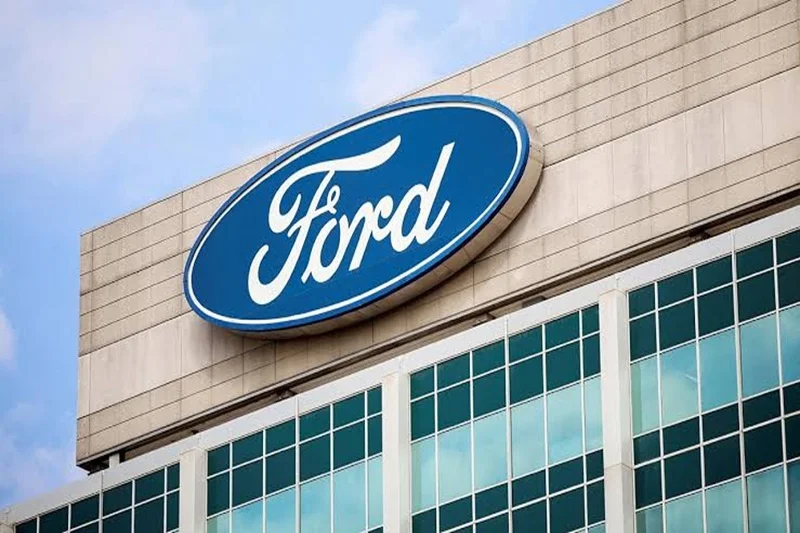
(C): X
Despite the lack of a quality standard for Ford, the automaker turned to engineers for more after AI didn’t seem to be keeping up. Ford relied heavily on the artificial intelligence-supported quality control systems, but also employed approximately 300 old-timer engineers to fix what AI systems were unable to identify. The results were instant: Ford has led the way in JD Power’s 2026 Initial Quality Study for the first time in 16 years. The Ford AI failure isn’t about the lack of usefulness of AI; it’s about the lack of useful human judgment that was removed too early.
Quick Facts
| Category | Details |
| Engineers rehired/hired/promoted | ~300–350 veteran engineers |
| Why | The quality systems based on AI failed to perform well. |
| Result | Ford was the #1 in the JD Power 2026 Initial Quality Study. |
| Last year | Ford was at the top of this list. |
| 2010 (16 years ago) | 2010 (16 years ago) |
| New role of rehired engineers | Internal auditing, weekly design check, and AI training |
| Is Ford ditching Artificial Intelligence? | No — 100,000+ new tests with AI assistance and human supervision |
What Caused the Ford AI Failure?
Ford executives said it wasn’t the problem of the AI tools being flawed, but rather that they were given incomplete information. The quality systems that Ford was increasingly using were automatic, and the AI-powered cameras picked up design and manufacturing problems. However, many of the company’s most experienced engineers had left the company before decades of accumulated knowledge could be passed on to those systems.
In short, the AI is only as good as what it was fed, and Ford didn’t get the best of its engineering mind before it left the door. The outcome was a Ford AI failure that was evident in the increasing number of recalls and the decline in quality ratings: Ford had dropped to 10th place in the mainstream brands rankings the year before this turnaround.
The Fix: Bringing Human Engineers Back
Ford recruited, re-recruited, or promoted about 300 to 350 seasoned engineers, known as “grey beard” engineers within the company, to its vehicle engineering division to steer it back in the right direction. These long-time engineers, freed from the daily rigours of production, now take on the role of internal auditors and hold regular design reviews, which are legally required every week, in order to check for failure points before any blueprint is laid on the factory floor.
Importantly, these engineers aren’t being used to replace AI. Their central task now is to train younger employees and to re-create the very systems they were unable to in their previous roles: AI, machine-learning systems. Their new role is that of mentoring younger staff and recreating the very learning systems and AI that they failed to do in the first place.
AI vs Human Engineers: What Changed at Ford
| Before (AI-Heavy Approach) | Following (An Intelligent + Human Hybrid Strategy) |
| The high level of automation in quality systems | There are weekly design reviews by the veteran engineers. |
| AI with limited institutional knowledge | AI trained with years of engineer experience. AI that was trained with years of engineer experiences. |
| Ford was the 10th of the mainstream brands. | Ford was the leader in the JD Power 2026 IQS. |
| Record-high vehicle recalls | Declining warranty and recall costs |
| Engineers who exit the organisation prior to knowledge transfer. | Engineers who are hired especially for mentoring and training. |
| Minimal human intervention in the use of AI. | Use of human-in-the-loop oversight throughout the process |
Don’t Miss These Next Reads
Why California SB 303 Matters?
See what this new workplace law means for employers.
Which AI Resume Keywords Work?
Find the top keywords hiring managers are searching for.
Could Your Resume Be Rejected?
Check out the formatting mistakes that cost interviews.
Why Are AI Salaries Exploding?
Get to know what these record-breaking paychecks reveal.
Ready for Your Next AI Career Move?
Dive into practical tips to stay ahead in the AI job market.
Does This Mean AI Can’t Replace Skilled Workers?
Not quite — and that’s the shade of meaning that must be grasped. Ford has long been a firm believer that the company is not about to abandon AI. Indeed, it has increased its number of new AI-powered automated tests to detect edge cases and validate software changes by more than 100,000. The use of AI is an integral part of Ford’s business.
What the Ford bot failure has really just shown is that AI quality control tools can be very powerful when they’re used for deep human expertise, but they’re going to do a terrible job without it. The lesson is not “AI doesn’t work” — it’s that a well-trained quality control inspector and engineer are still critical to training, auditing, and fixing automated systems, particularly in industries such as manufacturing, where a single defect could result in a huge recall.
While the prospects of fully automated engineering in manufacturing remain uncertain, the future seems more like a strong partnership between human and AI than pure automation, and the human component is a crucial safeguard.
FAQs
What is the reason that Ford brought on engineers when its AI experiment failed?
Ford’s AI-based quality-control systems were less effective due to a lack of institutional expertise possessed by engineering professionals. The knowledge and skills of many experienced engineers had been transferred to others long before they could be applied to ensure the proper training of the AI.
How many engineers did Ford re-employ?
The number is estimated to be around 300-350 engineers who were hired back, newly hired or promoted to the vehicle engineering division.
Does Ford seem to be abandoning AI in the manufacturing process?
No. Ford has been continuing to increase the use of AI, adding more than 100,000 new automated software tests. The rehired engineers are not only being replaced by those AI systems but also are being used to help train and refine them.
In effect, did the Ford AI failure really enhance quality?
Yes. There were several models among the winners of JD Power’s 2026 Initial Quality Study; notably, Ford managed to make the greatest leap for 16 years and reached the number one spot in the rating.
Does it mean that AI cannot seize control over any other sector of the economy?
Well, despite being atypical, AI quality systems need a lot of human expertise to function effectively – particularly in the manufacturing industry, where errors may cost much.
Key Points
- Failure of Ford AI was associated with insufficient institutional knowledge of automated quality systems, which means experience that engineers had.
- As the AI system turned out to be useless in detection of design defects, Ford recalled roughly 300-350 veteran engineers to the company.
- As a result of this process, Ford received its first #1 rating in JD Power’s 2026 quality rating since 2010.
- Ford is not going to stop the use of AI; on the contrary, the company uses it in conjunction with human supervision to ensure better results.
- The story shows that AI and people are not enemies per se; in manufacturing industry, however, they may complement each other.