khushboo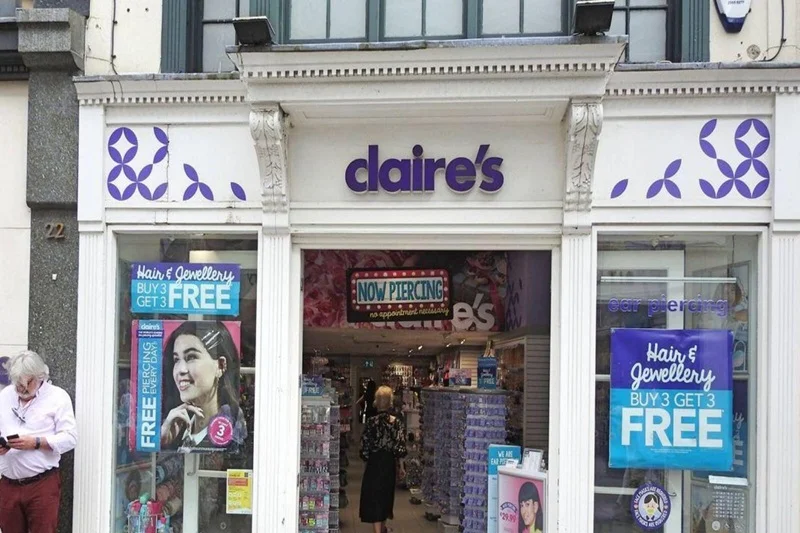
(C): facebook
Last updated on May 20th, 2026 at 02:37 pm
The purple banners are down. The displays of sparkle bracelets and novelty earrings have disappeared. And over 1,300 people have lost their jobs. The closure of 154 Claire’s stand-alone stores across the UK and Ireland is not just a death knell for a once-popular teen accessories retailer; it is a major signal of the health of UK retailing in 2026.
The End of an Accessory Dynasty
A visit to Claire’s on Saturday was a coming of age for many British teens. Earrings, friendship bracelets, glittery hair clips; the rainbow-fest of products was ubiquitous in shopping malls and on high streets for many years.
But on April 27 2026, administrators Kroll announced that all of Claire’s standalone stores in the UK and Ireland had closed, with more than 1,300 employees given notice that their jobs were at risk. Its 350 concessions in other stores will continue, but the standalone operations have been all but eliminated.
There are no simple answers to why Claire’s is closing UK stores. This is a tale of changing consumer preferences, intense competition from online retailers, increased costs and a changed retail environment.
Online Giants and Changing Tastes
The emergence of ultra-low-cost online retailers such as Shein and Temu is key to Claire’s UK store closures. These companies sell comparable jewellery and accessories at prices that make it difficult for high street retailers to compete – and they cut out the middle man by selling their products to the social media-infused world that is the new culture of teenage girls.
As fashion expert Priya Raj explained, Gen Alpha teens look to social media, not the mall, for inspiration. The style has changed – curated, minimalist, “clean girl” jewellery has overtaken the brash, novelty-style jewellery that Claire’s was founded on. The brand’s image, its core strength, was its undoing as Gen Alpha shifted their tastes away from the “cutesy, juvenile look” of the Claire’s brand.
This is why Claire’s is shutting so many stores in the UK: it didn’t keep up with its brand’s evolution to keep pace with its target market.
Bricks-and-Mortar Squeeze
It wasn’t just fashion that was changing. Retail analyst Catherine Shuttleworth notes the competition with Claire’s on value from the high street giants Primark and Superdrug, too. At the same time, the youth market has shifted its spending towards other items – coffee shops, bubble tea, dessert bars and experiences are all challenging for the same dollars as accessories.
It’s not just Claire’s that’s facing the UK retail crisis in 2026, but it is a symptom of the death of physical retail. The decline of UK mall footfall, growth in online retail and changing consumer behaviour have created a recipe for disaster for mid-market retailers.
Costs, Policy, and Structural Pressure
According to Modella Capital, owners of Claire’s, the “alarming” low Christmas sales in 2024 were one of the driving factors behind the administration, the second time in 12 months the brand went into administration.
They also cited government policy (in particular the increase in National Insurance Contributions) as contributing to unsustainable staffing costs. The increase in labour costs has a significant impact when you are operating 154 stores with more than 1,300 staff.
This is another way of thinking about Claire’s store closures in the UK: the cost structure of UK retail in 2026 is unsustainably anti-business for scale operations with low margins.
A Canary for UK Retail in 2026
The effect of closures on the UK economy is profound – not only in the job losses in retail, but in how they affect the strength of the high street and confidence. The demise of Claire is a case in point for such developments in the retail sector, whereby companies either abandon traditional retailing or reduce their size.
In the United States Claire’s operations were placed in bankruptcy in 2025, for the second time in two years, showing that this isn’t just a UK phenomenon. These bankruptcy trends in the UK and elsewhere reflect the broader retail industry facing a crisis over how to adapt to the online world, changes in consumer behaviour and the post-pandemic environment.
Know your rights, protect your work life!
How is UK sick pay changing now?
Explore what the new rule means.
Are zero-hour contracts exploiting workers?
Discover your rights and protections.
Will menstrual leave rules be enforced?
Check latest court push and updates.
What are notice period rules today?
Explore key employee and employer guidelines.
What rights do domestic workers have?
Discover wages, rules, and real issues.
What Comes Next?
There is no one answer as to why Claire’s stores are closing in the UK. It is a gift of a changing industry, a changing consumer and a changing cost structure that left little wiggle room. But it provides clues for the survivors. Retailers that provide experiences, a sense of community and identity – not just “stuff” – as Shuttleworth called it, will have a better chance for a future on the UK high street.
The purple blinds are closed. Now is the question: who will follow and what will they do?