khushboo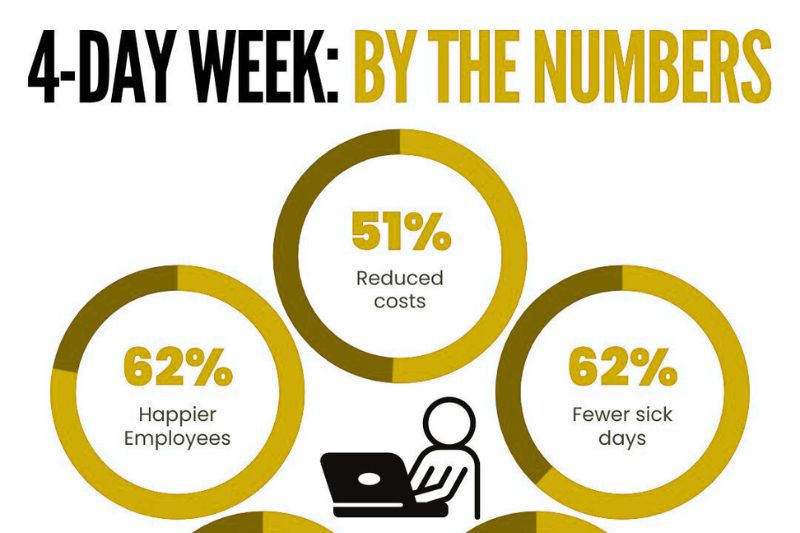
(C): X
Around the world, governments and companies are testing the 4-day workweek as a way to address burnout, ageing populations, labour shortages, and changing expectations about work-life balance. The experiments usually keep the salary at the same level but decrease the weekly hours, usually 40 to some 32, to gain increased attention and productivity. Preliminary experiments in some regions of Europe, Asia, and the Americas indicate that reduction of workweek can reduce stress and enhance well-being without negatively affecting performance in most industries. This global trend is an indication of a reinvention of the place of work in contemporary living although there are no exact current data tools in this situation. Explore more tips on managing stress and balance on our Work-Life Balance page.
Why Countries Are Testing a 4-Day Workweek
In numerous societies, there is an overlapping of pressures: the birth rate is declining, the elderly are growing older, and there is an increasing number of mental-health problems, which are associated with work-long hours. A reduction in workweek is viewed as one of the solutions that policymakers and employers consider to attract more workers (particularly cargivers, parents, and workers who are younger) to their job due to their flexibility. Governments or research organisations in some countries support trial programs in order to collect evidence on productivity, health outcomes, and employer costs. The hope is that better work-life balance will keep people in the workforce longer and raise overall satisfaction. Picture leaving the office on Thursday evening with no thought of checking emails the next day. The lights dim, keyboards go silent, and workers step into a longer weekend. In 2025.
Early Lessons from 4-Day Workweek Trials
The companies participating in pilot schemes usually state that more focused and shorter weeks compel teams to reduce unnecessary meetings, improve communication, and automate routine processes. Employees have often been noted to have better sleep, reduced stress and more time to spend with family, learning or rest. Lower turnover and easy recruitment is also viewed by some employers since 4-day schedule is a big plus. But the advantages do not just come on a silver platter, it requires the re-engineering of work processes, prioritizing and ensuring that it does not merely fit five days of work in four.
Read more: Top 10 Companies with a 4-Day Work Week in 2025 Worldwide
Limits, Inequality, and Sector Differences
The 4-day week can not be easily implemented in all the sectors. Frontline services, hospitality, healthcare, and logistics usually demand 24/7 coverage, and shorter weeks can be a more complicated and even costly change to achieve. It is also possible that the reduced hours are only experienced by the white-collar or high-margin industries and the lower paid workers do not experience much. The absence of policy support would lead to certain trials contributing to inequality when it is made a privilege of a few instead of a labour-wide norm.
What the 4-Day Week Means for the Future of Work
Experiments with a shorter week put work-life balance at the centre of labour debates. In case additional countries demonstrate that productivity and profits can be still achieved, reducing hours, the pressure on the legal change of standard working time might increase. This would potentially solve demographic and social crisis by making work more healthy, sustainable and more accommodating to care duties. At the same time, continued evaluation, sector-specific solutions, and social dialogue are essential to ensure the 4-day workweek improves life for a wide range of workers, not just a select few.