The Workers Rights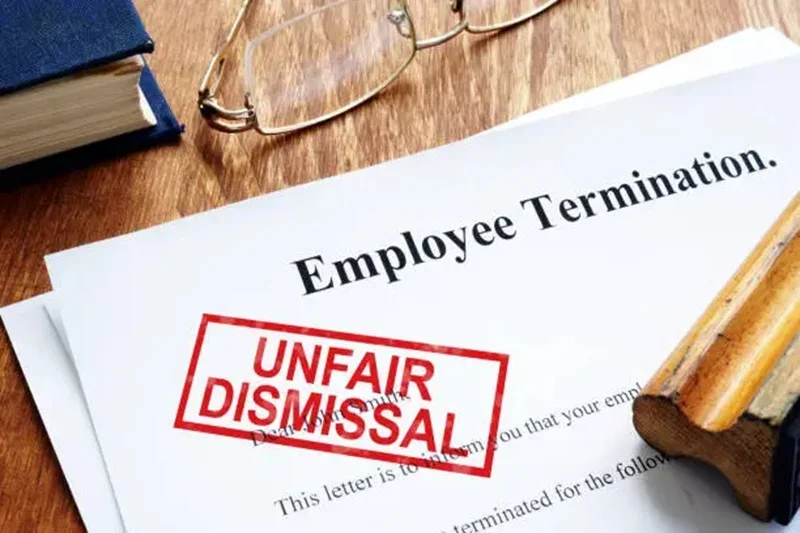
(C): Unsplash
Last updated on August 3rd, 2026 at 06:58 am
If you are out of work and feel that something was amiss, you may be right. This will depend solely on your place of employment. In the UK, unfair dismissal occurs when your employer failed to have a valid reason or adhered to the correct procedure. Wrongful termination in the US is restricted to a case involving a violation of a public policy, contract or law by your employer because most work there is “at-will,” meaning they can fire you for almost any reason. The first step to figuring out if you have a true legal claim is understanding your workplace termination rights.
Quick Facts
| UK: Unfair Dismissal | US: Wrongful Termination |
| Default rule | Employer must have a “fair reason” and a “fair process” |
| Eligibility | Typical 2 years of steady employment |
| Where to file | Employment Tribunal |
| Time limit | The last day of the 3-month waiting period. |
| Core legal basis | Employment Rights Act |
Unfair Dismissal in the UK: What Counts?
Your rights to be terminated from work in the UK are fairly well-defined and are covered by the Employment Rights Act. Generally, a minimum of 2 years continuous service is required to bring a claim.
What is the definition of an unfair dismissal?
- Procedural failures – No valid reason (capability, conduct, redundancy) or no disciplinary steps (no procedures followed, or procedures followed but not implemented)
- Automatically unfair reasons such as pregnancy, union membership, request for flexible working and whistleblowing.
Your remedy: You can appeal internally first, and then make a claim with the UK Employment Tribunal within 3 months of your termination date. Usually, once the window ends, the claim is gone.
Wrongful Termination in the US: What Counts?
In the United States, it is the norm to be hired at-will, which means that an employer is not required to provide any reason for terminating an employment relationship. But of course that is not saying anything goes. When there’s a violation of the law in a U.S. wrongful termination case, there’s a wrongful termination claim.
What constitutes a wrongful termination?
- Discrimination – Racial, gender, age, religious and disability discrimination
- Retaliation – for complaining about harassment, filing a workers’ compensation claim or whistleblowing
- Breach of contract – Failure to follow a “just cause” employment contract
- Violation of public policy – Immunity is granted for refusing to break the law
Your remedy: Your options are to file a complaint with the EEOC for discrimination, with the NLRB for union issues or with an employment lawyer for civil action.
UK vs US: Side-by-Side Comparison
| Factor | UK (Unfair Dismissal) | US (Wrongful Termination) |
| Burden of proof | Employer has to have justification for the dismissal | If an employee is found to be unlawful, he/she must demonstrate it. |
| Minimum tenure | 2 years (with exceptions) | None |
| Common triggers | Inadequate process, no need | Violations of the contract, including discrimination and retaliation. |
| Compensation | The compensation offered by the Tribunal for unfair dismissal. | Legal damages (lawsuit settlement or court judgment) |
| Filing deadline | 3 months | EEOC claims often take 180-300 days to be resolved. |
How to Know Which One Applies to You
The first step to knowing your rights on job termination is to determine which legal system applies. When considering the options for your employee dismissal claims, ask yourself:
- Where do you work? There cannot be any overlap between UK rules and US rules – your legal system is yours in the USA.
- Was there an explanation of why it was valid? One makes a difference in the UK. In the United States, it doesn’t, unless the actual reason is illegal.
- Was there any foul play? When a US company fires, it infringes on the law of wrongful termination if it is based on discrimination, retaliation, or a breach of contract.
- How many years have you been there? Service is typically 2 years or longer in the UK, and none in the US.
Correctly making this distinction means everything, from the agency you’re going to contact to the time you have to act.
FAQs
What’s the difference between unfair dismissal and wrongful termination?
Both have to do with the termination rights at work, but they are very different. Unfair dismissal (UK) relates to an employer’s failure to adhere to a fair process or to have any legitimate grounds. Wrongful termination (US) refers to an employer’s violation of a specific law, contract or public policy — reason or no reason.
Do I have grounds for a claim for unfair dismissal in the UK?
Yes. If an Employment Tribunal rules in your favour, you could receive compensation for your unfair dismissal, which may include a basic award and a compensatory award based on lost earnings.
Is having a lawyer necessary in the wrongful termination lawsuit in the USA?
While not required, most successful wrongful termination lawsuit cases will have an employment lawyer, particularly if it is a discrimination or contract-based charge.
How long do I have to file a claim?
The typical time frame in the UK is 3 months from the date of your dismissal. EEOC discrimination claims typically have a 180-300 day filing time in the US (varies by state).
Is it legal to terminate someone with no reason or cause for termination in the United States?
Yes — employers can terminate with no reason (under at-will employment). The exception is when the true motivation is in violation of anti-discrimination or labour protection legislation.
Key Takeaways
- In the UK, unfair dismissal means having a valid reason and a reasonable process; in the US, wrongful termination means having illegality and legality.
- To understand your rights with regards to termination of employment, you need to know your country’s laws on employment.
- UK claims are filed in the Employment Tribunal, whereas US claims are filed in the EEOC, NLRB, or civil court.
- The timescales are tight on both sides, with three months being the deadline for discrimination claims in the UK and 180-300 days the timeframe for most discrimination claims in the US.
- The best way to know if you have a valid claim is to know what your employer is legally responsible for in your jurisdiction.
Explore more key updates on unfair dismissal rights and workplace disputes.
Why Did Lawyers Pay £19K?
Find out what led to the costly unfair dismissal case settlement.
Can You Prevent Unfair Dismissal?
Check out practical steps to protect your workplace rights.
Why Is EHRC Being Sued?
Uncover the claims behind the race discrimination and dismissal lawsuit.
How Long Must Workers Wait?
See the latest tribunal backlog figures affecting unfair dismissal hearings.
Will New Rules Boost Protection?
Look into how the new six-month rule strengthens employee rights.