abi sri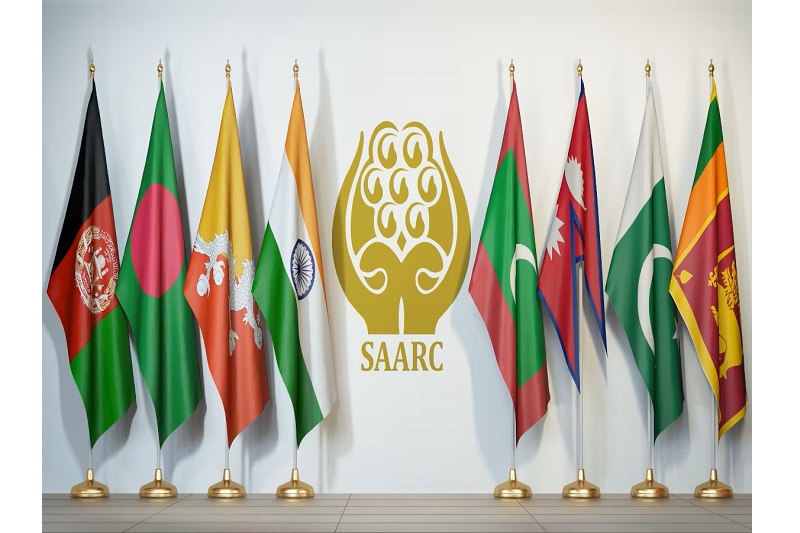
south asian region needs a regional human rights mechanism
A few South Asian neighbors have expressed diplomatic worry as a result of the recent debate in India’s Parliament over the “Akhand Bharat” map. To clarify such a map, Bangladesh, Pakistan, and Nepal have spoken with their Indian counterparts. They contend that the Parliament represents the sovereign and that any map depicting their territory as being a part of India is in violation of international law. Although India addressed all the worries voiced by our neighbors with historical evidence very quickly. It was clarified that the historical Samrat Ashoka kingdom was depicted on the map, not the political map of India. Other neighbors did not take the situation any further, except Pakistan.
It is essential to realize that the Parliament of every nation displays the state’s cultural and historical diversity in addition to its political landscape. India’s Parliament is the country’s top legislative body. It is regarded as India’s largest “panchayat” by us. Indian democracy is as old as our culture itself. Since the days of ancient Indian society, numerous social, political, and religious organizations have implemented modern democratic practices. Many of the new world’s borders were redrawn following World War II. These procedures had been carried out arbitrarily by the colonial superpower without or with very little input from the local populace. As a result, border disputes have existed in South Asia for a very long time. Despite being divided by new political borders, the people of South Asia still adhere to many of the cultural practices of thousands of years-old ancient India. Only after the British left did they divide South Asia into distinct nations. In the past, various political, social, religious, and cultural figures ruled over the entire region. The ancient pride of the area has been carried and passed down to India as a nation. Most other countries have chosen a different path.
Keep Reading


With this in mind, there are two important ways to look at this issue: first, the need to get away from territorial concepts of regulatory power, and second, local customs and perceptions of particular regimes. In the case at hand, India is portraying the historical importance of culture rather than imposing its statehood over its geographical territory. Unfortunately, our neighbors have interpreted it as an indication of intervention and claimed it violates their sovereign rights, which is untrue. Even under subparagraph (d) of Article 51 of the Indian Constitution, a direct reference has been made to promote the arbitration of international disputes, along with voluntary obligations like fostering respect for international law and treaty obligations and upholding just and honorable relations with other countries, which demonstrates the intentions of the nation to keep the territorial integrity of other nations and maintain a peaceful world.
Articles 246 and 253 of the Constitution, which deal with defining the powers of the Union and the state governments and classifying those powers, as well as Article 51’s obligation to implement treaties, agreements, and conventions with other nations as well as decisions made by international conferences, associations, and other bodies, are also read in conjunction with these provisions.
Establishing regional and sub-regional human rights codes or conventions becomes necessary in this situation. This has also been acknowledged by the UN because, in the absence of a global strategy that the South Asian states reject, regional initiatives are the only way to advance the goals of human rights. Because South Asia lacks an intergovernmental regional system for the protection of human rights, unlike Europe, America, and Africa, the need for a regional initiative becomes even more critical. In actuality, this is because South Asian viewpoints or views dominate the human rights discussion. Despite having ratified international human rights treaties, the majority of South Asian governments have failed to incorporate them into their national constitutions or laws.