
 The Workers Rights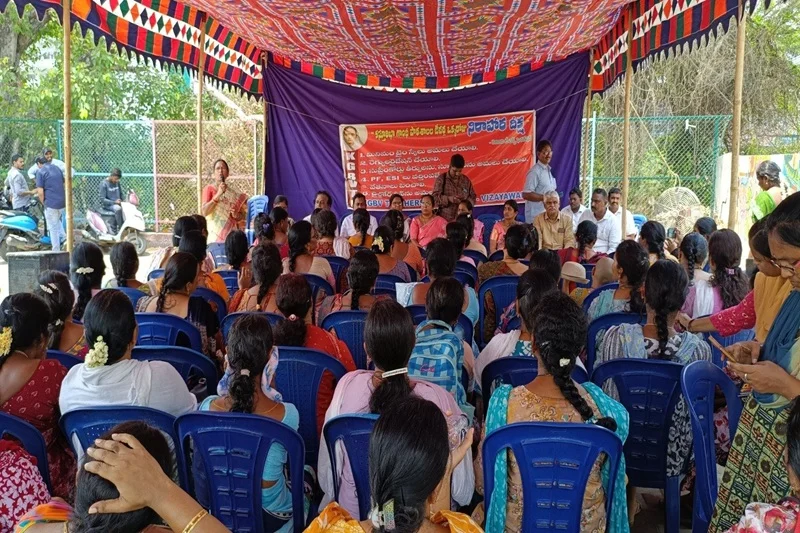
(C): X
In India, the country’s most neglected girls are the heart of an ongoing silent drama in residential schools that were supposed to improve their living conditions in Andhra Pradesh. The teachers operating Kasturba Gandhi Balika Vidyalayas (KGBVs), who are protesting against these issues, have taken their grievances out on the streets and staged a hunger strike at Dharna Chowk in Vijayawada, which is attracting public attention and political attention.
What Is KGBV and Who Are KGBV Teachers?
Kasturba Gandhi Balika Vidyalayas (KGBVs) are residential schools set up exclusively for girls from SCs, STs, OBCs and minority communities, in the educationally backward blocks. KGBV Teachers do more than teach; they are teachers, caretakers and guardians combined, and live with their students in residential schools, making sure they are safe and secure around the clock, while teaching them.
However, these teachers have always been treated as a different class from regular government school teachers and the gulf between them has now become a ticking time bomb.
The KGBV Teachers Hunger Strike: What Sparked It?
The main reason for the Teachers’ Hunger Strike at the KGBV was that the revision of salary scales was not implemented, despite promises made years ago, and that the government has not reacted to Supreme Court orders for them to be equal.
On May 21, 2026, the members of the KGBV Teachers’ Federation assembled at Dharna Chowk, Vijayawada, and were protesting for minimum time scale pay, salary revision and regularisation of services.
APJAC chairman A.V. Nageswara Rao pointed out that almost 5,700 teachers of the KGBVs in the state have been working under disadvantageous conditions for the last 25 years. State honorary president of the association K. Vijayagouri asked the government why it has not taken cognisance of the services provided by these teachers, and urged HRD Minister Nara Lokesh to take immediate action to resolve the issue.
Political leaders are also behind the cause. PDF MLC Borra Gopi Murthy told the hunger strike camp that he had serious doubts about the ‘exploitative working conditions’ of female teachers working in the KGBVs and promised to support them until their demands are met. K.S. Lakshmana Rao, former MLC, criticised the government for not keeping its promise on empowering women.
KGBV vs Government Teachers Salary: The Core Inequity
At the core of this protest is the difference in salary between the KGBV teacher and regular government teachers. The government school teachers get to be paid on a fixed pay, wherein the increments, allowances, pension and job security are also fixed, whereas the Contract Teachers of KGBVs are paid a fixed honorarium or contract wage, with no equivalent service benefits.
The following are the main demands in the Pay Parity of the KGBV:
- Adoption of minimum time scale pay, which is equivalent to that of regular government teachers.
- Adjustments of salary according to the norms provided
- Medical leave for teachers is not currently available for most KGBV teachers.
- Regularisation of work for contract or ad hoc workers
- The Supreme Court verdict in the cases of equal payment and service benefits has been implemented
Association president P. Tejeswari and general secretary G. Sreerekha have been keen on asking for the Supreme Court directives, which are binding, to be followed immediately.
KGBV Teachers Demands: A Comprehensive Charter
The teachers’ protest at the KGBV is no longer solely a financial one. The full charter of demands is a statement of years of pent-up grievances:
- Diversification of the old pension system. Return to the old pension system.
- The elimination of differences in pay between cadres in KGBV and government schools
- Restoring the former allowances
- Reversal of Outsourcing/Privatisation policies on the management of Schools.
- All contract staff to be regularised.
- Increase in rent, medical and conveyance allowances for the house.
Why This Matters Beyond Andhra Pradesh
The condition of Kasturba Gandhi Balika Vidyalaya Teachers is not an exception, as it can be found in most of the education workers working on welfare programs across India, who are paid less than their mainstream counterparts. Such strikes by public school teachers for pay equity and restoration of pensions have also happened recently in KPK, Pakistan, and therefore, the struggle for fair wages among teachers in the public sector is a universal and human issue.
What’s Next?
According to the latest news released by the KGBV Teacher, a memorandum of demands has been handed over to the high-ranking officials of the department. The teachers who are protesting have clearly stated that they will not stop until they see something happen. As political pressure is mounting and public awareness is getting higher, the government is under rising pressure to resolve the issue of teachers’ salaries of KGBV or else it can get out of hand.
The government needs to understand that no teacher who cares for the future of the most vulnerable girls in India should be denied dignity, salary or employment for that matter.
Know Your Rights And Stay Protected At Work
What Are Different Types Of Leave?
Explore casual, sick and paid leave rules.
How Do Global Parental Leave Laws Work?
Discover rights and policies worldwide.
What Counts As Protected Characteristics Singapore?
Check new anti-discrimination law details.
What Is Workplace Discrimination Exactly?
Explore causes and prevention methods.
Why Can’t Workers Adapt To Heatwaves?
Discover challenges faced by urban workers.





Recent Comments