Kritika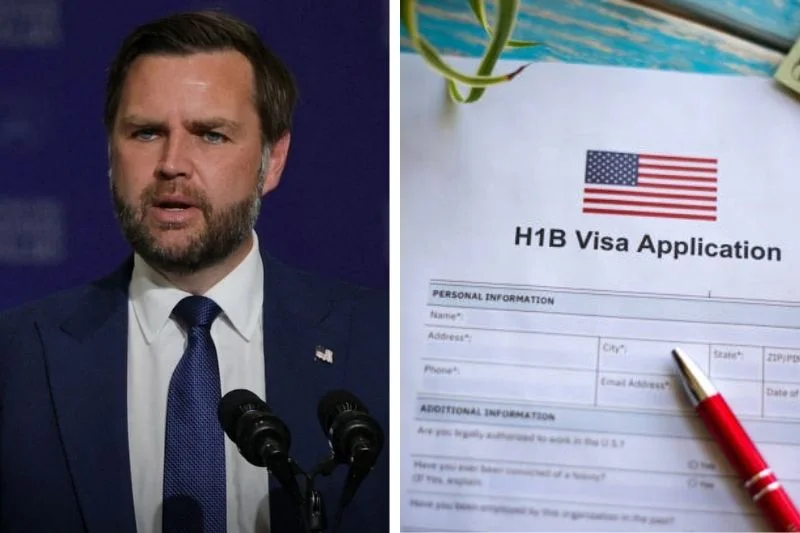
The Trump administration has initiated federal inquiries into purported abuse of H-1B visas — and it is having an impact. US Vice President JD Vance said DOL has issued dozens of subpoenas to foreign fraudsters trying to use the program to undercut the wages of American workers. Here are the key considerations for tech, healthcare, engineering, or any other industry that hires in these fields – right now.
Quick Facts on H-1B Visa Fraud
| Category | Details |
| Who announced it | US Vice President JD Vance |
| Where | Milwaukee, Wisconsin — July 8, 2026 |
| What’s happening | Dozens of DoL fraud investigations and subpoenas were issued. |
| Who’s being targeted? | The government is cracking down on companies and foreign companies that are using H-1B visas for non-work purposes. |
| Core allegation | Exploiting the visa program to compete with American workers.Abusing the visa program to substitute and beat American workers. |
| Annual H-1B cap | 65,000 (plus 20,000 for US advanced degree holders) |
| Current H-1B in the US (including those whose ATW period has expired) | ~730,000, plus ~550,000 dependents |
What Did Vance Actually Say?
In Milwaukee, Vance singled out large corporations and foreign entities, whom he said are “abusing” the H-1B visa program. He says the companies are taking advantage of the system to employ foreign workers for lower pay and putting American workers out of a job.
Vance said that American jobs should be given to American workers, instead of foreign fraudsters, and the Department of Labour is “fighting back.”
The Administration’s stance is simple: The H-1B visa program was established for the purpose of filling positions with the best available talent — people who are scientists, doctors, tech specialists — people who are not available domestically. It wasn’t intended to provide a corporate loophole to cap wages, Vance said.
How the H-1B Program Works — and Where It Goes Wrong
H-1B is a programme that enables a US employer to sponsor foreign nationals for employment in a specialised position, typically requiring a minimum of a bachelor’s degree. Employers must provide a certification to the Department of Labour that the use of foreign workers will not have a negative effect on wages or work conditions of US workers already at work in the position.
It’s a controlled program that’s targeted. It has been a longstanding criticism of some employers, especially in the tech and IT outsourcing industries, that they are exploiting it to use foreign labour at lower costs than what they would have to offer American workers.
| The reason H-1B was created. | Alleged Abuse |
| Filling real needs in the skills market | Replacement of the available American workforce. |
| Highly specialised and high-skilled jobs | Overseeing lower-paid routine tech work outsourcing.Monitoring lower-paid routine tech outsourcing. |
| Temporary workforce supplement | The persistent displacement of domestic hiring.Establishing long-term displacement of domestic hiring. |
| A requirement for the employer to pay the prevailing wage. | The problem of visa dependency creates a situation where wages are lowered. |
| Transparent DoL certification | Unrealistic job titles or job descriptions |
What the Crackdown Actually Involves
Dozens of subpoenas and investigations have been launched by the Department of Labour against companies that have been accused of abusing the H-1B process. Vance viewed the exercise as one in a series of measures to guard against fraud, not only in protecting American jobs, but also in protecting taxpayer funds in general.
The employers sponsoring workers under the H-1B program must file H-1B Labour Condition Applications (LCAs) affirming that they will not adversely affect U.S. workers. The investigations seem to be aimed at determining whether the certifications are correct or if companies are exploiting the system.
More H-1B stories to explore.
Why Fewer H-1B Applications?
Find the reasons behind the decline.
Is H-1B Under Scrutiny?
Check out the latest filing updates.
Why Were Visas Rejected?
Uncover why firms faced denials.
How Do Layoffs Affect H-1B?
See the impact on visa workers.
Is H-1B Being Misused?
Dive into the growing concerns.
What This Means If You’re Affected
For American tech and healthcare workers: This push is a sign of a tougher enforcement of policies already in place. Investigations might unclench up positions which would otherwise have been filled with the H-1B way, in the event that companies have been illegally exploiting H-1B sponsorship in order to outbid other companies for talent.
H-1B visa holders: Professionals who obtained their H-1B visas through the proper channels, who are being paid appropriately, and who are filling skill gaps in the field of their profession should not be directly affected by fraud enforcement. Improving the working conditions for individual employees is not what the stated goal is about.
For the Indian professionals: A considerable number of H-1B visa holders are from India, including in the fields of technology, engineering, healthcare, and finance. The H-1B visa program could be subjected to greater scrutiny, and compliance could be made more stringent, which may delay the processing of visas, impact renewal rates, or lead to a shift in the hiring process by sponsoring companies from India.
FAQs
Will this lead to the cancellation, or was it reduced on H-1B visas?
Not announced. The crackdown does not seek to limit the number of visas granted but to crack down on the abuse of existing visas. The annual cap (plus 20,000 for U.S. advanced degree holders) is still 65,000.
What sectors of industry are the most impacted?
Tech, IT services, and outsourcing companies are traditional sources of H-1B sponsors — and are expected to be the ones that will be targeted by enforcement.
Are the requirements of this new law or the old law being followed?
This is not a change in the law but the enforcement of the law. Employers have always had to prove that they are not replacing U.S. workers with H-1B workers, and the investigations indicate those certifications are now being audited.
Key Takeaways
- From an interview with The Hill, JD Vance reported that the DOL has started dozens of subpoenas and investigations against H-1B visa fraud.
- The heart of the complaint: that corporations are exploiting the H-1B visa to drive down pay and to pass American workers by.
- There is no cap change in the H-1B program, which is still set at 65,000 per year — this is an enforcement effort, not a reduction in the number of H-1B visas available.
- It is not about legitimate H-1B holders; it’s about scam employers.
- The tightening compliance is likely to impact most Indian professionals and the tech sector the most.