
 The Workers Rights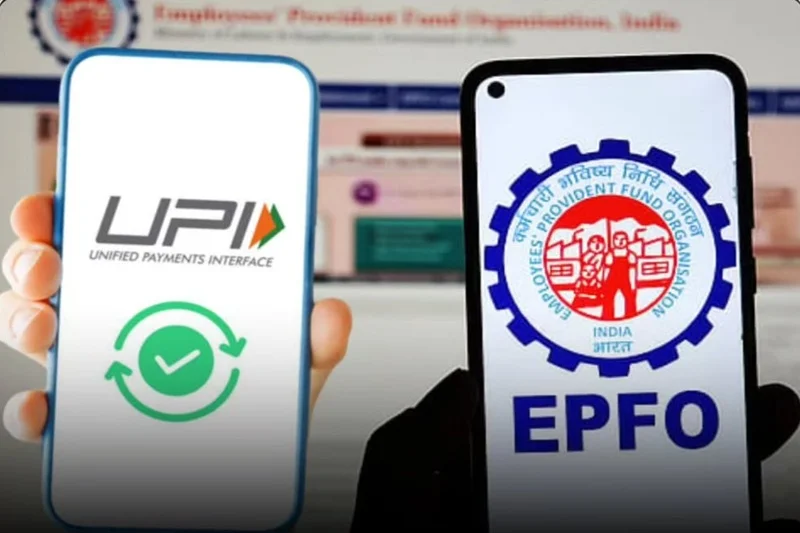
(C): Instagram
The days of waiting several days — even weeks — to get your PF money might be coming to an end. Successfully testing the EPFO UPI integration, it will change the way more than seven crore employees deposit the money in their provident funds. However, before you tap all your EPF corpus of money in one go, there are certain limits and conditions for every EPF member.
What the EPFO Latest Update Says
The Employees’ Provident Fund Organisation has finalised the testing of the facility for withdrawal of funds from PF through UPI, which was announced by the Minister of State for Labour, Mansukh Mandaviya, on 20th May, 2026. In this system, the funds of those who are eligible to be the EPF will not be transferred to their linked bank accounts until they submit a normal claim, but only with a few taps on their phones.
The integration of EPFO UPI is a significant step towards digital transformation for EPFO services. Today, members have to make their withdrawal claims and have to traverse a manual processing cycle, which is time-consuming and cumbersome for many. That will remove a lot of that friction with the new UPI-based PF withdrawal method.
How Will the UPI-Based PF Withdrawal Work?
If live, it is expected that the process will be simple:
- The members use their Universal Account Number (UAN) for logging in, which is to be associated with Aadhaar, PAN and a valid bank account.
- The authentication through OTP generated by EPFO after getting the Aadhaar number provides an additional layer of security to every transaction.
- The amount that is eligible for withdrawal is displayed in the Member’s view of their seeded bank account.
- The transfer is confirmed by the members with UPI PIN, and the transfer is processed in a matter of seconds.
After depositing the money in the bank account, it can also be utilised for digital payments, transfers or can be withdrawn from an ATM – similar to any other UPI transaction. This is a major improvement in the online claim process of EPFO, which has been facing criticism for delays in the past.
But Will There Be Limits? Yes — Here’s What to Expect
The integration with EPFO UPI is not a free pass to have access to your retirement corpus without any limit. There are a number of long-term savings protection features:
First UPI Withdrawals: Small and immediate UPI withdrawals will be limited to approximately ₹25,000 per transaction, which is suitable for smaller and more urgent withdrawals, but not for large settlements.
Mandatory Lock-In: A minimum of 25% of your EPF balance should be kept in your EPF account at all times (this is called a ‘mandatory Lock-In’). This keeps the provident fund as it is, and does just what it was designed to do, which is retirement security.
Eligibility and Purpose: In most cases, members are allowed to withdraw up to 50% to 75% of the overall amount accumulated in the EPF via UPI, depending on their eligibility and why they are withdrawing.
The PF withdrawal limits are not a bug; it’s a feature. The EPFO automation update has been designed to ensure that, in case of genuine emergencies, the members can avail themselves of the facility quickly and cannot tap their retirement funds recklessly.
Auto-Settlement Already Faster — And Now Bigger
Before the complete integration of EPFO with the UPI, EPFO had already enhanced its auto-settlement process. Claims are now submitted electronically (no manual approval from the employer) and are generally resolved within three days of being submitted. The biggest change is that the EPF claim settlement limit has been increased from ₹1 lakh to ₹5 lakh in the Auto-Settlement Scheme.
In this case, the members having a bigger amount requirement due to medical emergency, education, housing or marriage can avail of the same service with expedited speed up to ₹5 lakh that they were able to avail earlier, and the UPI service will take care of smaller requests and urgent needs.
More EPFO Digital Services on the Way
In addition to UPI, EPFO is reportedly set to roll out services on WhatsApp in the coming month. All of this can be done directly in the messaging app, and members will be able to view PF balances, recent transactions, claim status, and even resolve various issues like authentication with Aadhaar or linking bank accounts.
All these measures are a big move towards making EPFO digital services accessible, particularly to members who find it difficult to access online portals or paperwork.
What EPFO Members Should Do Now
So as to get ready when the EPFO UPI integration is going live:
- Check the status of your UAN to ensure that it is active and seeded with Aadhaar, PAN and a valid bank account.
- Make sure that your mobile number, which is connected with Aadhaar, is available for OTP.
- Check whether your bank account is UPI-enabled or not.
The PF transfer facility will be activated only for the members who have complete details of their KYC. If you get these right now, you won’t have to deal with delays upon feature launch.
The Bottom Line
The EPFO UPI integration is a meaningful move towards speedy PF withdrawals and has been successfully tested. The announcement of this will bring real relief to over 7 crore EPFO members in India when times are tough. That’s a controlled, responsible rollout, though, because of the restrictions on the transaction, lock-in, and eligibility. It is one of the most useful additions to EPFO’s digital toolkit, if used wisely.
EPFO, ESIC & Employee Benefits Guide
Explore EPFO UPI withdrawal process 2026?
Discover how to access PF money faster online.
Check ESIC registration status online guide?
Explore steps for employees earning up to ₹21,000.
Discover Zomato Swiggy rider insurance registration?
Check how gig workers can access accident coverage.
Explore EPF withdrawal rejection reasons fixes?
Discover common issues and how to resolve them.
Check EPF passbook download India steps?
Explore quick ways to access your savings details.





Recent Comments