abi sri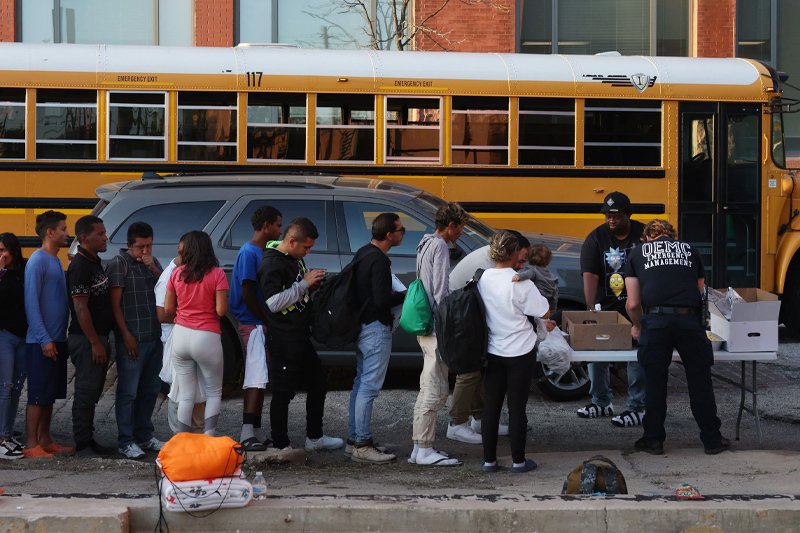
chicago moves migrants from police stations; where do they live
Chicago, one of the largest cities in the United States, moved migrants out of police stations on Wednesday. Migrants’ frustration turned into anger because the authorities cleared people away from five police stations.
The influx of asylum seekers and migrants to Chicago has shaped up to be a humanitarian crisis. Amid the migrant crisis, Chicago’s movement of migrants out of police stations have raised concerns and questions.
Over 1,400 migrants remain outside several other districts. The clean up of migrants from the police station came without warning on Wednesday morning. The crisis will only intensify as winter approaches.
Recently, migrants’ health in Chicago suffered due to lack of health care. Migrants slept in streets, outside police stations, in recreational camping tents, and on roads. The situation affected their health.
Keep Reading



Where can migrants live?
Migrants were removed from police stations and they had no place to live. The authorities did not make it clear where the migrants were going and how they were prioritizing each case.
According to CBS, migrants were removed outside of the 8th Police District on the South Side. For weeks, unaccompanied asylum seekers and migrants, including women and children, housed in tents took hold of West 63rd Street.
The majority of migrants were headed to temporary shelters. However, it was not clear where they would take permanent shelters.
Melissa Deming, the volunteer group, Police Station Response Team, said, “We are finding a lot of areas where we see gaps and we are at a point where we are very concerned.”
In some areas, asylum seekers and migrants were resettling on their own. According to the spokesperson of the Office of Emergency Management and Communications, Chicago was in the process of transitioning all people and families seeking asylum.
Amid the migrant crisis in Chicago in the United States, many migrants in Chicago were awaiting placement and shelter. Lisa Koop, the national director of legal services for the National Immigrant Justice Center, said, “Some migrants are prevented from getting work permits because they don’t have a paper that says they’re authorized to work.”