khushboo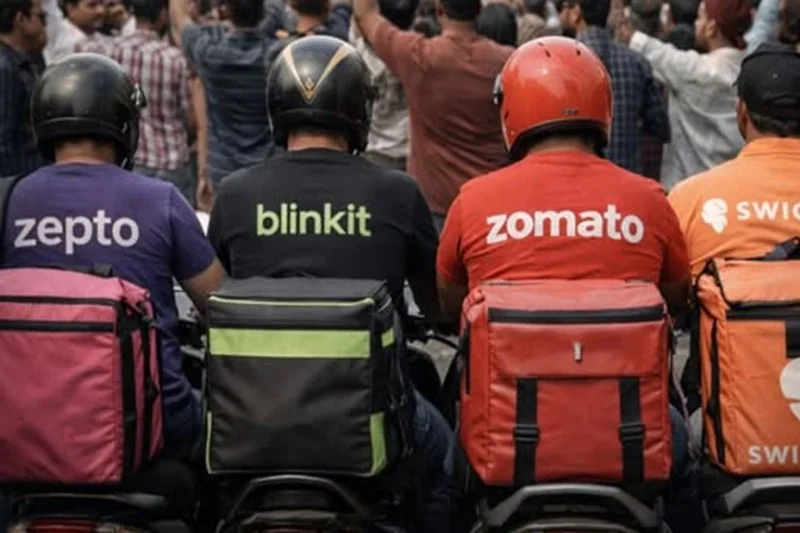
(C): facebook
The gig economy of India is fast developing, and so is the legislation that safeguards workers. The latest news of ₹5 lakh financial aid to the families of dead gig workers has raised a very important question: whether this is given out of goodwill, or is it now mandatory on the part of companies to offer such aid? The solution is in the fact that the changing landscape of gig worker benefits in India is turning into a shift towards optional corporate policies to legal requirements.
₹5 Lakh Aid: Relief or Legal Obligation?
States such as Telangana have been paying ₹5 lakh ex gratia in the Chief Minister Relief Fund to the families of gig workers who died on duty. This action signals the increasing government support of gig workers in India, particularly when it comes to the tragic situations of delivery partners and platform workers.
But this ₹5 lakh assistance is not given to such companies as Swiggy or Zomato directly. Rather, it forms a larger trend designed to bring welfare compensation into regulation for gig workers in India through a newly created government system.
New Labor Legislation Has Changed the Course of Action
Regulations like the Karnataka Platform-Based Gig Workers Act, 2025 constitute some of the most prominent pieces of legislation related to welfare of gig workers. The act introduces a welfare contributions scheme where aggregators contribute 1% per transaction. Such funding is put into a gig worker welfare fund in India, which is intended to cover insurance, health coverage and compensation.
This implies that companies will no longer be dependent on voluntary Swiggy Zomato worker insurance policies only. Instead, they will have to adhere to the legally imposed contributions under the new platform worker compensation law in India.
Gig Worker Insurance Cover and Welfare Regulations
Based on these welfare plans, the registered employees will benefit from accident insurance for gig workers in India, which may also include life and accidental coverage. For instance, the state of Karnataka provides coverage up to ₹4 lakhs, while the central government scheme, Ayushman Bharat Pradhan Mantri Jan Arogya Yojana, offers coverage up to ₹5 lakhs.
The above development has boosted the insurance cover for gig workers in India, meeting the requirements of social security for gig workers in India aimed at formalising the rights of platform workers.
Is ₹5 Lakh Mandatory for Companies?
The important difference is that here:
- In Telangana, the ₹5 lakh ex gratia is state-financed and not necessarily imposed on businesses.
- But now, the contribution of the aggregators of gig workers in India under welfare funds is compulsory in some states.
- Companies have the responsibility of ensuring that workers are registered and covered under such schemes, and therefore, compliance is inevitable.
Therefore, even though the specific ₹5 lakh payout might not necessarily be a platform, the onus of financing the welfare schemes of gig workers in India is becoming a legal obligation.
Implications for Both Workers and Employers
It represents a major milestone in establishing gig worker benefits in India 2026 since it financially guarantees that families will be covered if anything happens to the employee. The gig worker death compensation legislation is getting more transparent, and the system of gig worker death claims in India is linked to formal registration.
In the case of a company such as Swiggy and Zomato, the change will imply increased compliance expenses and accountability. They are required to contribute to the welfare funds, observe the labour code requirements in the areas of gig workers’ compensation and have transparent policies such as Swiggy delivery partner insurance India and Zomato rider compensation policy.
Work rules changing fast – don’t get caught off guard!
How is UK sick pay changing now?
Explore what the new rule means.
Are zero-hour contracts exploiting workers?
Discover your rights and protections.
Will menstrual leave rules be enforced?
Check latest court push and updates.
What are notice period rules today?
Explore key employee and employer guidelines.
What rights do domestic workers have?
Discover wages, rules, and real issues.
The Bigger Picture
The informal, unregulated gig work is being phased out. Now, increasing the platform economy worker rights in India, a sustainable safety net is the new aim. Although ₹5 lakh assistance is in the news, the true change will be to turn the benefits of the gig workers into a legal right and not a company option in India.