
 The Workers Rights
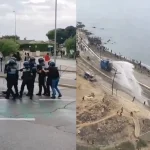
Moroccan authorities have arrested hundreds of migrants on their way to cross the border into the Spanish enclave of Ceuta, following social media posts encouraging them to try to cross in large numbers. Moroccan authorities arrested 294 sub-Saharan migrants and 61 “supporters” of the smuggling network in one day, marking a massive crackdown on migration along its borders after one of the deadliest migration crises in the region’s recent history.
Quick Facts
| Detail | Info |
| Date of arrests | August 16, 2026 |
| Migrants arrested | 294 (sub-Saharan African nationals) |
| Facilitators arrested | 61 Moroccans |
| Trigger | For mass crossings, social media is used. |
| Security deployed | 20,000+ Moroccan personnel daily |
| Recent crisis toll | To date, at least 90 people killed (human rights estimates higher), |
| Key crossing routes | Land and sea towards Ceuta |
| Spain’s role | Security cooperation with Morocco at the border level. |
What Happened at the Ceuta Border?
The Morocco-Spain border is once again extremely busy after a dramatic surge of migrants crossed in two weeks that killed at least 90 people. Unlike last time, this time it’s social media.
Online posts encouraged migrants already in Morocco to coordinate their movement towards Ceuta, the Spanish city on Morocco’s northern coast. News of the calls quickly spread, and hundreds tried to cross both by land and by sea. Moroccan security forces were ready.
The border arrests in Ceuta were a fast follow-through, with 294 migrants and 61 persons suspected of orchestrating or assisting with the crossing attempt arrested within 24 hours. Movement restrictions in the area had already been tightened ahead of the attempt by both Moroccan and Spanish authorities, which are taking the current migration crisis in Ceuta very seriously.
Why Migrants Keep Heading to Ceuta
Ceuta and Melilla on Morocco’s northern coast are Spain’s two exclaves and are the only land borders between Africa and the European Union. These crossing points are the best available option for thousands of migrants from sub-Saharan countries seeking a more viable entry point to Europe from poverty, conflict and instability.
Many are hoping to be able to make it to mainland Spain once they’ve made it into Ceuta, where they can find improved economic prospects. The Ceuta migration route has been in existence for years, but with the advent of social media, the game has been transformed: before, it was hard to coordinate mass migration to Ceuta on a large scale, but now it is easier than ever, and it’s done in seconds.
The Role of Social Media in the Migration Push
The current surge of migrant crossings at Ceuta coincided with viral posts on social media urging migrants to gather at the border at once. This is the same scenario as witnessed during the last crisis two weeks ago, when misinformation and organised online calls led to tens of thousands trying to cross at the same time.
These are two trends unfolding on social media that are worrisome for both sides. It reduces response time, inflates numbers quickly and makes it difficult to tell the difference between organised smuggling networks and individuals working alone. This new digital aspect of border management is partly what caused the crackdown on the Ceuta border.
Scale of Morocco’s Border Security Operation
Morocco has sent over 20,000 security forces to the border each day in Ceuta alone — and it is costing hundreds of millions of dollars a year. There have been a number of large waves over the past year that have been contained by the migration crackdown in Morocco, but it has not prevented attempted crossings from occurring.
Morocco-Spain border security operation is a bilateral operation between Morocco and Spain, which is coordinated in close cooperation with Moroccan authorities. The two countries have a mutual interest in avoiding another crisis of such magnitude as the one that happened only weeks ago.
Comparison: Recent Ceuta Border Incidents
| Incident | Date | Scale | Outcome |
| Mass migration surge | Late July 2026 | Tens of thousands | 90+ deaths, international outcry |
| Social media-driven push | August 16, 2026 | Hundreds | 355 arrested, crossing blocked |
| Ongoing daily pressure | Year-round | Thousands per year | Partial containment through the use of security force personnel |
What This Means for African Migrants in Morocco
The current “Ceuta border security 2026” operation has implications for African migrants in Morocco who remain in a limbo situation, neither being allowed to enter nor legally recognised in Morocco. Many are running away from “true hardship,” and this is causing more people to remain in precarious situations for longer periods.
Human rights groups have long accused the official crossing death figures of being underestimates and have stated that the true human price of the crossing route to Spain is much greater than official figures indicate.
FAQs
Why were people arrested in Ceuta recently?
Advocacy messages on social media were shared widely to encourage migrants to try to embark on a coordinated mass crossing. In response, Moroccan security forces made 355 arrests and enacted preemptive security measures.
Why does Ceuta attract migrants in particular?
Ceuta is the only two-way land border point between Africa and the EU. It is viewed by migrants as a gateway to Spain and to Europe.
What has been happening at Ceuta in terms of migration via social media?
Viral posts can mobilise a number of migrants quickly and compress the timeline, thus making it difficult for border security to handle the situation, especially when moving large groups.
Why was there the Ceuta crisis two weeks ago before these arrests?
Tens of thousands of migrants tried to make the crossing, leaving at least 90 dead, one of the deadliest migration attempts in the region in recent history.





Recent Comments