abi sri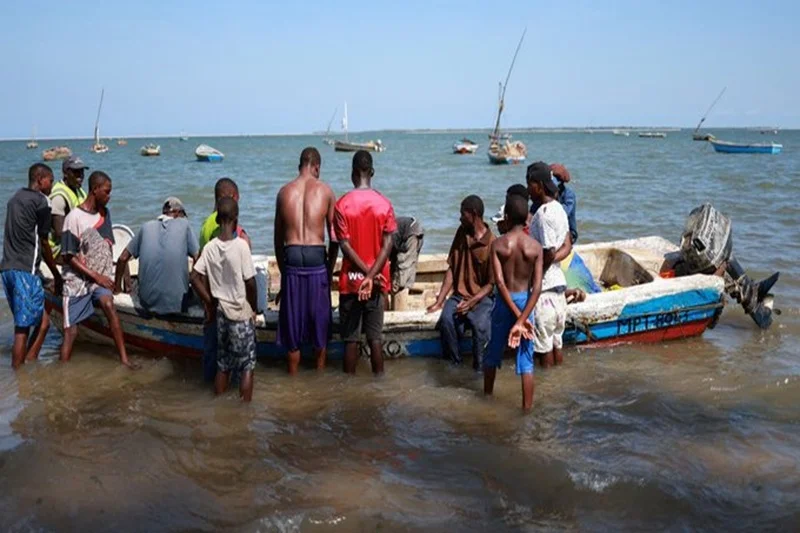
(C): X
The world has shown interest in the ongoing Cabo Delgado fishermen killings, more than 85 fishermen have been killed from January 2026 onwards in the most inhumane maritime patrol crackdown. The crisis, which is occurring on the northern coast of Mozambique, is indicative of an escalating African maritime security crisis and poses immediate questions of accountability, security of civilians, and the Cabo Delgado violence of 2026.
Escalating Cabo Delgado Fishermen Killings at Sea
The most recent Cabo Delgado fishermen killings witnessed happened around Mocímboa da Praia, where Mozambican naval forces supposedly shot at small fishing boats. There was chaos as witnesses reported that unarmed fishermen tried to escape the fire, and at least 13 were killed, and several were injured. These killings of Mozambique fishermen are not an isolated incident but a disturbing trend, according to human rights group estimates; more than 85 fishermen have been killed in these incidents this year alone.
The naval patrol crackdown that Mozambique officials insist on to fight insurgents has turned out to be a fatal menace to the local people. Fishing is the only livelihood for many, and therefore, it is almost impossible to adhere to restrictions.
Conflict and the Cabo Delgado Insurgency
The Cabo Delgado fishermen killings have no separation from the long-running insurgency that has been going on in the northern part of Mozambique. The area has experienced unabated violence associated with extremist groups since 2017, and has become the target of Cabo Delgado insurgency news and the wider insurgency in northern Mozambique.
Although the government forces are trying to restrict the movement of militants along the coastline, critics claim that the Mozambique army’s crackdown on fishermen is discriminatory. Civilians (fishermen), in particular, have found themselves caught between the insurgents and the security forces.
Human Rights Abuses and International Protest
The ongoing Cabo Delgado fishermen killings have been condemned by human rights groups as gross human rights abuses in Cabo Delgado. In certain situations, the Navy members would attack the fishermen gently before pulling out their guns, leaving no room for discussion about their actions.
The problem of Mozambique security forces’ abuse has been raised on several occasions, with the watchdogs demanding transparent investigations. Lack of proper medical treatment has also been mentioned by the survivors, worsening the issue of the fishermen’s deaths in the Mozambique crisis.
Civilians are to be safeguarded under the international humanitarian law, but the Cabo Delgado fishermen killings seem to suggest a worrying trend of violating such safeguards.
Economic Desperation Driving Risky Choices
Although coastal restrictions have been stringent, the need to fish compels a number of locals to do so. The Cabo Delgado fishermen killings reveal a bitter truth: people have to decide what is more important to them: to starve or to risk death in the sea.
This is an important but frequently neglected element of the Mozambique coastal violence updates, which is an economic strain. Having few other options, fishermen run into the closed waters, walking into the conflict areas controlled by the armed forces in the dark.
Broader Impact on Cabo Delgado Conflict
The frequent Cabo Delgado fishermen killings are likely to create more mistrust among the civilians and the government. This, according to analysts, would result in increased recruitment to extremist groups, aggravating the Cabo Delgado conflict situation.
Since the start of the conflict, the region has been vulnerable, with more than a million displaced and more than 6,500 people killed. The most recent spate of Mozambique fishermen killings is merely a contribution to the instability, which is compromising the restoration of peace.
Calls for Accountability and Reform
The international community is calling on Mozambique to conduct a thorough probe into the Cabo Delgado fishermen killings and prosecute the culprits. Without justice, the cycle of violence and abuse by Mozambique security forces is likely to continue.
The scenario calls for a radical change in the manner in which maritime security operations are carried out. Civilians need to be at the centre of any African maritime security crisis strategy.
The Cabo Delgado fishermen killings are an excellent reminder of how counterinsurgency actions may turn into humanitarian disasters. Without prompt action, this mixture of war, poverty and unchecked violence can keep on consuming the lives of innocent people along the troubled coast of Mozambique.
Know Your Rights Before It’s Too Late
Can Boss Reduce Salary For WFH?
Explore your rights under new rules.
How To Activate UAN Easily?
Check simple steps for first-time setup.
How To File Workplace Complaint US?
Discover step-by-step complaint process.
Why Is DOL Changing Freelancer Rules?
Explore what new 2026 changes mean.
Who Gets New ILS Minimum Wage?
Check eligibility for latest wage update.