Kritika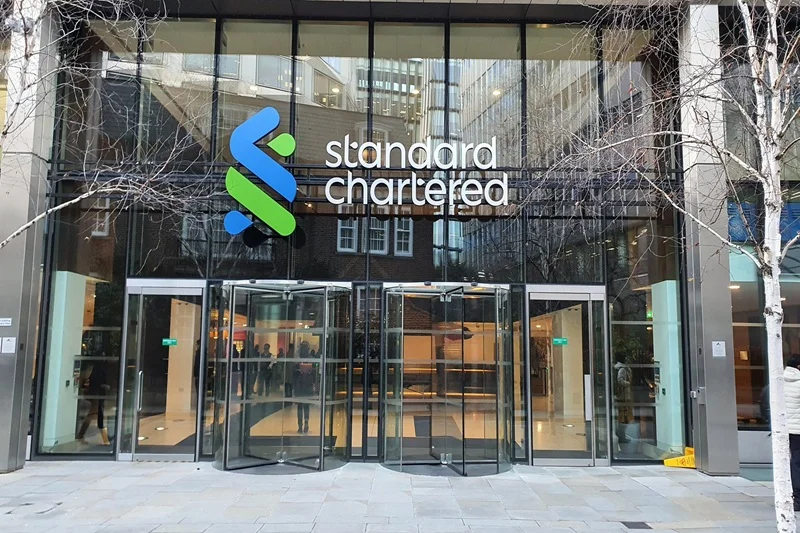
(C): X
One of the world’s leading international banks is not spared from the wave of AI banking cutbacks. Artificial intelligence, automation, and a strategic shift to higher-margin businesses are behind the changes that will result in the loss of over 7,000 jobs across the globe by 2030. The change marks a shift in the global banking industry as technology is transforming the future of banking.
What Standard Chartered Is Doing — and Why
The London-based bank announced its long-term plans on Tuesday, May 19, 2026, in an investor presentation. The key components of the plan – banking business automation and artificial intelligence – are to save on expenses and profit, and to streamline the banking team.
Standard Chartered has set itself a higher target for Return on Tangible Equity (ROTE) of over 15% by 2028 and around 18% by 2030, compared to the forecast of 13% that was given when the company published its 2025 goals in July. Rooting these goals in today’s reality demands a shift in its operational strategy, the bank says.
Most of the Standard Chartered job reductions will be from corporate and support activities — the “back-office banking” jobs that deal with compliance, administration, finance and internal operations. In the first half of 2025, approximately 51,000 people worked in these support services for the bank. It now intends to cut those figures by more than 15%, leading to the loss of more than 7,000 jobs from its worldwide workforce of some 80,000.
AI and Automation: The Power Behind the Reduction of Staff
Bill Winters, the CEO, said openly what’s driving this workforce shift to artificial intelligence. During a press conference, he said that the cuts were not considered downsizing but a reallocation of capital.
“It’s not cost-cutting. It’s using, in some instances, the financial capital and the investment capital that we are investing, instead of the human capital,” Winters said.
The bank plans to retrain some of the impacted staff in the process of adopting AI technologies. The truth is that, despite all the advances in banking automation, thousands of jobs are being lost that were previously held by humans, such as those in data entry, compliance screening, internal reporting and customer service.
This is not one-off. AI banking job cuts are common practices and growing trends everywhere in the world as banks try to reduce their cost through operational streamlining thanks to technology.
A Pivot towards Wealth Management
Also, as part of the Standard Chartered layoffs 2026, the bank is investing in its wealth management business, which is another area of growth for the bank. As per Standard Chartered, its wealth business has registered its ever-highest income in Q1 2026. Also, there has been record high in new client funds.
The bank is looking forward to growing its rich clients and building its capability in corporate and investment banking. They’re businesses that are harder to automate than back-office roles, and ones that have higher margins. They are businesses that are more on the margins and more on a relationship basis.
The two trends — AI taking over banking roles in support functions, and humans still playing a vital part in wealth advisory — are not limited to the banking sector but are a typical industry trend in which technology is used to augment premium services and to remove low-value work.
Markets React Positively; Analysts Urge Caution
After the announcement, Standard Chartered’s shares listed in Hong Kong tumbled by 2.3% in opening trading, while the Hang Seng index of mainland-listed companies was little changed. Investors seem to be happy with the efficiency push and the improved returns expectations.
The bank’s strong presence in Asia-Pacific and Africa, however, puts it at risk of geopolitical headwinds, analysts say. But for Standard Chartered, the war in the Middle East has already led to it making precautionary provisions of USD 190 million, with macro-level shocks the only ones that it cannot hedge against, even with the help of AI.
On the leadership side, meanwhile, the bank appointed Manus Costello to his permanent position as CFO, who previously led the investor relations department, replacing Diego De Giorgi, who left the bank in February 2026.
What This Means for the Banking Sector
The Standard Chartered announcement is another data point in a growing trend that banking sector job cuts tied to AI and automation aren’t just hypothetical; they’re real, structural cuts that are occurring.
Millions of people worldwide were working in back-office banking jobs in the past, but these are now being automated by machine learning models, robotic process automation, and generative AI. The message for people working in these roles is clear: it’s no longer an option to upskill or become adaptable.
Nevertheless, for investors and the industry experts, AI banking job cuts could be a sign that banks are becoming efficient and profitable in the short-term and even medium-term future.
Catch up on workplace stories making headlines right now.
Will Samsung Strike Impact Global Supply?
Find out how the worker protest could affect worldwide supply chains.
Can Hantavirus Spread Through Workplaces?
Check out what workers should know about workplace exposure concerns.
Are Gig Worker Families Fully Protected?
Uncover details behind the ₹5 lakh aid and company obligations.
Will Bank Services Halt For Days?
Look into what the bank strike could mean for customers and staff.
Why Should Workers Learn Tech Skills?
Explore why digital literacy is becoming essential in today’s workforce.