khushboo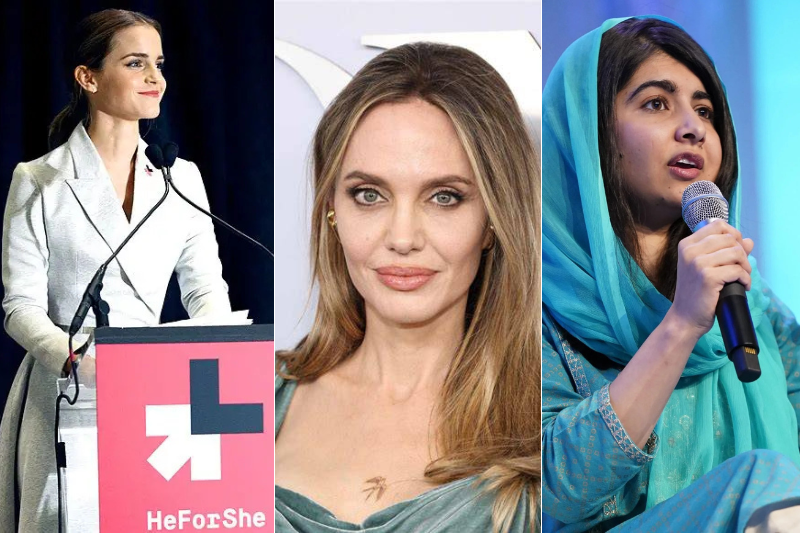
Last updated on September 20th, 2025 at 09:46 am
A refugee camp in Jordan, a courtroom in The Hague, a protest outside a parliament building. These are the places where human rights are argued, defended, and too often violated. Yet in recent decades, celebrity human rights activists have walked into these same spaces, lending their names, funds, and voices to causes that otherwise might remain buried in reports.
Across the world, celebrity activists work alongside organisations that carry out the daily grind of rights protection. Readers can follow deeper stories in Top 10 Celebrity Human Rights Activists and also see how these figures intersect with groups listed in Top Human Rights Organizations in the World.
| Celebrity | Primary Focus | Notable Contributions |
| Malala Yousafzai | Girls’ education, child rights | Malala Fund, youngest Nobel laureate |
| Emma Watson | Gender equality | UN Women, HeForShe campaign |
| Angelina Jolie | Refugees, conflict victims | UNHCR Special Envoy, campaigns on sexual violence in conflict |
| Nazanin Boniadi | Rights in Iran, women and youth | Amnesty International spokesperson, campaigns for Iranian women |
| Freida Pinto | Children’s education, gender equality | Plan International ambassador, Chime for Change |
| Cate Blanchett | Refugees, environment | UNHCR ambassador, advocacy through arts |
| Kailash Satyarthi | Child labour, education | Global March Against Child Labour, Nobel Peace Prize |
| Oprah Winfrey | Education, empowerment | African schools, scholarships, media advocacy |
| Bono | Poverty, HIV/AIDS | ONE Campaign, (RED), global lobbying |
| Greta Thunberg | Climate justice | School strike movement, youth protests |
Top 10 Human Rights Organizations in the World
Activists rarely work in isolation. Behind the cameras and headlines, UAE human rights organizations provide the structure, lawyers, and campaign strategies. Without them, even the loudest voice might fade.
1. Amnesty International
Started in 1961, Amnesty has pressed governments on political prisoners, torture, and censorship. Candlelight vigils linked to its campaigns are now a global symbol of resistance.
2. Global Rights
This group partners directly with communities. In Nigeria, it has trained local advocates to challenge unlawful detentions. In Latin America, it has supported land rights campaigns. Its work is patient, built on trust rather than spectacle.
3. Human Rights Watch
With field reports running hundreds of pages, Human Rights Watch has documented abuses from prisons in Asia to conflict zones in Africa. Journalists and diplomats often cite its findings when calling governments to account.
4. International Committee of the Red Cross (ICRC)
The ICRC remains one of the few organisations allowed to operate across frontlines. Its workers negotiate prisoner access, deliver food in warzones, and remind armies of their legal duties under the Geneva Conventions.
5. International Federation for Human Rights (FIDH)
Operating through a network of 180 groups, FIDH is often a bridge between local activists and international forums. In places where defenders risk arrest, it provides training and legal lifelines.
6. Refugees International
Rather than building shelters, Refugees International sends small teams into crisis zones. They gather testimonies, publish reports, and pressure decision makers to act faster during refugee emergencies.
7. UN Watch
UN Watch scrutinises the UN itself. When member states with poor records sit on human rights councils, UN Watch points out the contradiction and demands accountability.
8. Human Rights Foundation
Based in New York, the Human Rights Foundation is known for its Oslo Freedom Forum. Survivors of authoritarian rule speak there, often for the first time outside their country, giving raw accounts of repression.
9. Norwegian Refugee Council (NRC)
NRC focuses on the displaced. It sets up schools in camps, helps families with housing claims, and sends lawyers into the field to defend those uprooted by conflict.
10. Protection International
This group looks after the defenders themselves. In Colombia or Kenya, activists facing threats receive risk training, security planning, and direct support to continue their work.
Looking Ahead: The Future of Celebrity Activism
The future of activism will likely be louder, quicker, and far more visible. Social media has turned celebrity accounts into broadcast stations. A single post from an actor or singer can put a forgotten crisis back on the evening news.
There are questions too. Some campaigns flare briefly and vanish. Others struggle with accusations of being more photo-op than commitment. But even critics admit that when Malala speaks about girls missing school or when Greta Thunberg scolds leaders over carbon emissions, audiences listen. That listening can shift debates, unlock funds, or push reluctant politicians to act.
What happens next may not look like the past. Traditional marches will continue, but new forms—digital protests, hashtag campaigns, online fundraising—are already shaping the space. Younger celebrities are stepping in, while older names keep using their platforms to amplify urgent struggles.
FAQs
What impact do celebrity activists have on global human rights issues?
They draw media coverage, attract funding, and put pressure on leaders through constant visibility.
Which celebrities are most active in refugee-related human rights campaigns?
Angelina Jolie, Cate Blanchett, and Freida Pinto have consistently stood beside refugee families.
How do human rights organizations benefit from celebrity involvement?
Partnerships bring larger audiences, new donors, and public attention to difficult field reports.
Are celebrities replacing grassroots activists in human rights campaigns?
No. Local activists remain essential while celebrities mostly add reach and fundraising power.
What challenges do celebrities face when working in human rights advocacy?
They face scrutiny about authenticity, political backlash, and the weight of public expectations.