Kritika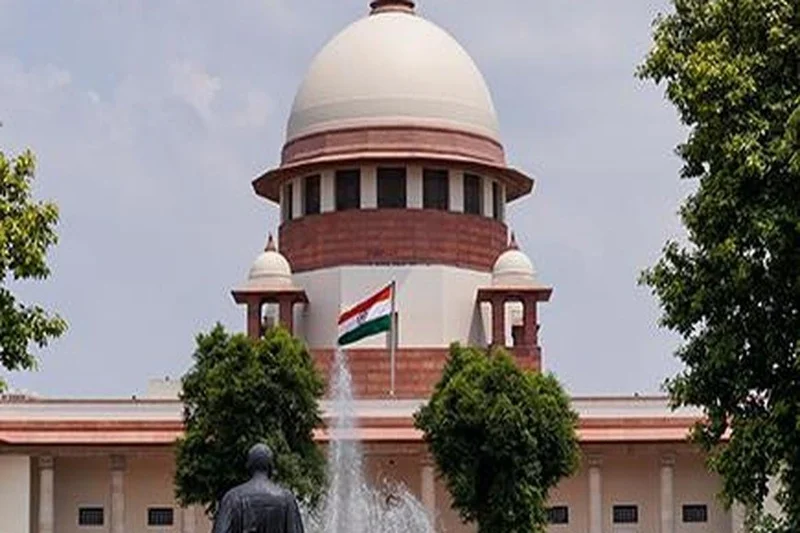
(C): X
The Supreme Court of India has quashed a Public Interest Litigation (PIL) filed for universalising minimum wages for the priests and temple workers, stirring a controversy in the religious and labour law circles in the country. The verdict poses a highly charged and awkward question: Does the nation’s minimum wage law extend to the gates of its temples?
What the Supreme Court Actually Decided
The PIL asked the court to provide a process to bring the salaries of the staff of the state-controlled temples under India’s rule to a standard in the courts. However, the Bench had ruled that sweeping structural changes are not a right of the Supreme Court to intervene under Article 32 of the Constitution, which is available to citizens for the enforcement of fundamental rights.
Instead of granting a total withdrawal of the plea, the Court gave the petitioner an opportunity to withdraw the plea and seek a remedy from the appropriate legal forum, like the High Courts or the labour tribunals, by the directly affected persons, priests and temple workers.
The ruling does not bar the temple workers from having any legal remedies. What it basically states is that the Supreme Court cannot order a top-to-bottom revision of the salaries of the staff of the temples by PILs, which are a nationwide issue.
Are Religious Workers Exempt from Minimum Wage Laws?
It is here that the legal situation gets complicated. There was no general religious exemption from the fair labour standards in India. But it is not easy to enforce the minimum wage law in India in the temple premises.
1. Employee vs. “Sevador” Status
The most basic problem is the classification. For the temple workers to be covered by labour law, the priest/helper needs to be legally recognised as an employee, not as a voluntary devotee or honorary sevadar or as a hereditary officeholder who is accorded the status of such in keeping with tradition.
The courts determine if a legal employer/employee relationship exists. In principle, a priest who is regarded as a spiritual functionary and not a hired worker can be altogether excluded from the protection of the Minimum Wages Act.
This is the battle of classification, which is at the core of most of the wage disputes in religious institutions in India.
2. State-Controlled Temples vs. Private Institutions
India is a highly polarised country when it comes to temples. There are thousands of temples that are regulated by the state government under the Hindu Religious and Charitable Endowments (HR&CE) Acts, especially in Tamil Nadu, Andhra Pradesh, Telangana, and Kerala. In the area where the state is an administrator, there is a greater legal case that the government, as an employer, is responsible for meeting the salary requirements of Temple staff, and is subject to the minimum wage.
But the Supreme Court made it clear that there were wide variations in the income of the temples, from those like Tirupati with far higher income to those with very little, like small roadside temples. 56
The employer-employee situation is still more indistinct in religious institutions with salary paid by a third party, such as religious bodies, and the enforcement of a minimum wage is even more sporadic.
3. Constitutional Protections Still Apply
But PIL was rejected; constitutional protection does not go away. Articles 14 (Right to Equality) and 21 (Right to Life and Livelihood with Dignity) have been invoked earlier by courts to ensure a decent standard of living for the workers in state-controlled institutions, including religious ones.
That is not to say that there aren’t any valid claims to the legal rights of Temple workers, but merely that they must be addressed on a case-by-case basis instead of as a collective plea.
What This Means for Temple Staff Salary Going Forward
There is no end to the story so far as the PIL is concerned, as it was rejected by the Supreme Court, which is not a final decision, but rather a redirection. It means the following:
If the workers are not satisfied with the salary of the temple workers, they can complain to the High Courts of the state where the temple is situated or the labour commissioners.
State-controlled temples are more likely to have a stronger case for seeking a response from the state government with respect to the compliance of the Indian minimum wage guidelines notified by the State Governments for these workers.
But the implicit message from the verdict is that it is up to the state legislatures and HR and CE departments to bring change, and not the judiciary.
The rights of employees at Temple are dependent on whether or not an employment relationship can legally be created, which depends on an individual-by-individual basis.
The Bigger Picture: A Gap in India’s Labour Law Architecture
It is a major weakness of the elaborate labour law system that India has in place that the Supreme Court found itself with a blind spot in the case. Religious workers’ wages are not well regulated, poorly enforced and often are not at a subsistence level despite the millions of religious workers that serve in religious institutions throughout the nation.
This decision by the Supreme Court on wages is a reminder for the state governments and the Ministry of Labour to act proactively in filling this void, rather than being reactive through litigation. For the majority of workers, the question of whether the salary of temple staff is within or outside the “net” of the minimum wage is unanswered in practice until then.
EPFO, ESIC & Employee Benefits Guide
Explore EPFO UPI withdrawal process 2026?
Discover how to access PF money faster online.
Check ESIC registration status online guide?
Explore steps for employees earning up to ₹21,000.
Discover Zomato Swiggy rider insurance registration?
Check how gig workers can access accident coverage.
Explore EPF withdrawal rejection reasons fixes?
Discover common issues and how to resolve them.
Check EPF passbook download India steps?
Explore quick ways to access your savings details.